Menu

Rooftop Unit Installation in Cleveland | Minimize Downtime with Industrial-Grade RTU Replacement

Commercial rooftop HVAC installation engineered for Cleveland's climate extremes. We deploy pre-staged equipment, coordinate crane logistics, and execute installations during off-peak hours to keep your operations running without interruption.

Slider Image 1
Slider Image 2
Slider Image 3
Slider Image 4
Slider Image 5
Slider Image 7
Slider Image 8
Slider Image 9
Slider Image 10
Slider Image 11

Why Cleveland Commercial Buildings Face RTU Failure Risk Year-Round

Cleveland's industrial corridor sits at the intersection of Lake Erie humidity and continental freeze cycles. Your rooftop package units absorb the worst of both. Summer brings sudden temperature swings from 60 to 95 degrees within 48 hours, forcing compressors to cycle aggressively. Winter delivers lake-effect snow loads exceeding 80 pounds per square foot on flat commercial roofs, stressing older curb mounts and accelerating structural fatigue.

Buildings in the Flats and along the Cuyahoga Valley deal with additional corrosion from residual industrial particulates. Salt spray from winter road maintenance drifts onto rooftops, attacking coil fins and electrical connections. The result is RTU installations that fail 30 percent faster than units in inland climates.

Commercial RTU install timelines become critical when you operate warehouses in the Industrial Valley or office complexes in Downtown Cleveland. A failed rooftop AC replacement in July means employees leave. A breakdown in January means frozen pipes and inventory loss. Cleveland's building stock includes thousands of flat-roof commercial structures built between 1960 and 1990, many still running original HVAC equipment rated for 15-year lifespans. You cannot afford reactive repairs when a compressor seizes during a heatwave or a blower motor burns out during single-digit cold snaps.

Rooftop unit installation requires coordination with building operations, crane access in tight urban lots, and compliance with Ohio mechanical codes that mandate specific curb heights and seismic bracing. The work happens above your business, but the impact hits your bottom line.

Why Cleveland Commercial Buildings Face RTU Failure Risk Year-Round
How We Execute Commercial Rooftop HVAC Installation Without Disrupting Your Operations

How We Execute Commercial Rooftop HVAC Installation Without Disrupting Your Operations

We pre-stage rooftop package unit installation to compress on-site work into the shortest possible window. Before the crane arrives, we verify roof load capacity using structural drawings and inspect curb adapters for dimensional match. We coordinate with building engineers to identify electrical disconnects, gas line shutoffs, and existing ductwork transitions. This eliminates surprises when the old unit comes off the roof.

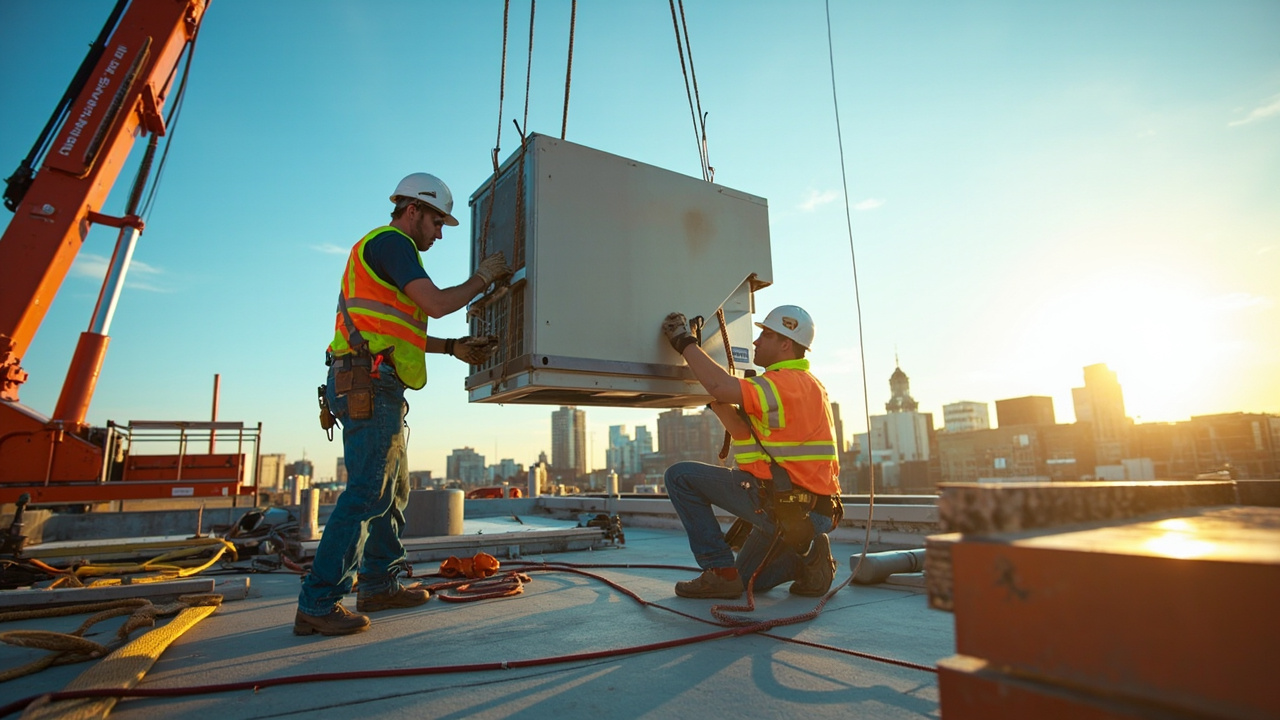
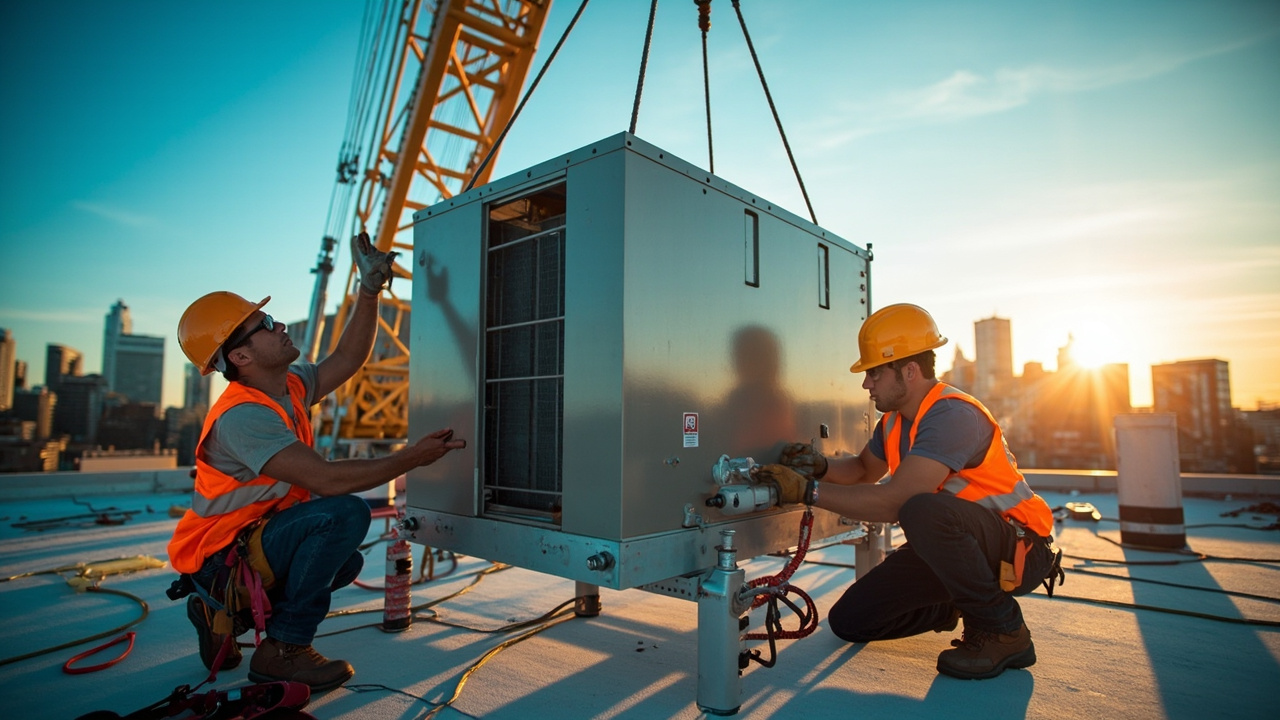
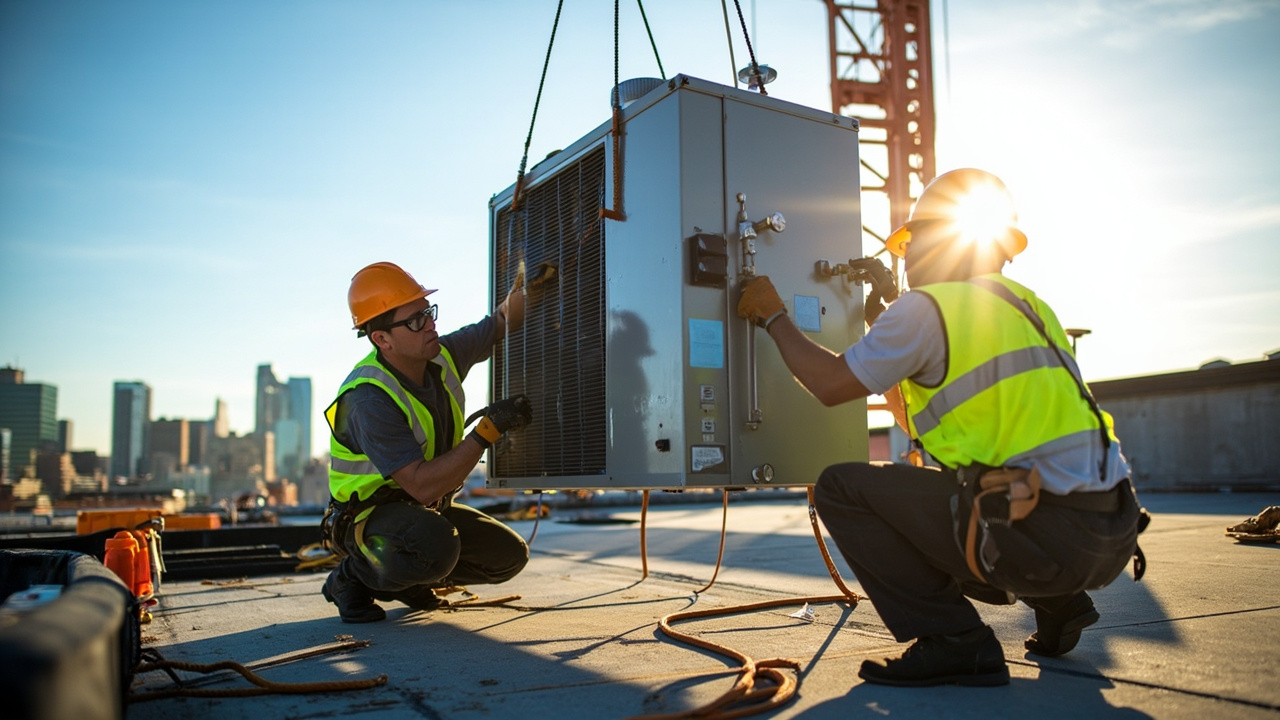
Commercial RTU install projects in Cleveland require crane logistics that account for overhead power lines, adjacent buildings, and street permits. We map lift paths two weeks in advance and secure municipal approvals for lane closures if needed. On install day, we arrive at your specified time, typically after-hours or weekends for occupied buildings. The old unit is rigged, lifted, and removed. The new RTU is set, leveled on the curb, and bolted down using seismic-rated hardware that meets Ohio Building Code Chapter 16 requirements.

Refrigerant lines are pressure-tested to 450 psi, brazed connections are leak-checked with nitrogen, and condensate drains are pitched correctly to prevent freeze damage. We rewire to the building management system if you run DDC controls, programming setpoints and scheduling logic before we leave. Start-up includes amperage verification on all motors, static pressure balancing across supply and return ducts, and airflow measurement at representative diffusers to confirm design CFM delivery.

You receive commissioning documentation that includes equipment nameplate data, refrigerant charge specs, and blower speed settings. This data matters when your facility manager troubleshoots three years later or when you sell the building and the new owner requests mechanical records.

What Happens During Your RTU Replacement

Rooftop Unit Installation in Cleveland | Minimize Downtime with Industrial-Grade RTU Replacement
01

Roof Structural Assessment

We verify your roof can support the new unit weight, typically 1,200 to 3,500 pounds depending on tonnage. Cleveland's older buildings often need curb reinforcement or load distribution. We evaluate existing curb condition, measure for dimensional match, and identify any needed flashing repairs before the crane is scheduled. This prevents installation delays and ensures code compliance with Ohio structural load requirements.
02

Crane Lift and Rigging

We coordinate crane access with street permits if required, then rig both the old and new units using spreader bars to prevent cabinet damage. The lift happens in a single mobilization to minimize cost. New RTUs are set onto the curb, leveled within 1/8 inch, and secured with stainless steel hardware. We handle all rigging, including disconnecting and capping refrigerant lines before the old unit is removed to comply with EPA Section 608 refrigerant recovery regulations.
03

System Commissioning and Testing

After electrical and gas connections are complete, we start the unit and verify operation across all modes: cooling, heating, economizer, and ventilation. We measure supply air temperature, check refrigerant subcooling and superheat, and confirm amp draw on compressors and blower motors. You receive a commissioning report with baseline performance data. This documentation is required for warranty activation and provides a reference point for future maintenance or troubleshooting diagnostics.

Why Cleveland Facilities Choose Ace HVAC Cleveland for Commercial Rooftop Systems

Cleveland's commercial building density demands contractors who understand urban logistics. You need someone who has pulled permits with the City of Cleveland Division of Building and Housing, coordinated with Dominion Energy for gas line work, and navigated crane access on East 9th Street during event days at Progressive Field. We have done all of that.

We work in the Warehouse District, Ohio City, and the eastern suburbs along I-271. We know which roofs need additional structural support because they were built before the 1989 building code revisions. We know where to source curb adapters for York, Trane, and Carrier units when your building runs a legacy system. We know how to interface new RTUs with older pneumatic controls without ripping out your entire building automation system.

Commercial rooftop HVAC installation in Cleveland also means dealing with weather windows. Lake-effect snow can close in with two hours' notice between November and March. We monitor forecasts and adjust schedules to avoid leaving your building open to the elements. If we start a tear-off, we finish it the same day. We carry tarps, temporary heaters, and backup blowers in case we need to maintain building pressure during the swap.

Ace HVAC Cleveland stocks common RTU components in our local warehouse, which matters when a control board fails on a Friday afternoon or a blower motor burns out during a cold snap. You call us, we diagnose the problem, and we pull the part from inventory instead of waiting three days for a shipment. That is the difference between a four-hour fix and a four-day shutdown.

What to Expect During Your Commercial RTU Installation

Project Timeline and Scheduling

Most commercial rooftop package unit installations take one to two days depending on unit size and access complexity. We schedule around your business hours, often working nights or weekends to avoid disrupting occupants. Lead time from contract signing to installation is typically two to four weeks, depending on equipment availability and permit processing. Crane mobilization happens in a single visit to minimize cost. We provide a detailed schedule before work begins so you can communicate downtime to tenants or employees.

Pre-Installation Site Evaluation

We conduct a roof inspection to verify structural capacity, measure existing curb dimensions, and assess electrical and gas service adequacy. This includes reviewing mechanical drawings if available and photographing the existing installation. We identify any needed ancillary work such as curb replacement, flashing repair, or electrical upgrades before the crane is scheduled. You receive a written scope of work with line-item pricing so there are no surprises on installation day. This evaluation takes one to two hours and happens within 48 hours of your inquiry.

Performance and Efficiency Outcomes

New RTU installations deliver measurable energy reduction compared to units older than ten years. Modern units include variable-speed blowers, scroll compressors, and economizer controls that reduce runtime and lower utility costs. You will notice more consistent space temperatures, quieter operation, and fewer service calls. We provide commissioning data that documents baseline performance, including airflow CFM, supply air temperature, and electrical amp draw. This data becomes your reference for future maintenance and helps you track energy savings over time.

Warranty and Ongoing Maintenance

New rooftop units include manufacturer warranties covering compressors for five to ten years and parts for one to two years. We handle warranty registration and provide you with all documentation. We recommend quarterly maintenance visits that include filter changes, coil cleaning, and refrigerant level checks. Cleveland's lake-effect environment accelerates coil corrosion, making regular maintenance critical to hitting the unit's rated 15 to 20-year lifespan. We offer maintenance agreements that lock in service rates and priority scheduling, which matters when you need a callback during peak summer or winter demand.

Frequently Asked Questions

You Have Questions,
We Have Answers

How Lake Erie Humidity Impacts Commercial RTU Lifespan in Cleveland

Cleveland sits less than ten miles from Lake Erie, which creates a humidity microclimate that accelerates corrosion on rooftop HVAC equipment. Summer dew points regularly exceed 70 degrees, meaning condensate drains run nearly 24/7 and coil fins stay wet for extended periods. Winter lake-effect snow delivers moisture-laden air that freezes on rooftop units, expanding inside cabinets and cracking drain pans. Buildings near the waterfront in Edgewater or North Collinwood experience even faster degradation due to salt spray. Commercial RTU install projects in Cleveland require corrosion-resistant coatings and upgraded drain pan materials to survive these conditions.

Ohio mechanical contractors must follow the Ohio Building Code and obtain permits through local municipalities for any rooftop unit installation exceeding five tons. Cleveland enforces strict crane operation rules within city limits, requiring certified riggers and street closure permits for lifts near public rights-of-way. Working with a contractor who understands these requirements prevents project delays and ensures your installation passes inspection the first time. Ace HVAC Cleveland maintains relationships with city inspectors and permit offices, which speeds approvals and keeps your project on schedule. Local expertise matters when your building needs to stay operational.

HVAC Services in The Cleveland Area

We are proud to serve the entire Cleveland area, and our service network extends to all surrounding communities. Our centrally located office allows us to dispatch our expert technicians quickly and efficiently to your home or business, ensuring fast response times for all your heating and cooling needs. We invite you to view our service area on the map to see if we can bring our trusted services right to your doorstep. Don't hesitate to reach out to us today to confirm if your location is within our coverage zone.

Address:
Ace HVAC Cleveland, 3095 W 25th St, Cleveland, OH, 44113

Additional Services We Offer

Our news updates

Latest Articles & News from The Blogs

How to stop indoor pool humidity from damaging your Bentleyville home If you own a luxury home with an indoor…

How to stop indoor pool humidity from damaging your Bentleyville home

How to stop indoor pool humidity from damaging your Bentleyville home If you own a luxury home with an indoor…

The best ways to heat a detached garage workshop in Middleburg Heights

The best ways to heat a detached garage workshop in Middleburg Heights Heating a detached garage workshop in Middleburg Heights…

Upgrading your PTAC wall unit in a Gold Coast condo for better efficiency

Upgrading your PTAC wall unit in a Gold Coast condo for better efficiency Living in a Gold Coast condo means…

Contact Us

Your building cannot afford extended downtime. Call (216) 530-9077 now to schedule a site evaluation and receive a detailed proposal within 48 hours. We handle permits, crane logistics, and after-hours installation to keep your operations running.