Menu

Commercial Ventilation & Exhaust Systems in Cleveland | Minimize Downtime with Industrial-Grade Air Handling Solutions

United HVAC Kansas City delivers high-capacity mechanical ventilation systems and commercial air extraction solutions engineered to keep your Cleveland facility compliant, productive, and operational without interruption.

Slider Image 1
Slider Image 2
Slider Image 3
Slider Image 4
Slider Image 5
Slider Image 7
Slider Image 8
Slider Image 9
Slider Image 10
Slider Image 11

Why Cleveland Manufacturing and Food Processing Facilities Need Properly Sized Exhaust Systems

Cleveland's industrial corridor runs through zones where legacy buildings meet modern production demands. Many facilities along the Cuyahoga River and in the Flats were built before current ASHRAE standards existed. You are managing air quality inside structures that were never designed for the heat load, chemical offgassing, or particulate generation your operation produces today.

When your commercial ventilation systems cannot match your actual air exchange requirements, you face three immediate problems. First, your team works in conditions that reduce productivity and increase turnover. Second, you risk failing Ohio EPA inspections tied to volatile organic compound limits or particulate emissions. Third, you burn energy moving air inefficiently, which inflates your utility spend without improving conditions.

Cleveland's freeze-thaw cycles and high summer humidity create additional pressure. Improperly balanced industrial exhaust solutions pull conditioned air out faster than your HVAC system can replace it, forcing your equipment to work harder. You pay for heating and cooling that exits through undersized or poorly placed exhaust hoods. Commercial air extraction that was sufficient five years ago may no longer handle increased line speeds or new product formulations. If your ventilation system was installed before you added welding stations, powder coating lines, or steam processes, you are likely operating outside design parameters. That gap costs you money every month and increases liability exposure when air quality complaints surface.

Why Cleveland Manufacturing and Food Processing Facilities Need Properly Sized Exhaust Systems
How We Engineer Mechanical Ventilation Systems for Real-World Industrial Environments

How We Engineer Mechanical Ventilation Systems for Real-World Industrial Environments

We do not sell equipment first and calculate airflow second. Our process starts with thermal mapping and contaminant load analysis specific to your facility layout and production schedule. We measure your current air changes per hour, identify dead zones where contaminants accumulate, and test static pressure across your existing ductwork. This data determines whether you need more capacity, better distribution, or both.

For facilities in Cleveland's industrial zones, we account for building envelope challenges common to older construction. Many structures have brick or block exteriors with minimal insulation and single-pane industrial windows. We calculate makeup air requirements based on your actual infiltration rates, not theoretical values from a catalog. If your building loses conditioned air through loading dock seals or poorly fitted overhead doors, we factor that into system sizing so your industrial air handling equipment maintains consistent pressure differentials.

We specify direct-drive plenum fans for applications requiring constant volume and variable frequency drives where your production schedule demands flexibility. For chemical processing or finishing operations, we design dedicated exhaust paths that prevent cross-contamination between work zones. If your process generates heat, moisture, and particulate simultaneously, we separate capture strategies so each pollutant type receives appropriate treatment before discharge. Our ductwork layouts minimize elbow counts and transition losses, which reduces fan horsepower requirements and lowers your operating cost. We also coordinate with your existing building automation system so ventilation ramps up and down with production activity instead of running full speed during second and third shifts when only maintenance crews are present.

How Commercial Exhaust System Installation Unfolds in Cleveland Facilities

Commercial Ventilation & Exhaust Systems in Cleveland | Minimize Downtime with Industrial-Grade Air Handling Solutions
01

Site Assessment and Load Calculation

We conduct a detailed walkthrough of your production floor, document all heat and contaminant sources, and measure existing airflow at critical points. Our team reviews your facility layout drawings, identifies structural constraints, and calculates the total exhaust volume required to meet OSHA permissible exposure limits and local air district rules. This assessment determines whether your project requires rooftop exhaust fans, wall-mounted units, or inline duct boosters to achieve target air changes per hour.
02

System Design and Equipment Specification

We engineer ductwork routing that avoids interference with overhead cranes, sprinkler mains, and existing electrical conduit. Our designs specify fan models based on your building's available voltage and required static pressure. For applications involving corrosive fumes or high-temperature exhaust, we select materials like stainless steel or coated galvanized steel that extend service life. We submit drawings for your review and adjust based on operational feedback before ordering equipment.
03

Installation and System Commissioning

Our crew installs exhaust fans, ductwork, and makeup air units during scheduled downtime to avoid production interruptions. After installation, we balance the system by measuring airflow at each hood and adjusting dampers to achieve design velocity. We test all safety interlocks, verify that exhaust fans activate when process equipment starts, and train your maintenance staff on filter replacement schedules and basic troubleshooting. You receive documentation showing actual measured performance against design specifications.

Why Cleveland Facility Managers Choose Local Expertise for Industrial Ventilation Projects

Cleveland's industrial landscape includes food processing plants near the West Side Market, metal fabrication shops in the Old Brooklyn neighborhood, and chemical distributors operating in the Port of Cleveland industrial area. Each zone presents distinct challenges tied to building age, proximity to residential areas, and local permitting requirements. We know which Cleveland Building Department inspectors focus on duct penetration fire stopping and which require third-party commissioning reports for air balance verification.

Our familiarity with Ohio's manufacturing sector means we understand the operational realities you face. We have installed commercial air extraction systems in facilities that run 24/7 and cannot afford multi-day shutdowns for equipment installation. We schedule work around your production calendar, prefabricate ductwork offsite to reduce installation time, and coordinate with your electrical contractor to ensure power is available when exhaust fans arrive. If your project requires a variance from local noise ordinances due to rooftop fan placement, we provide the sound level data and mitigation plans that Cleveland's Department of Public Health expects to see.

We also recognize that ventilation projects often uncover other issues. When we open ceilings to run new ductwork, we identify deteriorating roof membranes, undersized electrical feeders, or structural concerns that need attention. Instead of walking away from complications, we coordinate with your other contractors to solve problems efficiently. Our goal is to deliver a system that works correctly the first time and supports your operation for the next 15 years without requiring major modifications.

What to Expect When You Upgrade Your Facility's Ventilation Capacity

Project Timeline and Disruption Management

Most commercial ventilation upgrades require four to eight weeks from initial assessment to final commissioning, depending on equipment lead times and the complexity of ductwork routing. We complete the majority of installation work during weekends or night shifts to avoid interrupting your production schedule. For facilities that cannot tolerate any downtime, we stage the project in phases so only one work area goes offline at a time. You receive a detailed timeline before work begins, and we update you immediately if equipment delivery or permitting delays affect the schedule. Our project managers coordinate with your operations team to ensure material deliveries do not block loading docks or interfere with shipping schedules.

Initial Evaluation and Airflow Testing

We measure air velocity at existing exhaust points using calibrated hot-wire anemometers and calculate actual cubic feet per minute against your equipment manufacturer recommendations. Our evaluation includes thermal imaging to identify areas where heat accumulates and direct-reading instruments to measure carbon monoxide, volatile organic compounds, or particulate concentrations if your process involves combustion or chemical use. We document static pressure drop across filters and ductwork to determine whether poor performance stems from undersized fans or accumulated debris. You receive a written report that identifies deficiencies, explains code compliance gaps, and outlines options for correcting airflow imbalances.

System Performance and Energy Efficiency

Properly designed industrial exhaust solutions reduce energy waste by matching airflow to actual process demands. Variable frequency drives allow fans to ramp down during low-production periods, which cuts motor amperage and reduces noise. Demand-controlled ventilation ties exhaust fan speed to real-time air quality sensors, so you only move the air volume necessary to maintain safe conditions. Heat recovery options capture waste heat from exhaust streams and preheat incoming makeup air, which lowers your gas or electric heating costs during Cleveland's winter months. We provide energy consumption estimates based on your utility rates so you can calculate payback periods for efficiency upgrades.

Maintenance Planning and Long-Term Support

Industrial ventilation systems require routine maintenance to sustain performance. We recommend quarterly filter inspections, semiannual belt tension checks, and annual motor bearing lubrication to prevent unplanned failures. For facilities without in-house mechanical staff, we offer service agreements that include scheduled maintenance visits and priority response for breakdowns. Our technicians carry common replacement parts like fan belts, motor capacitors, and damper actuators to minimize downtime when components fail. We also provide operator training so your team understands how to adjust dampers, clean filters, and recognize early warning signs like increased motor amperage or reduced airflow that indicate developing problems.

Frequently Asked Questions

You Have Questions,
We Have Answers

What is an exhaust ventilation system? +

An exhaust ventilation system removes stale air, moisture, and contaminants from your building by using mechanical fans to create negative pressure. The system pulls indoor air out through designated exhaust points while fresh air enters passively through vents or cracks. Commercial facilities in Cleveland use these systems in restrooms, kitchens, manufacturing areas, and laboratories to maintain code compliance and indoor air quality. The negative pressure prevents odors and pollutants from migrating to other zones. Properly sized exhaust systems reduce liability risks, protect equipment from moisture damage, and ensure your facility meets Ohio building codes.

How much does a whole-house ventilation system cost? +

Whole-house ventilation systems vary widely based on system type, building size, and integration complexity. Energy recovery ventilators and heat recovery ventilators cost more upfront but reduce operating expenses in Cleveland's climate by pre-conditioning incoming air. Simple exhaust-only systems run less initially but increase heating and cooling loads during harsh winters and humid summers. Commercial installations require load calculations, ductwork modifications, and often controls integration. Factor in ongoing maintenance, filter replacements, and energy consumption when evaluating total ownership costs. Request detailed proposals that specify equipment efficiency ratings and projected operational expenses.

What are the four types of ventilation systems? +

The four main ventilation systems are natural, exhaust-only, supply-only, and balanced. Natural ventilation relies on passive airflow through windows and vents. Exhaust-only systems use fans to pull air out while replacement air enters passively. Supply-only systems push filtered air in while stale air exits through leaks and vents. Balanced systems use dedicated fans for both supply and exhaust, maintaining neutral pressure. Cleveland commercial buildings often require balanced systems with energy recovery to handle winter heating loads and summer humidity efficiently while maintaining proper pressurization and meeting ventilation codes.

What are the three types of exhaust systems? +

The three exhaust system categories are point-source, centralized, and dilution ventilation. Point-source systems capture contaminants at the generation point, like kitchen hoods or welding fume extractors. Centralized systems collect air from multiple locations through ductwork to a single discharge point, common in restrooms and locker rooms. Dilution ventilation introduces fresh air to reduce contaminant concentration rather than capturing at the source. Cleveland industrial facilities often combine all three types based on process requirements, air quality regulations, and building layout. Proper selection prevents cross-contamination and ensures code compliance.

How much should it cost to replace an exhaust? +

Exhaust system replacement costs depend on equipment type, accessibility, ductwork condition, and capacity requirements. Commercial kitchen hood systems differ significantly from industrial process exhaust in complexity and price. Factor in electrical upgrades, structural supports, roof penetrations, and fire suppression integration. Cleveland projects often require additional weatherproofing around roof-mounted units due to freeze-thaw cycles and ice damming. Replacing corroded ductwork adds substantial expense. Code compliance, permitting, and required inspections also impact total project costs. Get multiple detailed quotes that itemize labor, materials, permits, and post-installation testing.

How much does it cost to replace an exhaust vent? +

Exhaust vent replacement costs vary based on location, vent type, and roof condition. Roof-mounted vents in Cleveland require proper flashing and ice dam prevention measures. Bathroom and dryer vents are simpler replacements than commercial kitchen or laboratory exhaust terminations. Wall penetrations need weatherproofing against wind-driven rain. Corroded vent caps or damaged ductwork require additional repairs. Commercial facilities may need specialized vents with backflow prevention, fire dampers, or explosion-proof housings. Account for access equipment, structural reinforcement, and code-compliant installation. Request proposals that include weatherproofing materials suitable for Northeast Ohio conditions.

How much is HVAC for a 2000 square-foot house? +

HVAC system costs for commercial spaces depend on system type, zoning requirements, efficiency ratings, and building use. A 2000-square-foot office needs different equipment than a restaurant or warehouse. Cleveland's climate demands systems that handle both heating loads during subzero winters and dehumidification during humid summers. Multi-zone systems, ductwork modifications, and controls integration add expense. High-efficiency equipment costs more upfront but reduces operating expenses and may qualify for utility rebates. Factor in installation complexity, electrical service upgrades, and permit fees. Commercial projects require load calculations and detailed engineering.

What is the best ventilation system for a house? +

The best ventilation system depends on your building type, occupancy, and budget. Balanced systems with energy recovery offer superior performance in Cleveland's climate by pre-conditioning incoming air, reducing heating and cooling loads. Commercial facilities benefit from dedicated outdoor air systems paired with high-efficiency HVAC equipment. Industrial spaces may require specialized exhaust for process ventilation. Proper system selection requires load calculations, indoor air quality analysis, and code review. Consider operating costs, maintenance requirements, and integration with existing building systems. Work with engineers who understand Northeast Ohio climate challenges and commercial ventilation standards.

What is the $5000 rule for HVAC? +

The 5000 rule suggests replacing HVAC equipment when repair costs multiplied by the system age in years exceed 5000. If a repair costs 500 dollars on a 12-year-old system, that equals 6000, suggesting replacement makes better financial sense. This rule helps commercial property managers make informed decisions about aging equipment. However, factor in business disruption costs, efficiency gains from new equipment, utility rebates, and remaining useful life. Cleveland businesses should also consider refrigerant phaseouts and code changes that may require upgrades anyway. Evaluate total cost of ownership beyond simple repair math.

What are signs of poor air ventilation? +

Poor ventilation shows up as persistent odors, excessive humidity, visible mold growth, stuffy air, and increased employee complaints about headaches or fatigue. Cleveland commercial buildings may experience condensation on windows during winter, indicating inadequate air exchange. Dust accumulation, uneven temperatures between zones, and difficulty maintaining comfortable conditions signal ventilation problems. Industrial facilities see increased product defects or corrosion. Restaurants notice lingering cooking odors in dining areas. High carbon dioxide levels measured during occupancy confirm insufficient fresh air. Poor ventilation increases liability exposure, reduces productivity, and accelerates building deterioration.

How Cleveland's Industrial Legacy Buildings Complicate Modern Ventilation Upgrades

Many Cleveland manufacturing facilities occupy structures built between 1920 and 1960, when mechanical ventilation meant opening windows and relying on natural convection. These buildings feature heavy timber roof decking, brick curtain walls, and minimal ceiling height. Retrofitting modern exhaust systems into these spaces requires creative routing to avoid structural columns and low-clearance areas. Rooftop exhaust fans must account for snow loads and wind exposure common to Cleveland's location on Lake Erie's southern shore. We routinely coordinate with structural engineers to verify that existing roof framing can support new equipment without requiring costly reinforcement.

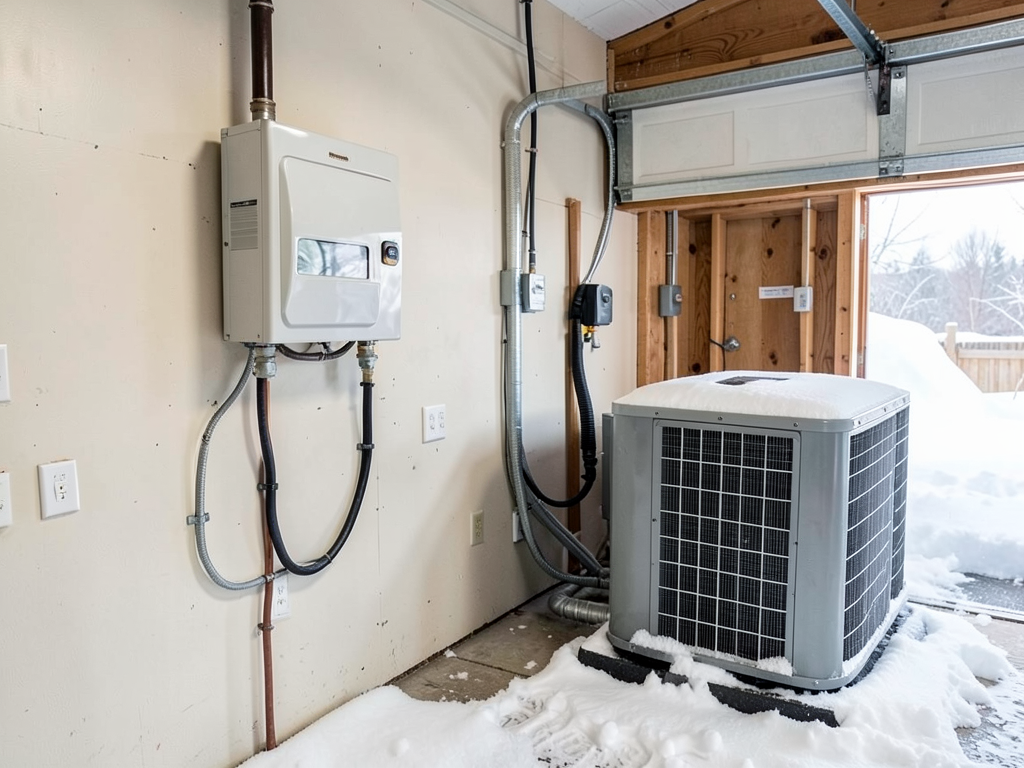
HVAC Services in The Cleveland Area

We are proud to serve the entire Cleveland area, and our service network extends to all surrounding communities. Our centrally located office allows us to dispatch our expert technicians quickly and efficiently to your home or business, ensuring fast response times for all your heating and cooling needs. We invite you to view our service area on the map to see if we can bring our trusted services right to your doorstep. Don't hesitate to reach out to us today to confirm if your location is within our coverage zone.

Address:
Ace HVAC Cleveland, 3095 W 25th St, Cleveland, OH, 44113

Additional Services We Offer

Our news updates

Latest Articles & News from The Blogs

Why Your Oakwood Village Home Feels Dusty Even After You Clean the Floors \n\n Your floors sparkle. Your shelves shine.…

Why your Oakwood Village home feels dusty even after you clean the floors

Why Your Oakwood Village Home Feels Dusty Even After You Clean the Floors \n\n Your floors sparkle. Your shelves shine.…

Navigating historical society rules for exterior HVAC units in Gates Mills

Navigating historical society rules for exterior HVAC units in Gates Mills Installing an exterior HVAC unit in Gates Mills requires…

Keeping your pets safe from heat stroke when your Walton Hills AC fails

Keeping your pets safe from heat stroke when your Walton Hills AC fails When the air conditioning goes out during…

Contact Us

Stop losing money to inefficient exhaust systems. Call (216) 530-9077 now to schedule an airflow assessment and receive a detailed proposal for upgrading your commercial ventilation capacity. We respond to Cleveland facilities within 24 hours.