Menu

Outdoor Unit Not Spinning in Cleveland – Get Expert Diagnostics and Same-Day Repairs

When your outdoor unit fan stops running, you need accurate diagnosis and fast repairs to prevent compressor failure. Ace HVAC Cleveland identifies the exact cause of outdoor unit not spinning and restores your cooling system quickly.

Slider Image 1
Slider Image 2
Slider Image 3
Slider Image 4
Slider Image 5
Slider Image 7
Slider Image 8
Slider Image 9
Slider Image 10
Slider Image 11

Why Your AC Condenser Fan Stopped Working in Cleveland

You walk outside and notice something wrong. The outdoor unit sits silent when it should be humming. No fan blade movement. No air flow. Just dead silence while your indoor temperature climbs.

This is not a minor inconvenience. When your condenser fan stops spinning, your compressor runs without proper heat dissipation. The refrigerant cannot release absorbed heat. Your system works harder, costs more to run, and risks catastrophic compressor failure within hours.

Cleveland's humid summer climate makes this worse. High humidity loads force your AC to work harder than systems in dry climates. When the outside AC fan stops turning, refrigerant pressures spike. The compressor overheats. Internal components start breaking down.

The causes vary. Capacitor failure tops the list. This small cylindrical component provides the electrical jolt needed to start the fan motor. Cleveland's temperature swings from freezing winters to 90-degree summers wear capacitors down faster than moderate climates. They simply fail.

Motor bearings seize from age and lack of maintenance. Debris clogs the fan blades. Electrical contactors pit and fail. The fan blade itself can crack or come loose from the motor shaft.

Each cause creates the same symptom. Your air conditioner outdoor fan stops running. The compressor keeps working. Heat builds. Pressure climbs. Damage accumulates every minute the fan stays still.

You need diagnosis now. Waiting turns a $200 capacitor replacement into a $2,500 compressor swap. The condenser fan not spinning is an urgent problem that demands immediate attention.

Why Your AC Condenser Fan Stopped Working in Cleveland
How We Diagnose and Fix Non-Spinning Condenser Fans

How We Diagnose and Fix Non-Spinning Condenser Fans

We do not guess. Guessing wastes your money and leaves problems unresolved.

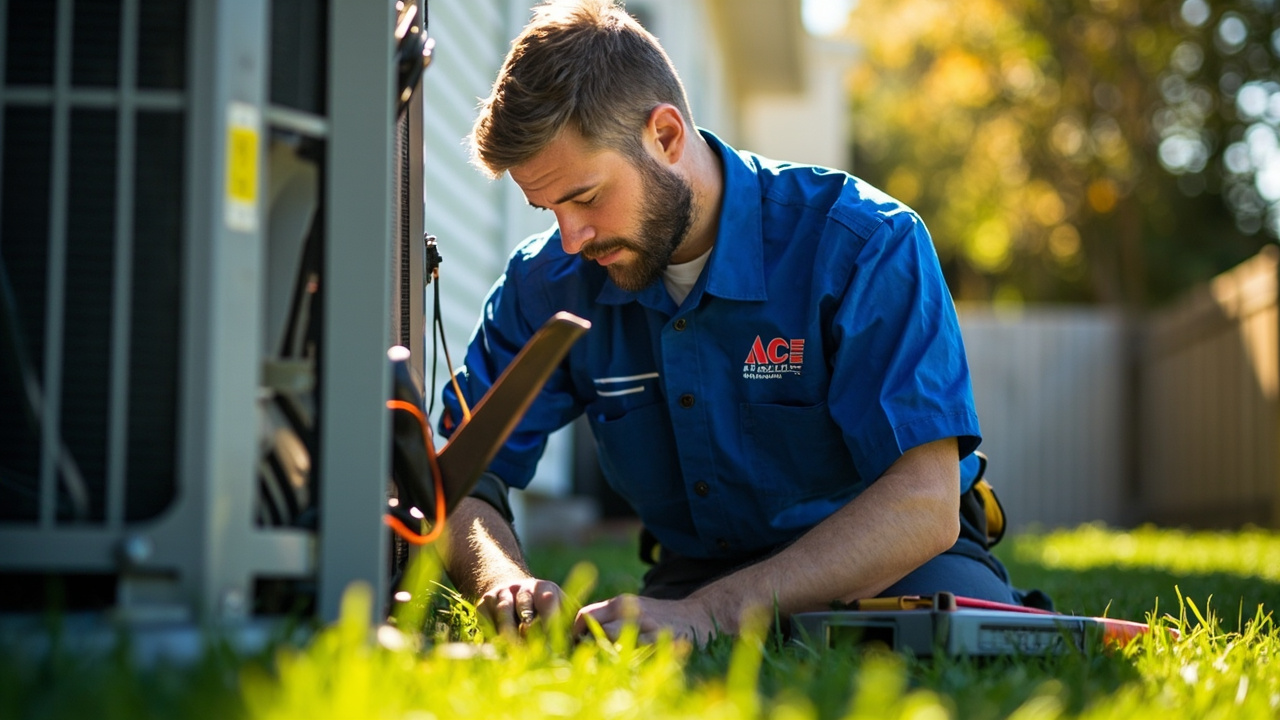
Our diagnostic process starts with visual inspection. We check the fan blade for physical obstructions, cracks, or loose mounting. A simple debris jam gets cleared in seconds. A cracked blade gets replaced immediately.

Next comes electrical testing. We use multimeters to measure capacitor microfarad ratings against manufacturer specifications. Capacitors fail gradually. A capacitor reading 30 microfarads when it should read 45 will not start the motor reliably. We catch degradation before total failure.

We test the fan motor windings for continuity and resistance. A motor with infinite resistance has open windings. It needs replacement. A motor with low resistance has shorted windings. Also replacement.

We inspect the contactor that sends power to the fan motor. Pitted contacts create resistance and heat. Arc marks indicate electrical problems. We test voltage at the contactor terminals under load conditions to verify proper power delivery.

We check the control board signals. The board tells the contactor to engage. If the board fails to send the signal, the contactor never closes. The fan never runs. We trace the circuit to find the breakdown point.

Temperature matters. We use infrared thermometers to check compressor shell temperature. If the compressor runs above 250 degrees, we shut the system down immediately. Continued operation will destroy the compressor.

Our repairs match the diagnosis. Failed capacitors get replaced with exact-match components rated for Cleveland's climate extremes. Seized motors get swapped with OEM or equivalent replacements. Damaged contactors get upgraded to heavy-duty versions that last longer.

We verify repairs under full load. The fan must spin at correct RPM. Air flow must meet specifications. Refrigerant pressures must stabilize in normal ranges.

What Happens During Your Condenser Fan Repair

Outdoor Unit Not Spinning in Cleveland – Get Expert Diagnostics and Same-Day Repairs
01

Emergency Diagnostic Call

You call and describe the problem. We ask specific questions about symptoms, sounds, and system behavior. We dispatch a technician within two hours for same-day service. Our trucks carry the most common replacement parts for condenser fan failures, including capacitors in all standard ratings, contactors, and fan motors for major brands. This eliminates return trips and gets your system running faster.
02

Complete System Testing

Our technician arrives and performs full electrical diagnostics on your outdoor unit. We test voltage, amperage, and capacitance at every connection point. We inspect the compressor for damage and check refrigerant pressures. We identify the exact failed component causing your outdoor unit fan to stop spinning. You get a clear explanation of the problem, the fix, and the cost before any repair work begins.
03

Repair and Verification

We replace the failed component and test the complete system under operating conditions. The condenser fan must spin at proper speed. Air flow must be adequate across the condenser coils. Refrigerant pressures must stabilize. Indoor temperatures must drop. We monitor the repair for 15 minutes to confirm stable operation before leaving your property. You get cooling restored the same day we arrive.

Why Cleveland Homeowners Choose Ace HVAC for Condenser Fan Repairs

You need someone who understands how Cleveland's climate affects HVAC components. We service equipment in Ohio City, Tremont, Detroit-Shoreway, and every neighborhood across the greater Cleveland metro. We know how lake-effect humidity accelerates capacitor degradation. We know how freeze-thaw cycles stress electrical connections. We know which components fail first in local conditions.

We stock parts for the brands installed in Cleveland homes. Carrier, Trane, Lennox, Goodman, Rheem. We maintain inventory of capacitors in every common rating from 5 to 80 microfarads. We carry single-phase and three-phase contactors. We have fan motors for standard residential condensers and commercial rooftop units.

This matters when your outside AC fan stops turning on a 90-degree afternoon. We fix it today. Not tomorrow after ordering parts. Not next week when the warehouse delivers. Today.

Our technicians train continuously on diagnostic procedures and new equipment. They understand electrical theory, refrigeration cycles, and control systems. They can troubleshoot complex problems that stump less-experienced techs.

We do not sell you components you do not need. If your fan motor tests good and the capacitor failed, you get a capacitor. Not a motor. Not a full outdoor unit replacement. Just the repair that solves your problem.

We work on commercial systems too. When a business loses cooling, every hour costs money. Lost productivity. Uncomfortable employees. Customers who leave. We prioritize commercial emergency calls and dispatch technicians with commercial-grade parts and tools.

Cleveland business owners in Flats East Bank, Warehouse District, and downtown rely on us for fast commercial repairs. We understand business continuity matters more than residential comfort. We work after-hours to minimize disruption.

You get honest answers. If your compressor sustained damage from running without a working condenser fan, we tell you. We explain repair versus replacement economics. We give you information to make smart decisions.

What You Can Expect From Our Condenser Fan Repair Service

Same-Day Emergency Response

When your air conditioner outdoor fan is not running, you need help now. We dispatch technicians within two hours of your call during business hours. Emergency service is available seven days per week during cooling season. Our techs arrive in fully-stocked trucks ready to diagnose and repair your system on the first visit. We do not schedule callbacks for parts we should already have. Most condenser fan repairs get completed within 90 minutes of arrival.

Thorough Electrical Diagnosis

We perform complete electrical testing before any repair. Capacitance gets measured with precision meters. Motor windings get tested for opens and shorts. Contactors get inspected for pitting and damage. Control boards get tested for proper signal output. You receive clear explanation of what failed, why it failed, and how we will fix it. We identify secondary problems that could cause future failures. You get a complete picture of your system condition, not just a bandaid repair.

Proper Component Replacement

We install exact-match or superior-quality replacement components. Capacitors must match the microfarad and voltage ratings specified by your equipment manufacturer. Fan motors must match horsepower, RPM, and shaft specifications. Contactors must handle your system's electrical load with safety margin. We do not use cheap aftermarket parts that fail prematurely. We use OEM components or upgraded versions that outlast original equipment. Your repair gets done right the first time.

System Performance Verification

After repairs, we monitor your system under operating conditions. The condenser fan must spin consistently without hesitation. Air flow must move properly across condenser coils. Refrigerant pressures must stabilize within manufacturer specifications. Compressor amperage must stay within normal ranges. Indoor temperature must begin dropping within minutes. We stay on site long enough to confirm stable operation. You get documentation of all test readings and repairs performed for your maintenance records.

Frequently Asked Questions

You Have Questions,
We Have Answers

Why is my outside AC not spinning? +

Your outside AC unit stops spinning due to several common issues. A blown capacitor is the most frequent culprit, especially in Cleveland's humid summers where units work overtime. The capacitor stores energy to start the fan motor. A tripped breaker, burned-out motor, or seized bearings also prevent spinning. Debris like leaves and cottonwood seeds, common in Northeast Ohio, can jam the blades. Extreme temperature swings from our freeze-thaw cycles stress electrical components. Never attempt to manually spin the blades while power is on. Turn off your system and call a technician to diagnose the exact cause before the compressor overheats.

What is the problem if the fan is not spinning? +

When the fan does not spin, your AC cannot expel heat from the refrigerant, which means your home stays warm. The compressor continues running without airflow, causing it to overheat and potentially fail. This is expensive damage. The problem stems from electrical failure like a bad capacitor or contactor, mechanical failure like seized bearings, or a burned motor. In Cleveland's muggy climate, capacitors wear out faster due to constant cycling. Your thermostat still calls for cooling, but the outdoor unit cannot complete the heat exchange process. This creates a domino effect that can destroy your compressor if ignored.

Why is my AC unit humming but not spinning? +

A humming outdoor unit signals electrical power reaching the system, but mechanical failure preventing movement. The compressor attempts to start, creating that humming sound. A failed start capacitor is the prime suspect. This component gives the motor the voltage boost needed to overcome inertia. Without it, the motor hums but cannot turn. Cleveland's temperature extremes degrade capacitors quickly. A locked rotor from seized bearings, failed contactor, or motor windings also cause humming. This situation draws excessive amperage, tripping breakers or damaging the compressor. Shut down your system immediately to prevent a total compressor failure, which costs thousands to replace.

How to fix AC unit outside fan not working? +

First, turn off power at both the thermostat and the outdoor disconnect box. Check your breaker panel for trips. Clear debris from around the unit and inside the fan housing. Cottonwood seeds and leaves clog Cleveland units every spring and fall. Never manually spin the blades with power on. If the capacitor is bulging, leaking, or corroded, it needs replacement. This is a quick fix for a technician. Motor replacements take longer. If you hear grinding or the shaft does not turn freely, the bearings are seized. Contact a licensed HVAC technician to diagnose electrical and mechanical issues safely. DIY repairs risk electrocution or further damage.

How much does it cost to fix a AC fan not spinning? +

Capacitor replacement typically runs between $150 and $400, depending on the type and service call fees. This is the most common fix. Fan motor replacement costs between $300 and $700 for parts and labor. Compressor damage from delayed repairs can exceed $2,000. Prices in the Cleveland metro vary by company and equipment accessibility. Older units may need additional parts. Emergency service costs more than scheduled repairs. Many factors affect your final bill, the unit's age, warranty status, refrigerant type, and accessibility. Get multiple quotes. Preventative maintenance catches capacitor wear before failure, avoiding emergency pricing and preventing compressor damage from overheating.

What is the 3 minute rule for AC? +

The 3 minute rule prevents short cycling damage to your compressor. After your AC shuts off, wait at least 3 minutes before restarting. This allows refrigerant pressures to equalize between the high and low sides of the system. Starting too soon forces the compressor to work against unbalanced pressure, straining the motor and start components. The capacitor must overcome significantly more resistance. In Cleveland's humid climate where units cycle frequently, ignoring this rule accelerates wear on electrical components. If your thermostat rapidly cycles, you have a bigger problem. Short cycling indicates sizing issues, refrigerant problems, or thermostat failure requiring professional diagnosis.

Should I turn off my AC if the fan isn't spinning? +

Yes, turn off your AC immediately if the outdoor fan stops spinning. The compressor continues pumping refrigerant without airflow to cool it, causing overheating. This leads to compressor failure, which costs thousands to replace. Your electric bill also spikes because the system runs continuously without cooling your home. Cleveland's summer heat makes this failure even more stressful. Turn off the system at your thermostat, then flip the disconnect switch outside. Call a technician the same day. Running the system creates cascading damage. The compressor is the most expensive component. Protecting it from heat damage saves you significant money and prevents a full system replacement.

How to get a fan to spin again? +

Do not attempt to manually spin the fan yourself. If power is on, you risk electrocution or serious injury. Shut off power at the disconnect box and breaker panel first. Check for debris jamming the blades. Remove any leaves, cottonwood seeds, or trash blocking movement. If the fan spins freely by hand when power is off, the motor or capacitor failed. If it does not spin freely, bearings are seized or the motor is locked. These require professional repair. Never force a stuck fan. You can bend the blades or damage the motor shaft. Call a licensed technician to replace failed components safely and correctly.

Can you spray WD-40 in a fan motor? +

No, never spray WD-40 into an AC fan motor. WD-40 is not a lubricant for electric motors and attracts dust, creating sludge that damages bearings faster. Modern sealed motors do not require lubrication. Older motors with oil ports use specific electric motor oil, not penetrating spray. WD-40 can damage motor windings and insulation, causing electrical shorts. Cleveland's humidity already stresses motors. Adding petroleum products accelerates failure. If your motor needs lubrication, it likely needs replacement instead. Sealed bearings cannot be serviced. A grinding noise means bearing failure. Contact a technician for proper motor service or replacement rather than attempting quick fixes.

How to tell if an outside AC fuse is blown? +

Check the disconnect box mounted on the wall near your outdoor unit. Pull out the block and inspect the cartridge fuses. A blown fuse shows a broken internal wire visible through the glass, or the glass appears blackened. Some fuses are ceramic and require a multimeter to test for continuity. If you lack electrical experience, do not test live circuits. Reset the breaker inside your home first, as this is more common. Fuses blow due to electrical surges, short circuits, or compressor failure drawing excessive amperage. Cleveland's summer storms cause power fluctuations that blow fuses. Replace fuses with the exact same amperage rating. Repeated failures indicate a serious electrical problem requiring professional diagnosis.

How Cleveland's Lake Erie Humidity Accelerates Condenser Fan Component Failure

Cleveland sits on Lake Erie's southern shore. This location creates persistent high humidity that attacks electrical components inside your outdoor unit. Capacitors fail faster in humid environments because moisture penetrates the dielectric material and causes internal breakdown. Electrical contactors corrode and pit from exposure to humid air carrying industrial pollutants from Cleveland's manufacturing areas. Motor bearings rust and seize when moisture enters through worn seals. Your AC condenser fan components wear out faster here than they would in dry climates. Regular maintenance and quick repairs prevent cascading failures that destroy expensive compressors.

Ace HVAC Cleveland specializes in diagnosing and repairing HVAC systems in local humidity conditions. We understand which components fail first in Cleveland's climate. We stock parts specifically for equipment operating near Lake Erie. Our technicians service homes in Lakewood, Cleveland Heights, Shaker Heights, and every neighborhood from the lakeshore to southern suburbs. We know local installation practices and common problem patterns in Cleveland's housing stock. When your outdoor unit stops spinning, you need someone who understands local conditions and has the right parts ready.
HVAC Services in The Cleveland Area

We are proud to serve the entire Cleveland area, and our service network extends to all surrounding communities. Our centrally located office allows us to dispatch our expert technicians quickly and efficiently to your home or business, ensuring fast response times for all your heating and cooling needs. We invite you to view our service area on the map to see if we can bring our trusted services right to your doorstep. Don't hesitate to reach out to us today to confirm if your location is within our coverage zone.

Address:
Ace HVAC Cleveland, 3095 W 25th St, Cleveland, OH, 44113

Additional Services We Offer

Our news updates

Latest Articles & News from The Blogs

How to stop indoor pool humidity from damaging your Bentleyville home If you own a luxury home with an indoor…

How to stop indoor pool humidity from damaging your Bentleyville home

How to stop indoor pool humidity from damaging your Bentleyville home If you own a luxury home with an indoor…

The best ways to heat a detached garage workshop in Middleburg Heights

The best ways to heat a detached garage workshop in Middleburg Heights Heating a detached garage workshop in Middleburg Heights…

Upgrading your PTAC wall unit in a Gold Coast condo for better efficiency

Upgrading your PTAC wall unit in a Gold Coast condo for better efficiency Living in a Gold Coast condo means…

Contact Us

Your compressor is at risk every minute the fan stays still. Call Ace HVAC Cleveland now at (216) 530-9077 for same-day diagnosis and repair. We answer calls seven days per week and dispatch technicians fast. Stop the damage before it costs thousands.