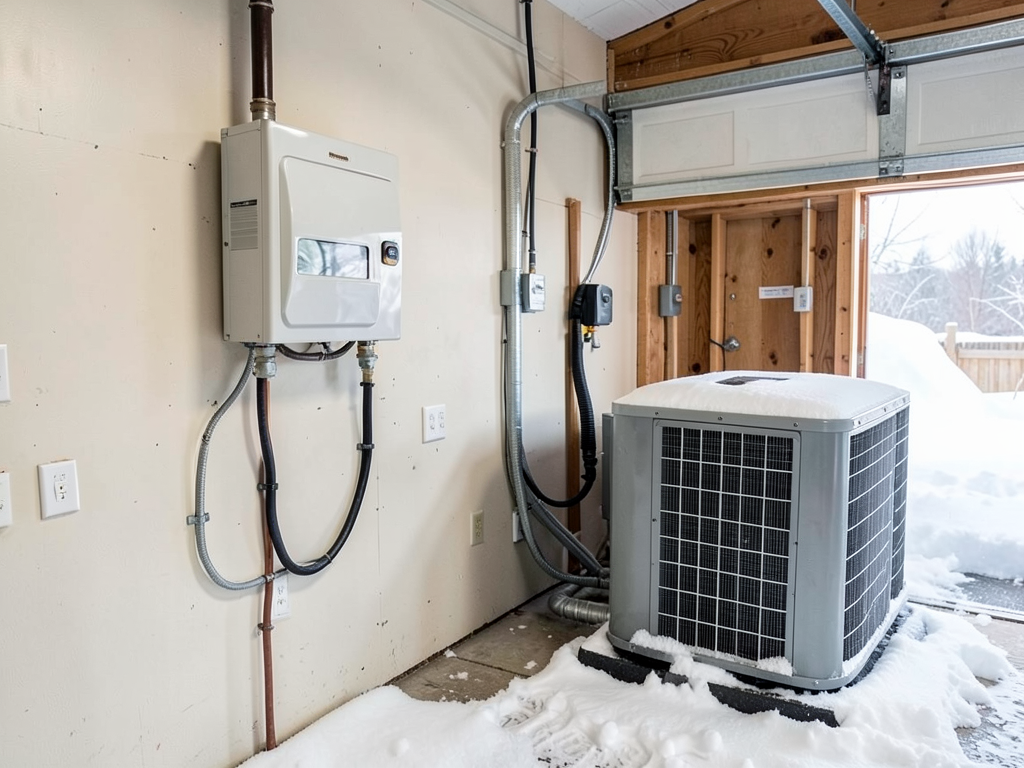
Cleveland sits in the primary lake effect snow belt off Lake Erie. Arctic air crosses the open water, picks up moisture, and dumps heavy snow from November through February. This pattern creates rapid temperature drops and sustained subzero cold snaps that force furnaces to run 18 to 20 hours per day. Continuous operation stresses aging components. Ignitors crack from thermal cycling. Heat exchangers develop hairline fractures. Blower motors overheat. The highest concentration of emergency holiday furnace repair calls happens during multi-day cold events when systems never get a break. If your furnace is over 15 years old, the odds of holiday failure increase substantially during lake effect storms.
Cleveland's older housing stock compounds the problem. Many homes built before 1980 lack proper insulation and air sealing. Heat loss happens faster, forcing furnaces to work harder. Undersized ductwork and inadequate return air create pressure imbalances that shorten equipment life. Local HVAC companies understand these regional challenges. We account for Cleveland's climate when diagnosing failures and recommending solutions. A furnace that works fine in Atlanta will struggle here. You need technicians who understand how lake effect winters kill HVAC systems and how to repair them under pressure. That local knowledge matters when you're freezing on Christmas morning.