
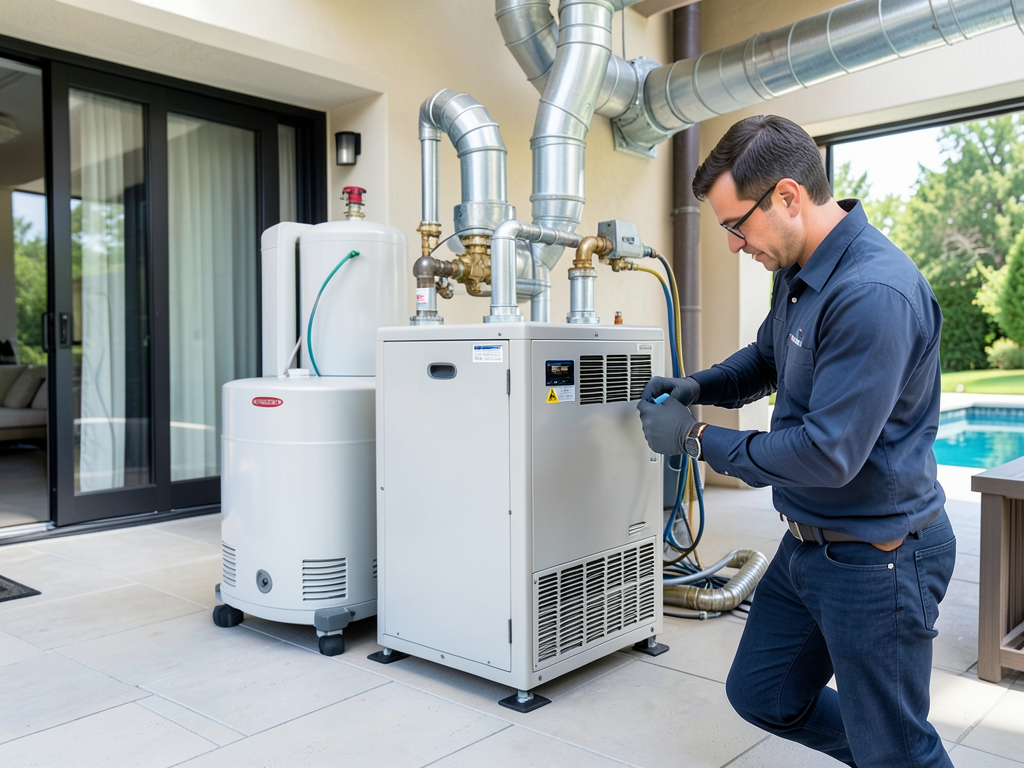
How to stop indoor pool humidity from damaging your Bentleyville home
If you own a luxury home with an indoor pool in Bentleyville, Ohio, you’re facing a hidden threat that can destroy your investment. Indoor pool humidity creates massive moisture loads that can warp wood, peel paint, rust metal, and grow toxic mold throughout your home. The Cleveland area’s cold winters and humid summers make this problem even worse, as temperature differentials drive moisture migration through walls and ceilings.
The good news is that specialized pool dehumidification systems can eliminate this threat. These systems don’t just remove moisture from the air—they also recover heat energy and maintain proper air exchange to keep your pool room comfortable while protecting your entire home. Let’s examine how to identify if you have a humidity problem and what solutions will actually work in your Bentleyville estate. How Much Does a New Central Air System Cost in Northeast Ohio?.
Signs your indoor pool is already damaging your Bentleyville home
Indoor pool humidity damage often starts silently before you notice obvious problems. Here are the warning signs that indicate your pool room needs immediate attention:
- Condensation on windows that never fully dries, even during the day
- A persistent musty smell that follows you from the pool area into adjacent rooms
- Wood trim or door frames that feel soft or spongy to the touch
- Paint bubbling or peeling on walls near the pool
- Metal fixtures showing rust spots or corrosion
- Respiratory issues that seem worse after swimming or in the pool area
These symptoms indicate that moisture has already begun penetrating your home’s structure. The longer you wait, the more expensive the repairs become. What starts as a simple dehumidification need can escalate to replacing rotted framing, remediating mold, or even rebuilding entire sections of your home. EPA Indoor Air Quality Guidelines.
How indoor pool humidity creates structural damage
Indoor pools generate enormous amounts of moisture through evaporation. A typical 20×40 foot pool can release over 150 pounds of water vapor into the air every day. In Bentleyville’s climate, this creates a perfect storm for structural damage.
During winter, warm humid air from your pool room meets cold exterior walls. The moisture condenses inside wall cavities where you can’t see it. Over time, this creates the ideal environment for wood rot and mold growth. The problem compounds because indoor pools typically maintain water temperatures between 82-86°F, which is much warmer than the surrounding air during Cleveland’s cold months.
The chemistry of pool water adds another layer of complexity. Chlorine and other chemicals create chloramines that become airborne and can corrode metal components throughout your home. These chemical compounds are particularly aggressive on electrical systems, HVAC equipment, and even structural steel in modern homes.
According to the EPA’s Indoor Air Quality guidelines, relative humidity in pool areas should be maintained between 50-60% to prevent both structural damage and occupant health issues. Levels above 70% create conditions where mold can grow on virtually any organic material within 24-48 hours.
Specialized pool dehumidification systems: how they actually work
Pool dehumidification systems are fundamentally different from standard residential dehumidifiers. They’re engineered to handle the massive moisture loads that indoor pools generate while also managing temperature and air quality.
These systems work by drawing in warm, humid air from the pool area and passing it over cold coils. The moisture condenses on these coils and drains away while the system recovers the heat energy from the condensation process. This recovered heat can be used to warm the pool water or the surrounding air, making the system highly energy-efficient.
The most critical feature is the system’s ability to maintain proper air pressure and circulation. Pool rooms need slightly negative pressure compared to the rest of the house to prevent moisture migration. The dehumidification system must also provide adequate fresh air exchange to maintain healthy indoor air quality while controlling humidity.
Modern pool dehumidifiers use sophisticated controls that monitor both temperature and humidity, adjusting operation based on pool usage, outdoor conditions, and even time of day. Some systems can integrate with your home automation to provide remote monitoring and control.
Common pool dehumidifier brands we service in Bentleyville
When it comes to protecting your Bentleyville estate, not all pool dehumidification systems are created equal. Here are the brands we trust and service:
| Brand | Key Features | Best For |
|---|---|---|
| Dectron | Heat recovery, smart controls, corrosion-resistant components | Luxury residential pools |
| PoolPak | Durable construction, easy maintenance, energy efficiency | Commercial and large residential |
| Seresco | High-capacity units, advanced filtration, quiet operation | Multi-pool facilities |
| Desert Aire | Modular design, precise humidity control, long lifespan | Custom installations |
Each brand offers different capacities and features. The right choice depends on your pool size, room volume, local climate conditions, and specific usage patterns. A system that’s too small won’t protect your home, while one that’s too large wastes energy and money. Fast and Local AC Repair Services in Solon and Surrounding Areas.
The engineering process: calculating your exact dehumidification needs
Proper pool dehumidification starts with precise engineering calculations. We don’t guess—we measure and calculate based on your specific situation.
The process begins with measuring your pool’s surface area and water temperature. Larger surface areas create more evaporation, and warmer water evaporates faster. We also consider your pool’s usage patterns—competitive swimmers create more air movement and evaporation than casual users.
Next, we calculate the room’s volume and insulation quality. High ceilings require more air movement, while poor insulation allows more heat transfer and moisture migration. We also factor in the number and size of windows, which can be significant sources of heat loss in winter.
The final calculation determines the system’s required moisture removal capacity in pints per day. For a typical Bentleyville indoor pool, this often ranges from 150 to 500 pints per day—far beyond what any residential dehumidifier can handle.
We also design the air distribution system to ensure proper circulation. This includes calculating air change rates, determining supply and return locations, and sometimes adding destratification fans to prevent temperature layering in rooms with high ceilings.
Installation considerations for Bentleyville’s climate
Bentleyville’s location in the Chagrin Valley creates specific challenges for indoor pool installations. The area’s rolling terrain and proximity to the Chagrin River means many homes have higher-than-average basement humidity levels, which compounds pool moisture problems. HVAC Rocky River.
During installation, we pay special attention to vapor barriers and insulation. Cleveland’s building code (Cuyahoga County Residential Code Section R302) requires specific vapor barrier installations in moisture-prone areas. We exceed these requirements for pool rooms because standard code often doesn’t account for the extreme moisture loads indoor pools generate. Cuyahoga County Residential Code.
Winter operation presents unique challenges. When outdoor temperatures drop below freezing, the dehumidification system must prevent condensate lines from freezing while still removing moisture effectively. We install heat trace tape on drain lines and sometimes use glycol-based heat exchangers in particularly cold spots.
Summer humidity from Lake Erie can overwhelm undersized systems. We design for peak conditions, not average conditions, because a system that struggles during the most humid weeks will constantly run at maximum capacity, reducing its lifespan and increasing energy costs.
Maintenance requirements to protect your investment
Pool dehumidification systems require regular maintenance to function properly. Unlike standard HVAC equipment, these systems work year-round in harsh chemical environments, which accelerates wear on components. Commercial HVAC Maintenance for Businesses in Downtown Cleveland.
Monthly maintenance should include cleaning or replacing air filters, checking condensate drains for blockages, and inspecting coils for dirt buildup. The chemical environment in pool rooms means filters often need more frequent replacement than in other parts of your home. Replacing an Old Furnace in a Historic Shaker Heights Home.
Quarterly maintenance involves checking refrigerant levels, cleaning coils thoroughly, and inspecting electrical connections for corrosion. The high humidity environment can cause connections to loosen over time, creating potential safety hazards.
Annual professional service should include a complete system check, including compressor performance testing, fan motor inspection, and control system calibration. This is also when we check for any signs of moisture migration that might indicate developing problems in walls or ceilings.
Many Bentleyville homeowners find that a maintenance agreement provides peace of mind and prevents costly emergency repairs. These systems are too important to your home’s protection to risk unexpected failures.
Energy efficiency and operating costs
Modern pool dehumidification systems are surprisingly energy-efficient thanks to heat recovery technology. A well-designed system can recover 60-80% of the heat energy from the moisture it removes, significantly reducing overall operating costs.
The energy efficiency ratio (EER) of pool dehumidifiers typically ranges from 10 to 15, compared to 5-7 for standard residential dehumidifiers. This means they remove more moisture per unit of electricity consumed.
Operating costs depend on several factors: your pool’s temperature setting, how often the pool is used, local electricity rates, and the system’s efficiency. A typical 20×40 foot indoor pool in Bentleyville might cost $50-150 per month to operate, depending on these variables.
Smart controls can reduce these costs by 15-30% by optimizing operation based on actual conditions rather than running continuously. Some systems can even integrate with your home’s smart thermostat to coordinate operation with your HVAC system.
Common problems and troubleshooting
Even well-maintained pool dehumidification systems can develop problems. Here are the most common issues we encounter in Bentleyville homes:
Frozen coils often occur during extreme cold snaps. This usually indicates low refrigerant levels or restricted airflow. The system will shut down automatically to prevent damage, but you’ll notice increased humidity until it’s repaired.
Water leaks around the unit typically indicate clogged condensate drains or cracked drain pans. Pool chemicals can accelerate corrosion of drain components, so regular inspection is crucial.
Inconsistent humidity control often results from dirty coils or failing sensors. If you notice humidity creeping up despite normal operation, it’s time for professional service.
Strange noises from the system—grinding, squealing, or rattling—usually indicate failing bearings or loose components. These problems tend to worsen quickly, so prompt attention prevents more expensive repairs.
If your system is over 10 years old, efficiency may have declined significantly. Modern systems are much more efficient, and replacement often pays for itself through energy savings within 3-5 years.
Why choose Ace HVAC Cleveland for your pool dehumidification needs
Ace HVAC Cleveland has been serving the Bentleyville area for over 15 years, specializing in the unique HVAC challenges that luxury homes face. We understand that your indoor pool is both a luxury and a responsibility—and we have the expertise to protect your investment.
Our technicians are factory-trained on all major pool dehumidifier brands and stay current with the latest technology through ongoing education. We don’t just install equipment; we engineer complete moisture control solutions tailored to your specific home and usage patterns.
We provide detailed engineering calculations before any installation, so you know exactly what capacity you need and why. Our proposals include energy savings estimates and maintenance requirements so you can make informed decisions.
Emergency service is available 24/7 because we know that humidity problems don’t wait for business hours. When your system fails, every hour of downtime increases the risk of damage to your home.
Our maintenance agreements include priority service, annual tune-ups, and discounts on repairs. We believe that preventing problems is always better than fixing them after damage occurs.
Call (216) 530-9077 today to schedule your indoor pool humidity assessment. Don’t wait until you see visible damage—by then, the cost of repairs could be substantial.
Frequently Asked Questions
How much does a pool dehumidification system cost?
Installation costs typically range from $8,000 to $25,000 depending on pool size, room volume, and system features. This investment protects your home from potentially tens of thousands in moisture damage repairs.
Can I use a regular dehumidifier for my indoor pool?
No. Standard residential dehumidifiers are designed for occasional use in living spaces, not continuous operation in harsh chemical environments. Pool dehumidifiers have corrosion-resistant components and heat recovery systems that residential units lack.
How long do pool dehumidification systems last?
With proper maintenance, quality systems typically last 10-15 years. The harsh chemical environment means components may need replacement sooner than in standard HVAC equipment.
Will a pool dehumidifier eliminate the chlorine smell?
While it won’t eliminate all chemical odors, a properly sized system with adequate fresh air exchange significantly reduces chloramine buildup and associated odors.
Do I need permits for pool dehumidifier installation?
Yes. Cuyahoga County requires permits for HVAC modifications, and pool dehumidification systems often need electrical and mechanical permits. We handle all permitting as part of our service.
Can the system heat my pool water?
Many modern systems include heat recovery that can warm pool water or the surrounding air. This feature can significantly reduce your pool heating costs.
How do I know what size system I need?
Proper sizing requires detailed calculations based on pool surface area, water temperature, room volume, and local climate conditions. Guessing often results in undersized systems that can’t protect your home.
What maintenance does the system require?
Monthly filter cleaning, quarterly coil cleaning, and annual professional service are typical requirements. The chemical environment means more frequent maintenance than standard HVAC equipment.
Will the system run all year?
Yes. Indoor pools generate moisture year-round, though operation may decrease slightly during periods of low usage or when outdoor humidity is very low.
How quickly can you install a system?
Typical installations take 2-3 days once permits are approved. We can often complete emergency replacements in 24-48 hours if damage is occurring.
{
“@context”: “https://schema.org”,
“@type”: “BlogPosting”,
“headline”: “How to stop indoor pool humidity from damaging your Bentleyville home”,
“description”: “Protect your luxury Bentleyville estate from indoor pool humidity damage. Learn how specialized dehumidification systems prevent structural damage and mold growth.”,
“wordCount”: 2242,
“datePublished”: “2026-04-16T07:44:00.000Z”,
“dateModified”: “2026-04-16T07:44:00.000Z”,
“inLanguage”: “en-US”,
“mainEntityOfPage”: {
“@type”: “WebPage”,
“@id”: “https://acehvaccleveland.com”
},
“publisher”: {
“@type”: “LocalBusiness”,
“name”: “Ace HVAC Cleveland”,
“url”: “https://acehvaccleveland.com”
},
“author”: {
“@type”: “Organization”,
“name”: “Ace HVAC Cleveland”,
“url”: “https://acehvaccleveland.com”
},
“image”: {
“@type”: “ImageObject”,
“url”: “https://acehvaccleveland.com/wp-content/uploads/2026/03/how-to-stop-indoor-pool-humidity-from-damaging-you-1.png”
}
}
{
“@context”: “https://schema.org”,
“@type”: “HVACBusiness”,
“name”: “Ace HVAC Cleveland”,
“url”: “https://acehvaccleveland.com”,
“address”: {
“@type”: “PostalAddress”,
“addressLocality”: “Cleveland”
},
“areaServed”: {
“@type”: “City”,
“name”: “Cleveland”
}
}
{
“@context”: “https://schema.org”,
“@type”: “FAQPage”,
“mainEntity”: [
{
“@type”: “Question”,
“name”: “How much does a pool dehumidification system cost?”,
“acceptedAnswer”: {
“@type”: “Answer”,
“text”: “Installation costs typically range from $8,000 to $25,000 depending on pool size, room volume, and system features. This investment protects your home from potentially tens of thousands in moisture damage repairs.”
}
},
{
“@type”: “Question”,
“name”: “Can I use a regular dehumidifier for my indoor pool?”,
“acceptedAnswer”: {
“@type”: “Answer”,
“text”: “No. Standard residential dehumidifiers are designed for occasional use in living spaces, not continuous operation in harsh chemical environments. Pool dehumidifiers have corrosion-resistant components and heat recovery systems that residential units lack.”
}
},
{
“@type”: “Question”,
“name”: “How long do pool dehumidification systems last?”,
“acceptedAnswer”: {
“@type”: “Answer”,
“text”: “With proper maintenance, quality systems typically last 10-15 years. The harsh chemical environment means components may need replacement sooner than in standard HVAC equipment.”
}
},
{
“@type”: “Question”,
“name”: “Will a pool dehumidifier eliminate the chlorine smell?”,
“acceptedAnswer”: {
“@type”: “Answer”,
“text”: “While it won’t eliminate all chemical odors, a properly sized system with adequate fresh air exchange significantly reduces chloramine buildup and associated odors.”
}
},
{
“@type”: “Question”,
“name”: “Do I need permits for pool dehumidifier installation?”,
“acceptedAnswer”: {
“@type”: “Answer”,
“text”: “Yes. Cuyahoga County requires permits for HVAC modifications, and pool dehumidification systems often need electrical and mechanical permits. We handle all permitting as part of our service.”
}
},
{
“@type”: “Question”,
“name”: “Can the system heat my pool water?”,
“acceptedAnswer”: {
“@type”: “Answer”,
“text”: “Many modern systems include heat recovery that can warm pool water or the surrounding air. This feature can significantly reduce your pool heating costs.”
}
},
{
“@type”: “Question”,
“name”: “How do I know what size system I need?”,
“acceptedAnswer”: {
“@type”: “Answer”,
“text”: “Proper sizing requires detailed calculations based on pool surface area, water temperature, room volume, and local climate conditions. Guessing often results in undersized systems that can’t protect your home.”
}
},
{
“@type”: “Question”,
“name”: “What maintenance does the system require?”,
“acceptedAnswer”: {
“@type”: “Answer”,
“text”: “Monthly filter cleaning, quarterly coil cleaning, and annual professional service are typical requirements. The chemical environment means more frequent maintenance than standard HVAC equipment.”
}
},
{
“@type”: “Question”,
“name”: “Will the system run all year?”,
“acceptedAnswer”: {
“@type”: “Answer”,
“text”: “Yes. Indoor pools generate moisture year-round, though operation may decrease slightly during periods of low usage or when outdoor humidity is very low.”
}
},
{
“@type”: “Question”,
“name”: “How quickly can you install a system?”,
“acceptedAnswer”: {
“@type”: “Answer”,
“text”: “Typical installations take 2-3 days once permits are approved. We can often complete emergency replacements in 24-48 hours if damage is occurring.”
}
}
]
}
{
“@context”: “https://schema.org”,
“@type”: “BreadcrumbList”,
“itemListElement”: [
{
“@type”: “ListItem”,
“position”: 1,
“name”: “Home”,
“item”: “https://acehvaccleveland.com”
},
{
“@type”: “ListItem”,
“position”: 2,
“name”: “Blog”,
“item”: “https://acehvaccleveland.com/blog”
},
{
“@type”: “ListItem”,
“position”: 3,
“name”: “How to stop indoor pool humidity from damaging your Bentleyville home”
}
]
}
{
“@context”: “https://schema.org”,
“@type”: “Service”,
“serviceType”: “HVAC”,
“provider”: {
“@type”: “LocalBusiness”,
“name”: “Ace HVAC Cleveland”,
“url”: “https://acehvaccleveland.com”
},
“areaServed”: {
“@type”: “City”,
“name”: “Cleveland”
},
“description”: “Protect your luxury Bentleyville estate from indoor pool humidity damage. Learn how specialized dehumidification systems prevent structural damage and mold growth.”
}