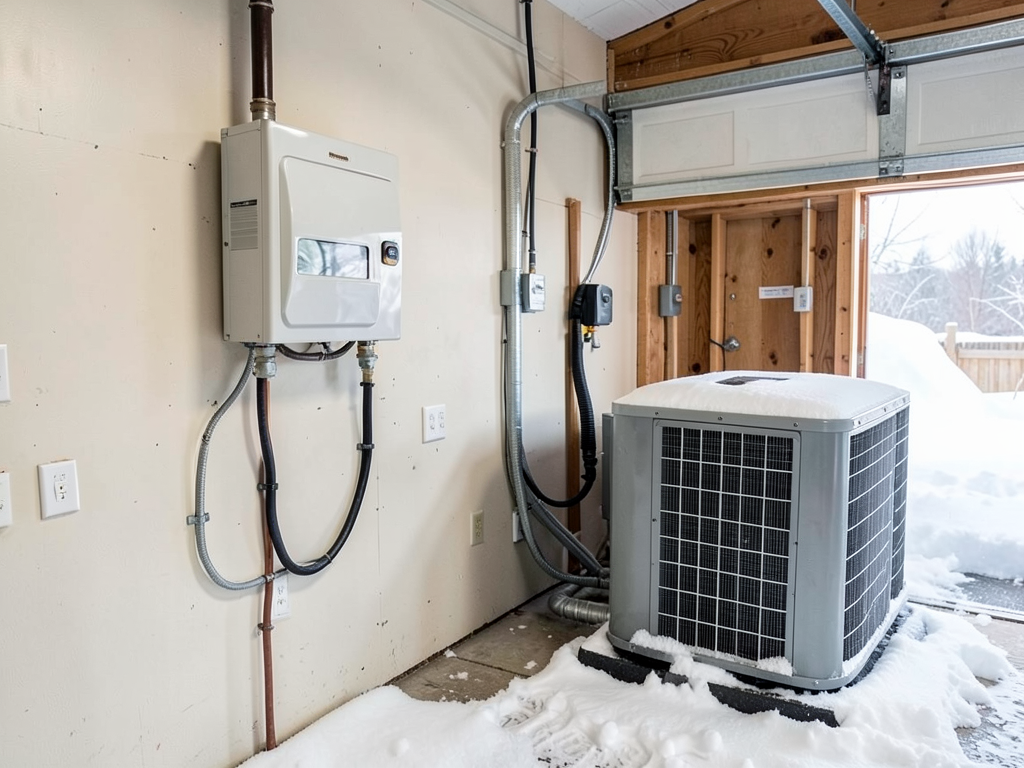
Cleveland's proximity to Lake Erie creates high ambient humidity, which accelerates corrosion on condenser coils and evaporator fins. Salt-laden air from winter road treatments further degrades outdoor refrigeration equipment. Condenser coils in Cleveland corrode faster than in drier climates, reducing heat rejection capacity and forcing compressors to work harder. Evaporator coils ice over more frequently in high-humidity environments, requiring more aggressive defrost cycles. Commercial refrigeration installation in Cleveland must account for these corrosive conditions. Coated coils, corrosion-resistant fasteners, and weatherproof enclosures extend equipment life. The Cuyahoga River valley funnels wind and moisture into industrial areas, creating microclimates that stress rooftop refrigeration equipment. Commercial refrigeration contractors familiar with Cleveland's geography select components rated for coastal or high-humidity environments.
Cleveland's commercial refrigeration companies must navigate Ohio's commercial building codes and Cuyahoga County health regulations. Food service establishments require refrigeration equipment that maintains temperatures below 41°F for cold holding and below 0°F for frozen storage. Health inspectors verify proper temperature logs and equipment maintenance records during routine inspections. Commercial refrigeration maintenance plans that include documentation and calibration verification satisfy these requirements. Cleveland's diverse food sector, from West Side Market vendors to large-scale distribution centers near the Port of Cleveland, requires contractors who understand scale differences and application-specific requirements. United HVAC Kansas City has worked across Cleveland's commercial landscape and understands the regulatory and operational demands unique to this region. Local expertise matters when downtime is not an option.