
Managing sawdust and air quality in your Puritas-Longmead home workshop
Woodworkers in Puritas-Longmead face unique challenges from Cleveland’s lake-effect humidity and sub-zero winters. Your garage or basement shop needs more than a box fan to handle fine sawdust and protect your tools and wood stock. This guide covers Cleveland-specific solutions for keeping your workshop comfortable, safe, and dust-free year-round.
Why standard HVAC fails in Cleveland woodshops
Most residential HVAC systems are not designed for high-particulate environments. Standard return air filters quickly clog with sawdust, reducing efficiency and allowing fine particles to circulate. The Cleveland area’s high summer humidity (often exceeding 70% from Lake Erie) creates perfect conditions for mold growth in ductwork and wood warping. Standard systems also lack the filtration power to capture particles as small as 1-5 microns, which are the most dangerous to your lungs. How Much Does a New Central Air System Cost in Northeast Ohio?.
Another critical issue is combustion safety. Many Puritas-Longmead homes built before 1980 have gas-fired furnaces in attached garages. Sawdust is highly combustible, and even a small spark can ignite a dust cloud. This makes the placement of heating equipment and dust collection systems crucial for workshop safety. Replacing an Old Furnace in a Historic Shaker Heights Home.
The dust problem: Cleveland-specific considerations
Cleveland’s climate creates unique dust challenges. Summer humidity causes wood to expand, increasing the volume of sawdust produced during cutting. Winter’s dry air creates static electricity, making fine dust cling to surfaces and become airborne more easily. The combination means your shop needs year-round air quality management.
According to Cleveland Building Code Section 1302.4, any heating appliance in a garage must be installed with specific clearances and protection from combustible materials. This directly impacts where you can place a workshop heater and how you must configure your dust collection system.
Local woodworkers report that standard 1-inch furnace filters last only 2-3 weeks in active woodshops, compared to 3 months in normal households. This rapid clogging reduces airflow and strains your HVAC system, potentially leading to frozen coils or heat exchanger cracks. Fast and Local AC Repair Services in Solon and Surrounding Areas.
Humidity and wood movement in Cleveland workshops
Cleveland’s extreme humidity swings affect both your wood stock and your comfort. Summer relative humidity often exceeds 70%, while winter drops below 20% when furnaces run constantly. This 50% swing causes significant wood movement, affecting glue joints, drawer fits, and door alignments.
Woodworkers must maintain workshop humidity between 35-55% to minimize dimensional changes. This requires either a dedicated dehumidifier in summer or a humidifier in winter, depending on your shop’s configuration. A mini-split heat pump with dehumidification mode can handle both heating and humidity control, making it ideal for Cleveland’s climate.
The National Wood Flooring Association recommends maintaining consistent temperature and humidity to prevent warping. For Puritas-Longmead workshops, this typically means keeping temperatures between 65-75°F and relative humidity between 40-50%.
Solution comparison: Mini-splits vs. unit heaters vs. portable ACs
| System Type | Initial Cost | Operating Cost | Dust Handling | Cleveland Suitability |
|---|---|---|---|---|
| Ductless Mini-Split | $3,500-5,500 | Low | Excellent (with MERV 13+) | Excellent |
| Unit Heater (Gas) | $1,200-2,500 | Medium | Poor | Fair |
| Portable AC + Heater | $500-1,200 | High | Poor | Poor |
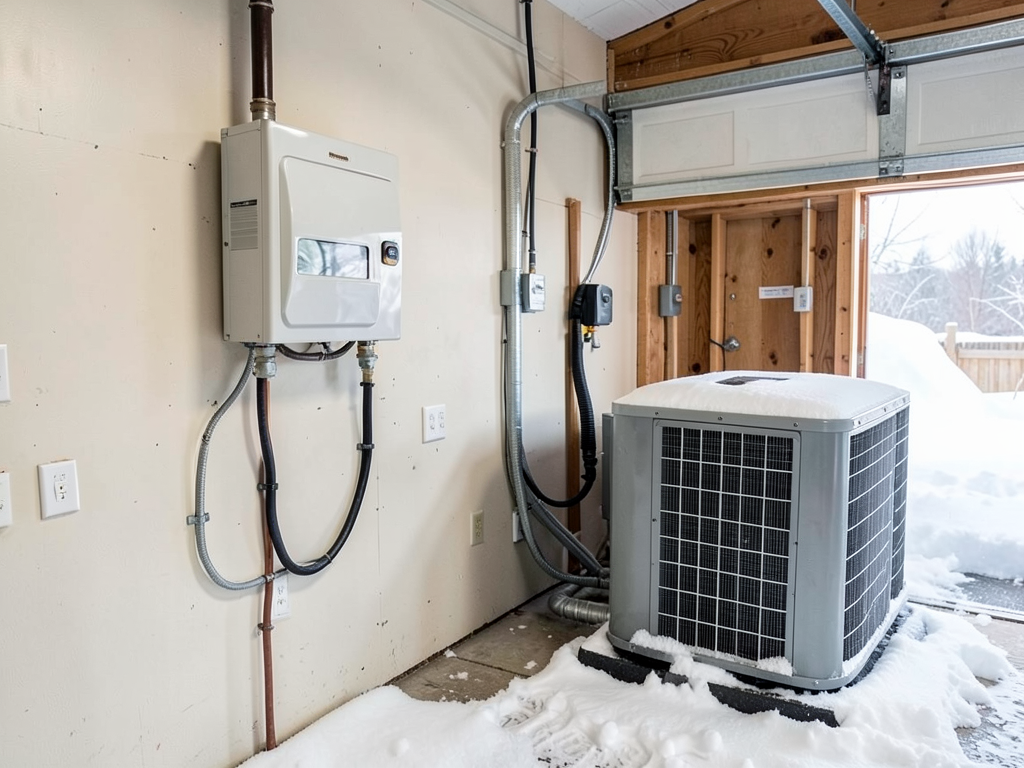
Ductless mini-splits offer the best combination of heating, cooling, and air filtration for Cleveland woodshops. Models with inverter technology adjust output to maintain consistent temperatures, preventing the thermal shock that causes wood movement. The outdoor units are also designed to handle Cleveland’s lake-effect snow and ice.
Unit heaters provide inexpensive heating but lack cooling and advanced filtration. They also create temperature stratification, with hot air rising to the ceiling while your feet stay cold. This uneven heating accelerates wood movement and creates uncomfortable working conditions.
Portable air conditioners struggle in Cleveland’s humid summers. They typically remove only 2-3 pints of moisture per hour, while Cleveland’s summer air often contains 5-7 pints per hour. This means portable units cannot maintain comfortable humidity levels during peak summer months.
Sizing your Puritas-Longmead workshop
Workshop heating and cooling loads differ significantly from living spaces. Woodshops have higher ceilings, more air changes from dust collection systems, and often lack insulation. Here’s a sizing guide for common Cleveland garage configurations:
| Workshop Size | Insulation Level | Required BTUs (Heating) | Required BTUs (Cooling) |
|---|---|---|---|
| 1-car garage (250 sq ft) | None | 12,000-15,000 | 8,000-10,000 |
| 2-car garage (500 sq ft) | None | 18,000-24,000 | 12,000-15,000 |
| 1-car garage (250 sq ft) | R-13 walls | 9,000-12,000 | 6,000-8,000 |
| 2-car garage (500 sq ft) | R-13 walls | 15,000-18,000 | 10,000-12,000 |
These calculations assume standard 8-foot ceilings. Workshops with 10-foot or higher ceilings require 25% more capacity. Also factor in heat gain from equipment like table saws and dust collectors, which can add 2,000-4,000 BTUs during active use.
For Puritas-Longmead’s climate, choose equipment with a heating capacity rated for at least 90% of your calculated need. Cleveland experiences temperatures below -10°F during polar vortex events, and standard heat pumps lose efficiency rapidly below 20°F.
Cleveland compliance and permit requirements
Installing HVAC in a workshop requires compliance with Cleveland Building Code Section 1301 and Ohio Mechanical Code. For gas-fired equipment, you’ll need permits and inspections for gas line modifications. The code requires specific clearances from combustible materials, which directly affects dust collector placement.
Outdoor condenser units must maintain minimum clearances from property lines and windows. In Puritas-Longmead’s dense residential areas, this often means mounting units on exterior walls rather than placing them on the ground. The condenser must also be elevated at least 12 inches above grade to prevent snow blockage.
Electrical requirements are equally strict. Workshop HVAC equipment must have dedicated circuits with proper grounding. The National Electrical Code Article 210.21(B)(3) limits continuous loads to 80% of circuit capacity, which affects how many tools you can run simultaneously with your HVAC system.
Permits typically cost $150-300 and require 2-3 weeks for processing. However, unpermitted work can result in fines up to $1,000 and may void your homeowners insurance if a fire occurs.
Filtration solutions for wood dust
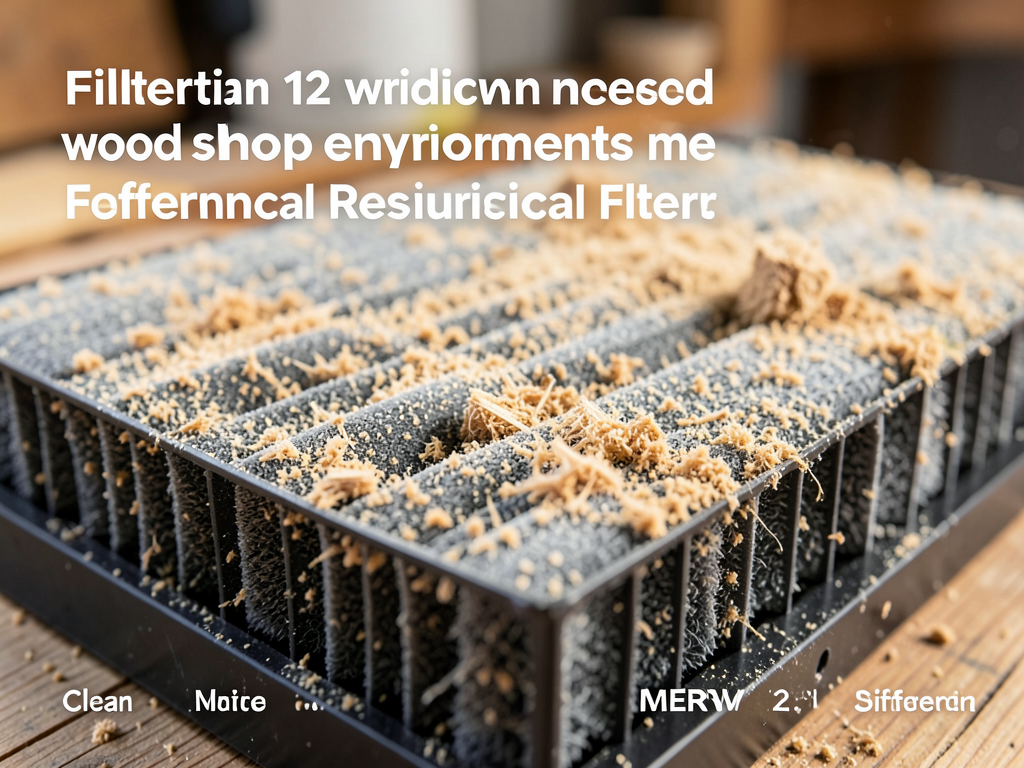
Standard HVAC filters capture only 20-30% of wood dust particles. For effective workshop air quality, you need MERV 13-16 filtration. These filters capture 90-95% of particles 1-3 microns in size, which includes most wood dust and mold spores.
However, high-MERV filters restrict airflow, so your system must be sized accordingly. A 2-ton system with MERV 13 filters moves about 75% of the air volume of the same system with standard MERV 8 filters. This means you may need a larger system or more frequent filter changes.
Consider a multi-stage filtration approach: a MERV 13 filter on your HVAC return, plus a standalone HEPA air cleaner running continuously. This combination captures both the dust your tools produce and the fine particles already in the air. EPA HVAC maintenance guidelines.
Filter replacement frequency depends on usage. Active woodshops should replace MERV 13 filters monthly during heavy use seasons. Watch for pressure drop indicators – if your system seems to be moving less air, your filter likely needs replacement.
Maintenance schedule for dusty environments
Woodshops require more frequent HVAC maintenance than typical homes. The Cleveland climate’s humidity variations accelerate corrosion and mold growth in HVAC components. Here’s a recommended maintenance schedule: Commercial HVAC Maintenance for Businesses in Downtown Cleveland.
- Monthly Tasks
Check and replace air filters, inspect outdoor unit for debris, clean condensate drain lines.
- Quarterly Tasks
Clean evaporator and condenser coils, check refrigerant levels, inspect electrical connections.
- Annually
Professional tune-up including combustion analysis for gas systems, duct inspection, and blower motor service.
During peak woodworking seasons (spring and fall), increase filter checks to bi-weekly. Sawdust accumulation on coils reduces heat transfer efficiency by up to 30%, increasing energy costs and system wear.
Pay special attention to condensate drains. Sawdust can clog these lines, causing water damage and mold growth. Flush drains with a vinegar solution quarterly to prevent biological growth.
Energy efficiency and cost considerations
Workshop HVAC systems typically run 2-3 times longer than residential systems due to open doors and active machinery. This makes efficiency crucial for controlling operating costs. Look for systems with SEER2 ratings of 18+ for cooling and HSPF ratings of 10+ for heating.
FirstEnergy and Cleveland Public Power offer rebates up to $300 for high-efficiency heat pump installations. These rebates apply to systems meeting minimum efficiency standards and can offset 10-15% of installation costs.
Consider a zoned system if your workshop has distinct areas (machining, assembly, finishing). Zoning allows you to heat or cool only occupied areas, reducing energy consumption by 15-30% compared to single-zone systems.
Insulation upgrades provide the fastest return on investment. Adding R-13 insulation to uninsulated garage walls can reduce heating and cooling loads by 25-40%, allowing you to specify smaller, less expensive HVAC equipment.
Local utility rebates and incentives
Ohio utilities offer several programs for energy-efficient HVAC upgrades. FirstEnergy’s HVAC Efficiency Program provides rebates for systems meeting minimum SEER2 and HSPF requirements. Cleveland Public Power offers similar incentives for qualifying heat pumps.
The federal ENERGY STAR program provides tax credits up to $2,000 for qualifying heat pump installations. These credits apply to both primary residences and home workshops, making high-efficiency systems more affordable.
Some local HVAC contractors offer seasonal promotions that stack with utility rebates. These can reduce net installation costs by 20-30% during off-peak seasons (typically late fall and early spring).
Check with your utility provider for current programs, as incentives change annually based on funding availability and policy updates.
Frequently Asked Questions
Can I use my existing furnace to heat my workshop?
Standard furnaces can heat workshops, but they lack the filtration and humidity control needed for woodshops. They also pose combustion risks near sawdust. A dedicated system with proper filtration is safer and more effective.
How much does workshop HVAC installation cost in Puritas-Longmead?
Costs range from $3,500-8,000 depending on system size, complexity, and existing infrastructure. Mini-split systems for a 2-car garage typically cost $4,500-6,000 installed. Factor in additional costs for electrical upgrades or gas line modifications if needed.
Do I need permits for workshop HVAC installation?
Yes, Cleveland requires permits for most HVAC installations. Gas-fired equipment always requires permits and inspections. Permit costs range from $150-300 and ensure your installation meets safety codes.
How do I protect my HVAC system from sawdust damage?
Use high-efficiency filters (MERV 13+), maintain proper clearances between equipment and dust sources, and install pre-filters on return air grilles. Regular cleaning prevents sawdust accumulation on coils and in ductwork.
What humidity level is best for woodworking?
Maintain relative humidity between 35-55% for most woodworking applications. This range minimizes wood movement while preventing mold growth. Use a hygrometer to monitor levels and adjust your system accordingly.
Ready to improve your workshop air quality?
Don’t let poor air quality or uncomfortable temperatures limit your woodworking. Cleveland’s climate demands specialized solutions that generic HVAC contractors don’t understand. Our team knows exactly how to size, install, and maintain systems for local woodshops.
Call (216) 530-9077 today to schedule your workshop comfort assessment. We’ll evaluate your space, discuss your specific needs, and provide a detailed proposal with no high-pressure sales tactics. Your tools, your wood stock, and your lungs deserve professional care.
Pick up the phone and call (216) 530-9077 before the next humid summer or polar vortex hits. We’re ready to help you create the perfect workshop environment for year-round productivity. For more information, visit U.S. Department of Energy heat pump guide.
{
“@context”: “https://schema.org”,
“@type”: “BlogPosting”,
“headline”: “Managing sawdust and air quality in your Puritas-Longmead home workshop”,
“description”: “Control sawdust and humidity in your Puritas-Longmead workshop with Cleveland-specific HVAC solutions. Protect tools, wood stock, and your lungs from fine dust and lake-effect humidity.”,
“wordCount”: 1877,
“datePublished”: “2026-06-09T07:52:00.000Z”,
“dateModified”: “2026-06-09T07:52:00.000Z”,
“inLanguage”: “en-US”,
“mainEntityOfPage”: {
“@type”: “WebPage”,
“@id”: “https://acehvaccleveland.com”
},
“publisher”: {
“@type”: “LocalBusiness”,
“name”: “Ace HVAC Cleveland”,
“url”: “https://acehvaccleveland.com”
},
“author”: {
“@type”: “Organization”,
“name”: “Ace HVAC Cleveland”,
“url”: “https://acehvaccleveland.com”
},
“image”: {
“@type”: “ImageObject”,
“url”: “https://acehvaccleveland.com/wp-content/uploads/2026/03/managing-sawdust-and-air-quality-in-your-puritas-l-1.png”
}
}
{
“@context”: “https://schema.org”,
“@type”: “HVACBusiness”,
“name”: “Ace HVAC Cleveland”,
“url”: “https://acehvaccleveland.com”,
“address”: {
“@type”: “PostalAddress”,
“addressLocality”: “Cleveland”
},
“areaServed”: {
“@type”: “City”,
“name”: “Cleveland”
}
}
{
“@context”: “https://schema.org”,
“@type”: “FAQPage”,
“mainEntity”: [
{
“@type”: “Question”,
“name”: “Can I use my existing furnace to heat my workshop?”,
“acceptedAnswer”: {
“@type”: “Answer”,
“text”: “Standard furnaces can heat workshops, but they lack the filtration and humidity control needed for woodshops. They also pose combustion risks near sawdust. A dedicated system with proper filtration is safer and more effective.”
}
},
{
“@type”: “Question”,
“name”: “How much does workshop HVAC installation cost in Puritas-Longmead?”,
“acceptedAnswer”: {
“@type”: “Answer”,
“text”: “Costs range from $3,500-8,000 depending on system size, complexity, and existing infrastructure. Mini-split systems for a 2-car garage typically cost $4,500-6,000 installed. Factor in additional costs for electrical upgrades or gas line modifications if needed.”
}
},
{
“@type”: “Question”,
“name”: “Do I need permits for workshop HVAC installation?”,
“acceptedAnswer”: {
“@type”: “Answer”,
“text”: “Yes, Cleveland requires permits for most HVAC installations. Gas-fired equipment always requires permits and inspections. Permit costs range from $150-300 and ensure your installation meets safety codes.”
}
},
{
“@type”: “Question”,
“name”: “How do I protect my HVAC system from sawdust damage?”,
“acceptedAnswer”: {
“@type”: “Answer”,
“text”: “Use high-efficiency filters (MERV 13+), maintain proper clearances between equipment and dust sources, and install pre-filters on return air grilles. Regular cleaning prevents sawdust accumulation on coils and in ductwork.”
}
},
{
“@type”: “Question”,
“name”: “What humidity level is best for woodworking?”,
“acceptedAnswer”: {
“@type”: “Answer”,
“text”: “Maintain relative humidity between 35-55% for most woodworking applications. This range minimizes wood movement while preventing mold growth. Use a hygrometer to monitor levels and adjust your system accordingly.”
}
},
{
“@type”: “Question”,
“name”: “Ready to improve your workshop air quality?”,
“acceptedAnswer”: {
“@type”: “Answer”,
“text”: “Don’t let poor air quality or uncomfortable temperatures limit your woodworking. Cleveland’s climate demands specialized solutions that generic HVAC contractors don’t understand. Our team knows exactly how to size, install, and maintain systems for local woodshops.”
}
}
]
}
{
“@context”: “https://schema.org”,
“@type”: “HowTo”,
“name”: “Workshop HVAC Maintenance Schedule”,
“step”: [
{
“@type”: “HowToStep”,
“position”: 1,
“name”: “Monthly Tasks”,
“text”: “Check and replace air filters, inspect outdoor unit for debris, clean condensate drain lines.”
},
{
“@type”: “HowToStep”,
“position”: 2,
“name”: “Quarterly Tasks”,
“text”: “Clean evaporator and condenser coils, check refrigerant levels, inspect electrical connections.”
},
{
“@type”: “HowToStep”,
“position”: 3,
“name”: “Annually”,
“text”: “Professional tune-up including combustion analysis for gas systems, duct inspection, and blower motor service.”
}
],
“image”: “https://acehvaccleveland.com/wp-content/uploads/2026/03/managing-sawdust-and-air-quality-in-your-puritas-l-1.png”
}
{
“@context”: “https://schema.org”,
“@type”: “BreadcrumbList”,
“itemListElement”: [
{
“@type”: “ListItem”,
“position”: 1,
“name”: “Home”,
“item”: “https://acehvaccleveland.com”
},
{
“@type”: “ListItem”,
“position”: 2,
“name”: “Blog”,
“item”: “https://acehvaccleveland.com/blog”
},
{
“@type”: “ListItem”,
“position”: 3,
“name”: “Managing sawdust and air quality in your Puritas-Longmead home workshop”
}
]
}
{
“@context”: “https://schema.org”,
“@type”: “Service”,
“serviceType”: “HVAC”,
“provider”: {
“@type”: “LocalBusiness”,
“name”: “Ace HVAC Cleveland”,
“url”: “https://acehvaccleveland.com”
},
“areaServed”: {
“@type”: “City”,
“name”: “Cleveland”
},
“description”: “Control sawdust and humidity in your Puritas-Longmead workshop with Cleveland-specific HVAC solutions. Protect tools, wood stock, and your lungs from fine dust and lake-effect humidity.”
}