
Menu

Understanding Ductless Systems in Cleveland – Your Complete Guide to Mini Split Heat Pumps and Year-Round Comfort

Everything Cleveland homeowners need to know about how ductless mini splits work, from basic components and installation to energy efficiency and climate control in Northeast Ohio's demanding weather.

Slider Image 1
Slider Image 2
Slider Image 3
Slider Image 4
Slider Image 5
Slider Image 7
Slider Image 8
Slider Image 9
Slider Image 10
Slider Image 11

Why Cleveland Homeowners Are Switching to Ductless HVAC Systems

Cleveland's weather demands flexibility. You face lake-effect snow in January, humid 85-degree summers in July, and unpredictable spring freezes that can hit in April. Traditional forced-air systems struggle with this volatility, running at full capacity or not at all.

Ductless mini split systems solve this problem through zone-based heating and cooling. Unlike central HVAC that conditions your entire home through metal ductwork, ductless heat pumps deliver temperature control directly to specific rooms through wall-mounted air handlers.

The basics of mini split systems are straightforward. An outdoor compressor unit connects to one or more indoor air handlers through a small conduit. This conduit carries refrigerant lines, a power cable, and a condensate drain. No ductwork means no heat loss through leaky ducts in your attic or crawlspace.

Many Cleveland homes built before 1950 lack the space for ductwork installation. Older homes in neighborhoods like Ohio City, Tremont, and Detroit Shoreway feature plaster walls and limited ceiling cavities. Adding central air means tearing through historic architecture or settling for window units that leak cold air.

Ductless air conditioning gives you professional climate control without demolition. Each indoor unit operates independently, so you can heat your bedroom to 68 degrees while keeping your living room at 72 degrees. This is what makes ductless hvac systems practical for Cleveland's diverse housing stock, from century homes to modern builds.

The technology uses heat pump operation year-round. In summer, refrigerant absorbs indoor heat and moves it outside. In winter, the process reverses, extracting heat from outdoor air even when temperatures drop to 15 degrees.

Why Cleveland Homeowners Are Switching to Ductless HVAC Systems
How Ductless Mini Splits Actually Work in Cleveland's Climate

How Ductless Mini Splits Actually Work in Cleveland's Climate

Understanding what are ductless heat pumps requires knowing the refrigeration cycle. The outdoor compressor pressurizes refrigerant, raising its temperature. This hot refrigerant flows to the indoor air handler, where a fan blows room air across the evaporator coil. Heat transfers from the refrigerant to your room air, warming the space.

After releasing its heat, the refrigerant returns to the outdoor unit as a low-pressure gas. The cycle repeats continuously, modulating compressor speed to match your exact heating demand. This is called inverter technology, and it eliminates the on-off cycling that wastes energy in conventional systems.

In cooling mode, the four-way reversing valve changes refrigerant flow direction. Now the indoor coil absorbs heat from your room and the outdoor coil releases it outside. The same components handle both heating and cooling.

Cleveland's humidity creates condensation on the indoor coil during summer operation. The condensate drain line routes this moisture outside through the wall penetration. Proper pitch on this drain line prevents water backup, which is critical in older homes with settling foundations.

Modern ductless systems maintain heating capacity down to negative 13 degrees Fahrenheit. This matters in Cleveland, where January averages 26 degrees but can plunge lower during Arctic blasts off Lake Erie. Older heat pumps lost efficiency below 40 degrees, requiring backup electric resistance heat. Current technology extracts usable heat even from frigid air.

The outdoor unit sits on a wall bracket or ground pad, elevated above snow accumulation. Snow burial blocks airflow and triggers safety shutoffs. Positioning matters in Cleveland, where lake-effect bands can dump 12 inches overnight. Technicians account for prevailing wind direction and drainage when mounting equipment.

Each indoor unit includes a wireless remote with temperature sensors and programming modes. You control fan speed, swing direction, and sleep timers without touching the unit.

What Happens During a Ductless System Consultation

Understanding Ductless Systems in Cleveland – Your Complete Guide to Mini Split Heat Pumps and Year-Round Comfort
01

Load Calculation and Zoning

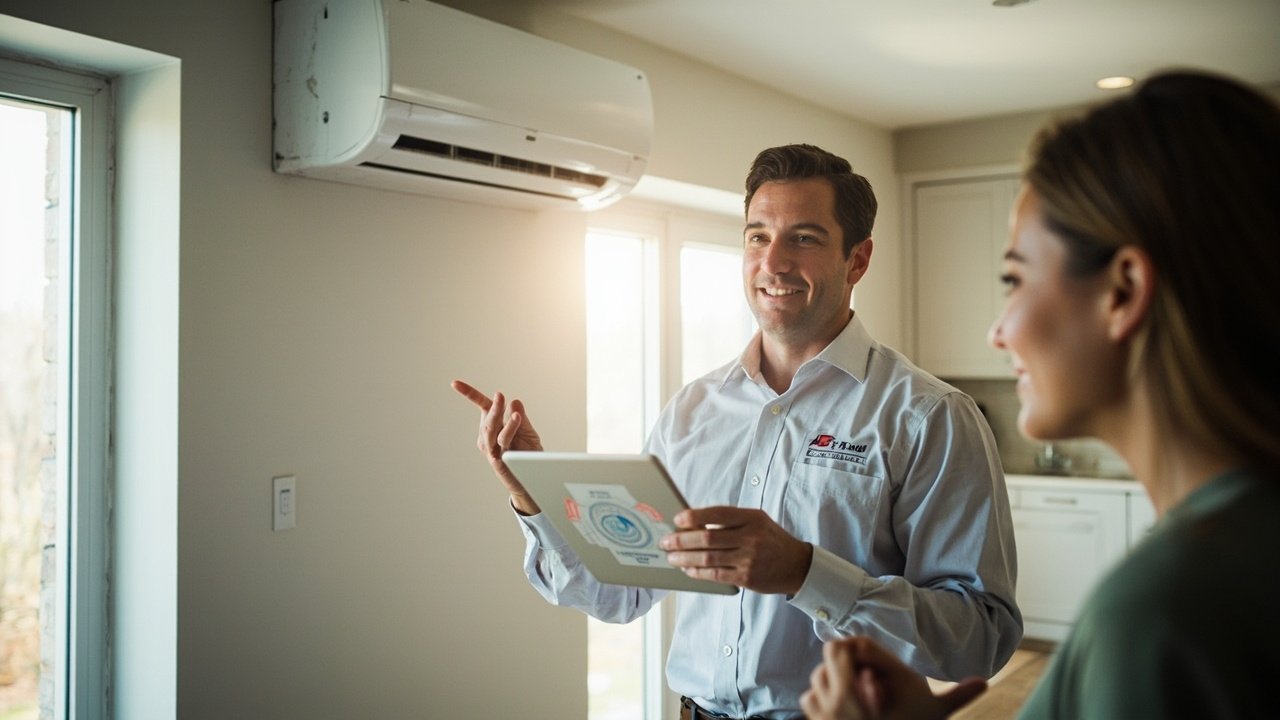
A technician measures each room you want to condition, noting window square footage, insulation levels, and sun exposure. This Manual J load calculation determines the BTU capacity needed per zone. Cleveland's temperature swings require accurate sizing to avoid short cycling in mild weather and inadequate heating during cold snaps. The calculation accounts for your home's age, wall construction, and attic insulation.
02

Equipment Matching and Placement

Based on your load calculation, the technician selects the appropriate outdoor unit capacity and matches it with compatible indoor air handlers. Placement considerations include refrigerant line length limitations, electrical service capacity, and wall structure. In Cleveland's older brick homes, mounting locations must avoid mortar joints and account for exterior siding types. The outdoor unit position must allow snow clearance and service access.
03

System Proposal and Education

You receive a detailed proposal showing equipment specifications, installation scope, and energy efficiency ratings. The technician explains SEER ratings for cooling and HSPF ratings for heating, helping you understand long-term operating costs. This includes reviewing thermostat options, maintenance requirements, and warranty coverage. You learn exactly how the system will perform during Cleveland's humid summers and sub-freezing winters before making a commitment.

Why Cleveland Residents Trust Local Ductless HVAC Expertise

Installing ductless systems in Cleveland requires understanding local building codes and climate challenges. Cuyahoga County enforces specific electrical codes for 240-volt outdoor unit connections. Permits require load calculations and refrigerant line specifications that meet state energy codes.

Ace HVAC Cleveland technicians know how Lake Erie's moisture affects equipment longevity. Coastal homes in Edgewater and Lakewood face salt air corrosion that inland homes avoid. Outdoor unit coatings and mounting hardware must resist this environment. We select equipment rated for marine climates when necessary.

Your home's construction dictates installation complexity. Balloon-framed houses built before 1940 have continuous wall cavities from basement to attic. Running refrigerant lines requires different techniques than platform-framed modern homes with fire blocking every ten feet. Brick veneer over wood framing needs different mounting hardware than solid masonry construction common in Cleveland's streetcar suburbs.

Northeast Ohio's freeze-thaw cycles stress refrigerant connections. We use flare fittings rather than compression fittings on outdoor connections, preventing leaks when copper contracts in January cold and expands in July heat. Brazed connections on indoor units ensure leak-free operation through thousands of temperature cycles.

Cleveland building inspectors require pressure testing on refrigerant lines before releasing refrigerant into the system. This nitrogen pressure test verifies connection integrity and identifies leaks before expensive refrigerant enters the lines. We hold pressure for 24 hours, exceeding the code minimum.

Local expertise means understanding Cleveland's electrical infrastructure. Many older neighborhoods have 100-amp service panels that need upgrades before adding a ductless system. We coordinate with electricians familiar with Cleveland's housing stock, ensuring permit compliance and safe operation.

Our familiarity with Cleveland's HVAC supply chain means faster parts availability when you need service. We stock common components for the equipment we install, minimizing downtime during repairs.

What to Expect from Your Ductless System Installation

Installation Timeline and Process

Most single-zone ductless installations complete in four to six hours. Multi-zone systems with three or four indoor units take a full day. The process includes mounting the outdoor unit, drilling a three-inch penetration through your exterior wall, mounting indoor air handlers, running refrigerant lines, making electrical connections, and pressure testing the system. We verify heating and cooling operation before leaving. Cleveland weather can delay outdoor work during heavy snow or temperatures below 20 degrees, when refrigerant handling becomes difficult.

System Sizing and Assessment

Proper sizing prevents comfort problems and efficiency loss. An oversized system short cycles, running brief periods without removing humidity. An undersized system runs constantly during temperature extremes, failing to maintain comfort. We measure room dimensions, calculate heat loss through windows and walls, and account for Cleveland's 6,351 annual heating degree days. This assessment includes evaluating your electrical service capacity, confirming adequate amperage for the outdoor unit, and identifying any panel upgrades needed before installation begins.

Performance and Efficiency Results

Quality ductless systems deliver 20 to 30 SEER cooling efficiency and 10 to 12 HSPF heating efficiency. This translates to operating costs roughly 40 percent lower than baseboard electric heat and 25 percent lower than standard air conditioning. You control each zone independently, eliminating energy waste in unused rooms. In Cleveland's variable climate, inverter-driven compressors adjust output in one-percent increments, maintaining precise temperature without the two- to three-degree swings common with conventional systems. Expect consistent comfort and noticeably lower utility bills.

Maintenance and Long-Term Care

Ductless systems need minimal maintenance compared to forced-air equipment. Clean the indoor unit filter monthly during heavy use seasons by removing it and rinsing under warm water. Annual professional maintenance includes cleaning the outdoor coil, checking refrigerant pressures, testing electrical connections, and verifying condensate drainage. Cleveland's humid summers promote algae growth in drain lines, requiring periodic flushing. Most manufacturers provide parts warranties covering the compressor for seven to twelve years. Regular maintenance prevents efficiency loss and catches small issues before they become expensive repairs.

Frequently Asked Questions

You Have Questions,
We Have Answers

What are the disadvantages of a ductless mini-split? +

Ductless mini-splits have a few drawbacks. The upfront cost is higher than traditional window units. The indoor wall units are visible and can clash with your decor, which bothers some homeowners. In Cleveland's cold winters, efficiency drops when outdoor temps fall below 15 degrees, so you may need backup heat. Installation requires drilling a three-inch hole through your exterior wall for the refrigerant lines. Each indoor unit operates independently, so you need multiple remotes or a central controller. Filters require cleaning every few weeks. If your home has many rooms, the cost of multiple indoor units adds up quickly compared to ducted systems.

What are the basics of a mini-split system? +

A mini-split system has two main parts: an outdoor compressor and one or more indoor air handlers. The outdoor unit sits on a pad outside your Cleveland home and connects to indoor units through a small conduit containing refrigerant lines, power cables, and a condensate drain. No ductwork is needed. The indoor units mount high on walls or ceilings and blow conditioned air directly into the room. You control each zone independently with a remote. The system heats and cools using heat pump technology. Installation takes one to two days and requires only a three-inch hole through your wall.

What is the difference between a split system and a ductless split system? +

A traditional split system uses ductwork to distribute air throughout your home. The indoor air handler sits in your basement or attic and pushes conditioned air through ducts to vents in each room. A ductless split system skips the ducts entirely. The outdoor unit connects directly to wall-mounted indoor units in each room or zone. This eliminates energy loss from leaky ducts, which can waste up to 30 percent of your heating and cooling energy. Ductless systems offer better zone control since you adjust temperature room by room. For Cleveland homes without existing ductwork, ductless installation is faster and less invasive.

What are the different types of ductless HVAC systems? +

The most common type is the wall-mounted unit, which sits high on your wall and blows air downward. Ceiling cassette units mount flush in drop ceilings and distribute air in four directions, ideal for open floor plans. Floor-mounted units sit near the baseboard and work well in rooms where wall space is limited. Ducted mini-splits hide in closets or attics and connect to short duct runs for a more discreet look. Multi-zone systems connect several indoor units to one outdoor compressor, allowing independent temperature control in each room. Single-zone systems serve one room with dedicated indoor and outdoor units.

What is the $5000 rule? +

The $5000 rule is an HVAC guideline used to decide between repairing or replacing your system. If your repair cost multiplied by the age of your equipment exceeds $5000, replacement makes better financial sense. For example, a $400 repair on a 10-year-old system equals $4000, so repair it. A $600 repair on a 12-year-old unit equals $7200, so replace it. This rule helps Cleveland homeowners avoid throwing money at aging equipment that will fail again soon. It accounts for diminishing efficiency and rising repair frequency as systems age. Use it as a starting point, not an absolute rule.

Why is my electric bill so high with mini split? +

Your electric bill likely spiked because you left the mini-split running constantly or set the temperature too low. Mini-splits work most efficiently when maintaining a steady temperature, not cooling an overheated space from scratch. Dirty filters force the system to work harder, burning more electricity. If your outdoor unit is buried in snow or blocked by debris, efficiency drops. Cleveland's humid summers make the system work harder to remove moisture. Check your thermostat settings. Running the system at 68 degrees instead of 72 degrees increases energy use significantly. Older mini-splits lack the efficiency ratings of newer inverter-driven models.

How many mini splits do I need for a 2000 square foot house? +

Most 2000-square-foot homes in Cleveland need two to four mini-split indoor units, depending on your layout and insulation. Open floor plans may need only two or three strategically placed units. Homes with many closed-off rooms require more units for proper coverage. Count the number of zones you want to control independently. Bedrooms, living areas, and home offices typically get their own units. Each indoor unit covers roughly 500 to 1000 square feet, depending on ceiling height and insulation quality. A qualified installer will perform a load calculation to determine exact needs based on your home's specific heat loss and gain characteristics.

What is the 3 minute rule for AC? +

The three-minute rule prevents compressor damage by requiring a three-minute wait between shut-off and restart. When your AC turns off, refrigerant pressure remains high. Restarting immediately forces the compressor to work against this pressure, causing strain and potential failure. Modern mini-splits have built-in delay timers to enforce this rule automatically. You should never rapidly cycle your thermostat on and off. If your system trips a breaker and you reset it, wait three minutes before turning the AC back on. This simple pause protects the compressor and extends system life. Cleveland's fluctuating weather makes this protection important.

Do mini splits work in 100 degree weather? +

Yes, quality mini-splits work effectively in 100-degree weather. Modern units are designed to cool in extreme heat, though efficiency decreases slightly as outdoor temps climb. The refrigerant absorbs indoor heat and releases it outside. In extreme heat, the temperature difference is greater, so the system works harder. Keep your outdoor unit shaded and clear of debris. Clean filters and coils improve performance. Cleveland summers occasionally hit the 90s, well within a mini-split's operating range. Most systems are rated to cool effectively up to 115 degrees outdoor temperature. Proper sizing and installation matter more than peak temps for reliable cooling performance.

How do Amish cool their homes without air conditioning? +

The Amish cool their homes using passive methods that align with their lifestyle. They design homes with cross-ventilation, placing windows to capture prevailing breezes. Thick walls and small windows reduce heat gain. Basements stay naturally cool and serve as gathering spaces in summer. They plant shade trees strategically around homes. Some communities allow propane-powered cooling in specific situations. Porches provide shaded outdoor living areas. They schedule heavy work for cooler morning hours. While these methods work for their lifestyle, most Cleveland residents prefer the comfort and control of modern HVAC systems to handle Ohio's humid summers and cold winters reliably.

How Cleveland's Lake Effect Weather Makes Ductless Systems Essential

Cleveland averages 60 inches of snow annually, with lake-effect bands creating dramatic temperature and moisture swings. These rapid changes stress traditional HVAC systems that operate at fixed capacities. Ductless heat pumps adapt in real time, ramping compressor speed up when temperatures plunge during Alberta Clippers and throttling back during mild January thaws. The humidity off Lake Erie during summer creates indoor moisture problems in poorly ventilated homes. Ductless systems remove humidity during cooling operation, preventing mold growth in basements and attics common in Cleveland's older housing stock.

Northeast Ohio's housing diversity requires flexible HVAC solutions. Cleveland contains everything from 1920s bungalows in Kamm's Corners to 1880s Victorians in Hingetown to modern condos in the Flats. Ductless technology fits all these structures without compromising architectural integrity. Local building codes require proper permitting and inspections for refrigerant systems. Working with Cleveland-based HVAC professionals ensures code compliance and proper integration with your home's existing systems. We understand Cuyahoga County permit requirements and maintain relationships with local inspectors, streamlining the approval process and protecting your investment.

HVAC Services in The Cleveland Area

We are proud to serve the entire Cleveland area, and our service network extends to all surrounding communities. Our centrally located office allows us to dispatch our expert technicians quickly and efficiently to your home or business, ensuring fast response times for all your heating and cooling needs. We invite you to view our service area on the map to see if we can bring our trusted services right to your doorstep. Don't hesitate to reach out to us today to confirm if your location is within our coverage zone.

Address:
Ace HVAC Cleveland, 3095 W 25th St, Cleveland, OH, 44113

Additional Services We Offer

Our news updates

Latest Articles & News from The Blogs

How to stop indoor pool humidity from damaging your Bentleyville home If you own a luxury home with an indoor…

How to stop indoor pool humidity from damaging your Bentleyville home

How to stop indoor pool humidity from damaging your Bentleyville home If you own a luxury home with an indoor…

The best ways to heat a detached garage workshop in Middleburg Heights

The best ways to heat a detached garage workshop in Middleburg Heights Heating a detached garage workshop in Middleburg Heights…

Upgrading your PTAC wall unit in a Gold Coast condo for better efficiency

Upgrading your PTAC wall unit in a Gold Coast condo for better efficiency Living in a Gold Coast condo means…

Contact Us

Ready to explore ductless heating and cooling for your Cleveland home? Call (216) 530-9077 now for a free consultation and load calculation. Our technicians will assess your space, answer your questions, and design a system that handles Northeast Ohio's demanding climate.