
Navigating the rules for HVAC upgrades in Edgewater condo and apartment buildings
Upgrading HVAC systems in Cleveland’s Edgewater condos and apartments requires understanding specific building codes, HOA requirements, and logistical challenges unique to multi-family living. Edgewater’s mix of historic high-rises and newer garden-style buildings means each project needs careful planning to meet Cleveland’s mechanical permit requirements while respecting shared spaces and noise regulations. How Much Does a New Central Air System Cost in Northeast Ohio?.
Before you replace that aging unit, you need to know the Cleveland Municipal Code Section 3101.01 requirements for multi-family mechanical systems, the HOA approval timeline, and how Lake Erie humidity affects equipment sizing. This guide walks you through the exact process for a smooth, code-compliant upgrade in your Edgewater building.. Read more about How to Plan for HVAC Upgrades Before Starting Your Tremont Kitchen Remodel.
Understanding Edgewater’s condo HVAC landscape
Edgewater’s residential buildings range from 1920s-era high-rises along Lake Avenue to 1970s garden apartments near the lakefront park. These structures typically use water source heat pumps, vertical stack units, or fan coil systems rather than traditional split systems found in single-family homes.
Water source heat pumps dominate because they connect to the building’s central cooling tower and boiler loop. This system provides both heating and cooling through a closed hydronic loop, making it ideal for Cleveland’s extreme seasonal temperature swings. However, these units require specialized knowledge for replacement and repair. EPA Section 608 certification.
Vertical stack units serve buildings with limited roof access or where individual outdoor condensers aren’t feasible. These self-contained units sit in closets or mechanical rooms, drawing combustion air from inside the building. They’re common in Edgewater’s older high-rises where roof loading or condo association rules prohibit rooftop equipment.. Read more about The Best Ways to Hide Your Outdoor AC Unit Without Hurting Performance in Waite Hill.
Fan coil units with PTAC (Packaged Terminal Air Conditioner) configurations appear in garden-style apartments and newer construction. These units provide individual temperature control but require careful condensate drainage planning to prevent water damage to lower units.

A technician inspects a water source heat pump in a Cleveland high-rise, showing the compact design and hydronic connections typical of Edgewater condo systems.
HOA and condo board approval process in Cleveland
Every Edgewater condo HVAC replacement requires approval from your building’s Architectural Review Committee or Board of Directors. This process typically takes 30-45 days and involves submitting detailed mechanical drawings, equipment specifications, and noise level documentation.
Start by requesting your building’s HVAC replacement guidelines. Most Edgewater associations require Energy Star certified equipment with specific decibel ratings for outdoor units. Some buildings mandate that all replacements use the same brand or model to maintain system compatibility. Energy Star tax credits.
Noise restrictions are strict in Edgewater’s dense housing. Condos near Lake Avenue often require units below 65 dB to avoid disturbing neighbors. Your contractor should provide sound pressure level data and may need to install vibration isolation pads or sound blankets.
Permit requirements vary by building age and Cleveland zoning district. Buildings in the Lake Avenue corridor often need additional approvals from the Cleveland Landmarks Commission if they’re within historic districts. Your contractor should handle permit applications through the City of Cleveland Building Department, but you’ll need to provide HOA approval documentation.
Schedule work during approved hours. Most Edgewater associations limit construction to 8 AM – 5 PM weekdays and prohibit weekend work. Some buildings require elevator reservations for equipment transport, especially for rooftop units requiring cranes.
Common HVAC systems in Edgewater buildings
Water Source Heat Pumps (WSHP) are the backbone of Edgewater’s larger buildings. These units circulate water from a central plant through a heat exchanger, providing efficient heating and cooling year-round. They’re sized for Cleveland’s climate using Manual J calculations that account for Lake Erie’s humidity and wind patterns.
Vertical Stack Gas Units serve buildings where individual furnaces and air conditioners aren’t practical. These self-contained units include a gas furnace section and air conditioning coil in one cabinet. They require proper venting through the roof or sidewall, following Cleveland’s mechanical code requirements for combustion air. Replacing an Old Furnace in a Historic Shaker Heights Home.
Ductless Mini-Split Systems work well in Edgewater’s garden apartments and older buildings without ductwork. These systems avoid the need for extensive demolition while providing zoned cooling. However, they require condensate pumps in basement installations where gravity drainage isn’t possible.
Packaged Terminal Air Conditioners (PTACs) are common in efficiency units and older hotel conversions. These through-the-wall units provide heating and cooling but have limited capacity for Cleveland’s extreme temperatures. Replacement often requires upgrading to higher-SEER2 models for energy efficiency compliance.
Fan Coil Units with Central Plants serve buildings where individual equipment isn’t feasible. These systems use a central boiler and cooling tower, with individual fan coils in each unit. They’re quiet and efficient but require regular maintenance of the building’s central equipment. Commercial HVAC Maintenance for Businesses in Downtown Cleveland.
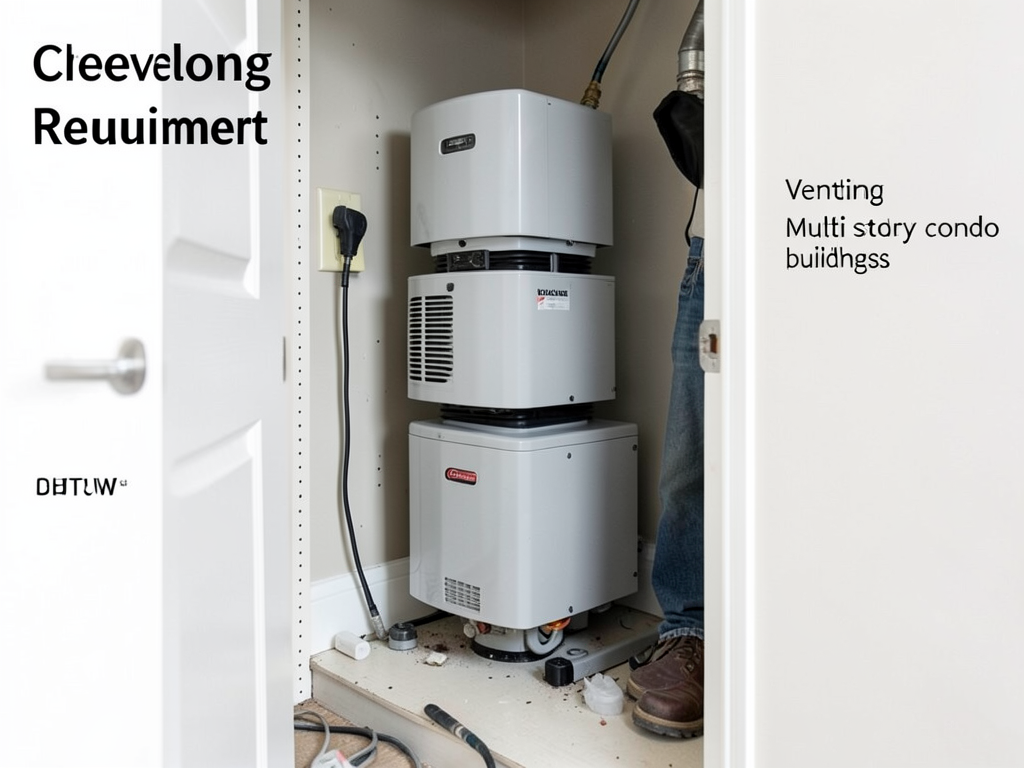
A vertical stack gas unit being removed from a Cleveland high-rise closet, showing the compact design and venting requirements for multi-story buildings.
Cleveland mechanical permit requirements
Cleveland’s mechanical permit process for condo replacements involves submitting detailed plans to the Building Department at 75 Erieview Plaza. You’ll need load calculations, equipment specifications, and compliance documentation for Energy Star requirements.
Section 1303.1 of the Cleveland Mechanical Code requires that all replacements meet current efficiency standards. For 2026, this means minimum SEER2 ratings of 14 for air conditioning and AFUE of 90% for gas furnaces. Older units often fall below these thresholds, making replacement mandatory when efficiency upgrades are involved.
Combustion air requirements under Section 701.4 are critical for vertical stack units. These units must have dedicated outside air supply or use direct vent technology. Improper venting can lead to carbon monoxide hazards and code violations.
Condensate disposal follows Section 307 requirements. In multi-story buildings, condensate must drain to the building’s sanitary system or use dedicated pumps. Dumping condensate onto balconies or common areas violates both code and condo rules.
Refrigerant handling requires EPA Section 608 certification for all technicians. This federal requirement ensures proper recovery and recycling of refrigerants like R-410A, which is standard in modern HVAC equipment.
Cost factors and energy efficiency rebates
HVAC replacement costs in Edgewater condos vary based on system type, building access requirements, and permit fees. Water source heat pump replacements typically cost $3,500-$6,000 per unit, while vertical stack units range from $4,000-$8,000 installed.
Building access significantly impacts pricing. Units requiring crane service for rooftop removal add $800-$1,500 to the project. Elevator reservations, parking permits for service vehicles, and after-hours work all increase costs.
FirstEnergy Ohio offers rebates for high-efficiency equipment installed in Cleveland. Current programs provide $50-$300 per unit for SEER2 ratings above 16 and AFUE above 95%. These rebates require pre-approval and installation by certified contractors.
Federal tax credits under the Energy Efficient Home Improvement Credit cover 30% of equipment costs up to $1,200 annually. This applies to Energy Star certified HVAC systems installed in owner-occupied units.
Maintenance agreements for condo HVAC systems typically cost $150-$300 annually per unit. These agreements include seasonal tune-ups, filter changes, and priority service, which many Edgewater associations require for warranty compliance. HVAC Maintenance & Tune-Ups.
Logistical challenges in Edgewater installations
Limited access is the biggest challenge in Edgewater condo replacements. Narrow hallways, small elevators, and tight mechanical rooms require careful equipment sizing and sometimes partial disassembly for transport.
Noise control during installation affects neighbor relations. Professional contractors use sound barriers, schedule noisy work during approved hours, and communicate with adjacent units about expected disruptions. Some buildings require noise level monitoring during installation.
Water damage prevention is critical in multi-story buildings. Condensate overflow can damage multiple units below, leading to expensive repairs and liability issues. Modern installations include secondary drain pans, float switches, and water alarms. Fast and Local AC Repair Services in Solon and Surrounding Areas.
Electrical capacity often limits equipment choices. Older Edgewater buildings may need electrical panel upgrades to support new high-efficiency units. This adds $800-$2,000 to the project but ensures safe operation.
Seasonal timing affects both cost and availability. Most condo replacements happen in spring and fall when demand is lower and contractors have more flexible scheduling. Emergency replacements during extreme weather cost 20-30% more due to urgency premiums.
Choosing the right contractor for your Edgewater condo
Experience with multi-family buildings is essential. Ask potential contractors about specific Edgewater projects they’ve completed, including system types and any challenges they encountered. Verify their EPA certification and check reviews mentioning condo work specifically.
Insurance requirements are stricter for condo work. Contractors should carry general liability, workers’ compensation, and pollution liability coverage. Ask for certificates naming your condo association as additionally insured.
Written proposals should detail every aspect of the project: equipment specifications, permit responsibilities, HOA approval process, and warranty terms. Avoid contractors who provide vague estimates or refuse to handle permit applications.
References from other Edgewater buildings provide the best validation. Contact previous clients to ask about communication, cleanliness, and how well the contractor handled building rules and neighbor concerns.
Emergency service capability matters in multi-family settings. Choose contractors offering 24/7 service with guaranteed response times, especially important during Cleveland’s harsh winters when heating failures affect multiple residents.
Maintaining your new HVAC system
Regular maintenance extends equipment life and maintains warranty coverage. Most manufacturers require professional service twice yearly for condo HVAC systems, with documented service records.. Read more about Simple HVAC maintenance tips for landlords owning property in Garfield Heights.
Filter replacement frequency depends on your specific system. Water source heat pumps typically need 1-inch pleated filters changed every 60-90 days. Vertical stack units often use washable filters requiring quarterly cleaning.
Coil cleaning prevents efficiency losses and system failures. Professional cleaning removes dirt buildup that reduces heat transfer and strains compressors. This service costs $150-$300 but prevents costly repairs.
Thermostat programming affects both comfort and energy costs. Smart thermostats can reduce heating costs by 15-20% through optimized scheduling and remote monitoring capabilities.
Annual inspections catch developing problems before they cause failures. Professional technicians check refrigerant levels, electrical connections, and mechanical components, identifying issues like worn bearings or corroded coils.
A technician performs a seasonal maintenance check on a water source heat pump, showing the diagnostic tools and inspection process for condo HVAC systems.
Frequently Asked Questions
How long does a condo HVAC replacement take in Edgewater?
Most replacements require 4-8 hours for the actual installation, but the total process including HOA approval and permit acquisition typically takes 4-6 weeks. Emergency replacements can be completed in 24-48 hours if permits are expedited.
Can I install a different brand than what’s currently in my unit?
Yes, but you’ll need HOA approval and may face compatibility issues with building control systems. Some associations require matching brands for aesthetic or maintenance reasons. Check your building’s specific requirements before selecting equipment.
What permits are required for Edgewater condo HVAC work?
You’ll need a mechanical permit from the City of Cleveland Building Department, plus any HOA approvals required by your building. Some units may also need electrical permits if panel upgrades are necessary. Your contractor should handle all permit applications.
How do I know if my current system is still under warranty?
Check the unit’s model and serial number, then contact the manufacturer with this information. Most HVAC warranties are 5-10 years for parts, but labor warranties vary. Your contractor can also verify warranty status during an inspection.
What’s the typical lifespan of condo HVAC equipment in Cleveland?
Water source heat pumps last 12-15 years, vertical stack units 15-20 years, and ductless mini-splits 10-12 years in Cleveland’s climate. Regular maintenance can extend these lifespans by 2-5 years, while neglect can reduce them by half.
Can I finance my HVAC replacement?
Yes, many contractors offer financing options through third-party lenders. Some utility companies also provide on-bill financing for energy-efficient upgrades. Check with your contractor about available programs and payment plans.. Read more about Understanding Your Options for HVAC Financing and Rebates in Maple Heights.
What should I do if my condo association requires all units to be replaced?
Coordinate with your association’s board to understand the timeline and requirements. Many associations phase replacements over several years to manage costs. Ask about group purchasing options which can reduce per-unit pricing by 10-15%.
How do I handle noise complaints during installation?
Professional contractors use sound barriers and schedule noisy work during approved hours. Communicate with neighbors before work begins and provide contact information for the job foreman. Most complaints arise from poor communication rather than actual noise levels.
What maintenance is required after installation?
Most manufacturers require professional maintenance twice yearly. This includes cleaning coils, checking refrigerant levels, testing electrical components, and replacing filters. Some associations require proof of maintenance for warranty coverage.
How do I choose between repairing and replacing my current system?
If repair costs exceed 30% of replacement cost or your unit is over 10 years old, replacement is usually more cost-effective. Consider energy savings, reliability, and warranty coverage when making this decision.
Ready to upgrade your Edgewater condo HVAC system?
Navigating condo HVAC replacement rules in Edgewater requires expertise in local codes, HOA requirements, and multi-family system logistics. Don’t risk delays or code violations by choosing an inexperienced contractor.
Our team has completed dozens of successful HVAC replacements in Edgewater buildings, handling everything from HOA approvals to final inspections. We understand the unique challenges of Cleveland’s lakefront condos and provide clear, upfront pricing with no hidden fees.
Call (216) 530-9077 today to schedule your free consultation. We’ll assess your current system, explain your replacement options, and guide you through the entire approval process. Don’t wait until your old unit fails during a polar vortex or heat wave.
Pick up the phone and call (216) 530-9077 before the next storm hits. Your comfort and peace of mind are worth a professional approach to condo HVAC replacement.
You may also find this helpful. Why your Lakewood steam radiators are banging and how to quiet them down.
You may also find this helpful. Comparing Portable Air Purifiers and Whole Home Systems for Little Italy Apartments.
{
“@context”: “https://schema.org”,
“@type”: “BlogPosting”,
“headline”: “Navigating the rules for HVAC upgrades in Edgewater condo and apartment buildings”,
“description”: “Learn Cleveland condo HVAC rules, HOA approvals, and local codes for Edgewater multi-family buildings. Get expert help navigating permits and replacements.”,
“wordCount”: 2246,
“datePublished”: “2026-04-07T06:50:00.000Z”,
“dateModified”: “2026-04-07T06:50:00.000Z”,
“inLanguage”: “en-US”,
“mainEntityOfPage”: {
“@type”: “WebPage”,
“@id”: “https://acehvaccleveland.com”
},
“publisher”: {
“@type”: “LocalBusiness”,
“name”: “Ace HVAC Cleveland”,
“url”: “https://acehvaccleveland.com”
},
“author”: {
“@type”: “Organization”,
“name”: “Ace HVAC Cleveland”,
“url”: “https://acehvaccleveland.com”
},
“image”: {
“@type”: “ImageObject”,
“url”: “https://acehvaccleveland.com/wp-content/uploads/2026/03/navigating-the-rules-for-hvac-upgrades-in-edgewate-1.png”
}
}
{
“@context”: “https://schema.org”,
“@type”: “HVACBusiness”,
“name”: “Ace HVAC Cleveland”,
“url”: “https://acehvaccleveland.com”,
“address”: {
“@type”: “PostalAddress”,
“addressLocality”: “Cleveland”
},
“areaServed”: {
“@type”: “City”,
“name”: “Cleveland”
}
}
{
“@context”: “https://schema.org”,
“@type”: “FAQPage”,
“mainEntity”: [
{
“@type”: “Question”,
“name”: “How long does a condo HVAC replacement take in Edgewater?”,
“acceptedAnswer”: {
“@type”: “Answer”,
“text”: “Most replacements require 4-8 hours for the actual installation, but the total process including HOA approval and permit acquisition typically takes 4-6 weeks. Emergency replacements can be completed in 24-48 hours if permits are expedited.”
}
},
{
“@type”: “Question”,
“name”: “Can I install a different brand than what’s currently in my unit?”,
“acceptedAnswer”: {
“@type”: “Answer”,
“text”: “Yes, but you’ll need HOA approval and may face compatibility issues with building control systems. Some associations require matching brands for aesthetic or maintenance reasons. Check your building’s specific requirements before selecting equipment.”
}
},
{
“@type”: “Question”,
“name”: “What permits are required for Edgewater condo HVAC work?”,
“acceptedAnswer”: {
“@type”: “Answer”,
“text”: “You’ll need a mechanical permit from the City of Cleveland Building Department, plus any HOA approvals required by your building. Some units may also need electrical permits if panel upgrades are necessary. Your contractor should handle all permit applications.”
}
},
{
“@type”: “Question”,
“name”: “How do I know if my current system is still under warranty?”,
“acceptedAnswer”: {
“@type”: “Answer”,
“text”: “Check the unit’s model and serial number, then contact the manufacturer with this information. Most HVAC warranties are 5-10 years for parts, but labor warranties vary. Your contractor can also verify warranty status during an inspection.”
}
},
{
“@type”: “Question”,
“name”: “What’s the typical lifespan of condo HVAC equipment in Cleveland?”,
“acceptedAnswer”: {
“@type”: “Answer”,
“text”: “Water source heat pumps last 12-15 years, vertical stack units 15-20 years, and ductless mini-splits 10-12 years in Cleveland’s climate. Regular maintenance can extend these lifespans by 2-5 years, while neglect can reduce them by half.”
}
},
{
“@type”: “Question”,
“name”: “Can I finance my HVAC replacement?”,
“acceptedAnswer”: {
“@type”: “Answer”,
“text”: “Yes, many contractors offer financing options through third-party lenders. Some utility companies also provide on-bill financing for energy-efficient upgrades. Check with your contractor about available programs and payment plans.”
}
},
{
“@type”: “Question”,
“name”: “What should I do if my condo association requires all units to be replaced?”,
“acceptedAnswer”: {
“@type”: “Answer”,
“text”: “Coordinate with your association’s board to understand the timeline and requirements. Many associations phase replacements over several years to manage costs. Ask about group purchasing options which can reduce per-unit pricing by 10-15%.”
}
},
{
“@type”: “Question”,
“name”: “How do I handle noise complaints during installation?”,
“acceptedAnswer”: {
“@type”: “Answer”,
“text”: “Professional contractors use sound barriers and schedule noisy work during approved hours. Communicate with neighbors before work begins and provide contact information for the job foreman. Most complaints arise from poor communication rather than actual noise levels.”
}
},
{
“@type”: “Question”,
“name”: “What maintenance is required after installation?”,
“acceptedAnswer”: {
“@type”: “Answer”,
“text”: “Most manufacturers require professional maintenance twice yearly. This includes cleaning coils, checking refrigerant levels, testing electrical components, and replacing filters. Some associations require proof of maintenance for warranty coverage.”
}
},
{
“@type”: “Question”,
“name”: “How do I choose between repairing and replacing my current system?”,
“acceptedAnswer”: {
“@type”: “Answer”,
“text”: “If repair costs exceed 30% of replacement cost or your unit is over 10 years old, replacement is usually more cost-effective. Consider energy savings, reliability, and warranty coverage when making this decision.”
}
},
{
“@type”: “Question”,
“name”: “Ready to upgrade your Edgewater condo HVAC system?”,
“acceptedAnswer”: {
“@type”: “Answer”,
“text”: “Navigating condo HVAC replacement rules in Edgewater requires expertise in local codes, HOA requirements, and multi-family system logistics. Don’t risk delays or code violations by choosing an inexperienced contractor.”
}
}
]
}
{
“@context”: “https://schema.org”,
“@type”: “BreadcrumbList”,
“itemListElement”: [
{
“@type”: “ListItem”,
“position”: 1,
“name”: “Home”,
“item”: “https://acehvaccleveland.com”
},
{
“@type”: “ListItem”,
“position”: 2,
“name”: “Blog”,
“item”: “https://acehvaccleveland.com/blog”
},
{
“@type”: “ListItem”,
“position”: 3,
“name”: “Navigating the rules for HVAC upgrades in Edgewater condo and apartment buildings”
}
]
}
{
“@context”: “https://schema.org”,
“@type”: “Service”,
“serviceType”: “HVAC”,
“provider”: {
“@type”: “LocalBusiness”,
“name”: “Ace HVAC Cleveland”,
“url”: “https://acehvaccleveland.com”
},
“areaServed”: {
“@type”: “City”,
“name”: “Cleveland”
},
“description”: “Learn Cleveland condo HVAC rules, HOA approvals, and local codes for Edgewater multi-family buildings. Get expert help navigating permits and replacements.”
}