
What Those Strange Banging Noises from Your Middleburg Heights Furnace Actually Mean
Your furnace just made a loud bang and now you’re worried. That’s completely understandable. When strange noises come from your heating system during a Cleveland winter it can feel like a ticking time bomb. The good news is that not every sound means disaster. But some do require immediate attention. Here’s what you need to know about those banging noises coming from your furnace right now. How Much Does a New Central Air System Cost in Northeast Ohio?.
Banging sounds from your furnace usually fall into three categories. Some are harmless. Others signal a minor issue that can wait a few days. And some are red flags that mean you should shut down your system immediately. The key is knowing which is which before you lose heat in the middle of a lake-effect snowstorm. Replacing an Old Furnace in a Historic Shaker Heights Home.
Let’s break down the most common banging noises and what they actually mean for your Middleburg Heights home. We’ll also cover when you need to call (216) 530-9077 for emergency service versus when you can schedule a routine maintenance visit. Commercial HVAC Maintenance for Businesses in Downtown Cleveland.
Immediate Action: When a Loud Noise is an Emergency
Some furnace noises mean danger. If you hear a loud boom followed by a gas smell or see a yellow burner flame instead of blue you need to act fast. These symptoms often point to delayed ignition which can cause a small explosion inside your furnace. Turn off the gas valve immediately and call for emergency service.. Read more about What that weird smell coming from your Old Brooklyn vents actually means.
Other emergency signs include a rattling sound that gets louder when the blower starts. This could mean a cracked heat exchanger which poses a carbon monoxide risk. If your carbon monoxide detector goes off while you hear these noises evacuate your home and call 911 before contacting your HVAC company.
Never ignore a banging sound that’s accompanied by soot around your vents or a rotten egg smell. These are signs of a serious gas leak or combustion problem that could endanger your entire household.. Read more about Why Smart Vents Might Not Be the Best Choice for Your University Heights Home.
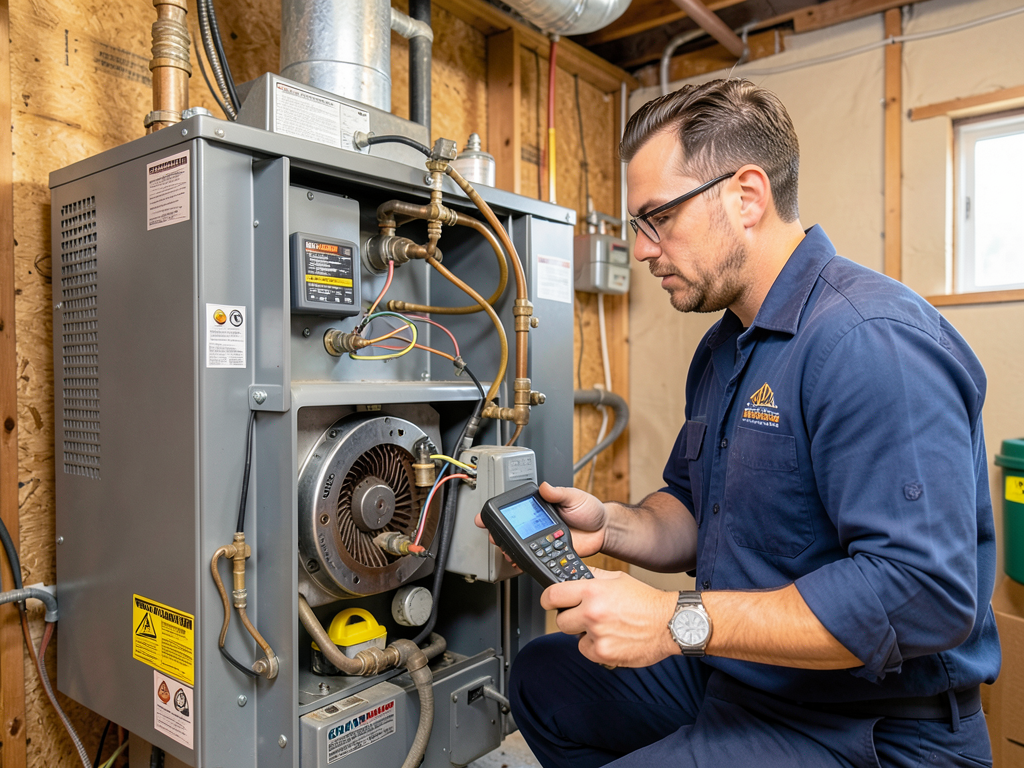
Diagram showing emergency furnace shutdown procedure and carbon monoxide detector placement in a typical Middleburg Heights home.. Read more about Protecting your Highland Heights family from carbon monoxide leaks this winter.
Identify Your Sound: The Furnace Noise Dictionary
Not all banging sounds are created equal. The specific type of noise your furnace makes helps diagnose the exact problem. Here’s a quick reference guide to help you identify what you’re hearing.
| Sound Description | Likely Cause | Urgency Level |
|---|---|---|
| Single loud bang when furnace starts | Delayed ignition or expanding ducts | Medium to High |
| Rapid popping like popcorn | Dirty burners or ignition problems | High |
| Metal on metal clanging | Loose blower wheel or motor mount | Medium |
| Deep booming sound | Gas buildup before ignition | Emergency |
| Rattling that intensifies | Loose panels or heat exchanger cracks | Emergency |
The timing of the noise also matters. A bang when the furnace first turns on often indicates ignition issues. Noises during operation might point to blower problems. Sounds when the system shuts down usually relate to metal expansion and contraction.
Delayed Ignition: The Most Dangerous Banging Sound
Delayed ignition occurs when gas builds up in your combustion chamber before the burners ignite. When ignition finally happens all that built-up gas ignites at once creating a small explosion. This causes the characteristic booming sound many homeowners fear.
In Middleburg Heights homes this problem often stems from dirty burners that don’t allow gas to flow properly. The burners can’t ignite immediately so gas accumulates until it finally lights with a bang. This not only sounds scary but also puts stress on your heat exchanger and can eventually cause cracks.
Another common cause is a faulty igniter that takes too long to glow hot enough to light the gas. During that delay gas continues flowing creating a dangerous buildup. Both issues require professional repair to prevent potential carbon monoxide leaks or heat exchanger damage. EPA indoor air quality guidelines.
Expanding Ductwork: The Harmless Banger
Sometimes that bang isn’t coming from your furnace at all. Your ductwork expands and contracts with temperature changes creating popping sounds that can mimic furnace problems. This is especially common in older Middleburg Heights homes with metal ducts.
When your furnace kicks on cold metal ducts rapidly heat up and expand. This can cause them to pop against floor joists or other supports. The sound travels through your vents making it seem like your furnace is the source. While annoying this rarely indicates a serious problem.
You can often identify duct noise by listening near your vents when the sound occurs. If the noise seems to come from the walls or ceiling rather than the furnace itself you’re likely dealing with expanding ducts. While not dangerous these noises can be fixed by adding insulation or support brackets to prevent movement.
Photo showing a technician inspecting a furnace burner assembly with visible soot buildup indicating delayed ignition problems.
Common Causes for Cleveland Furnaces
Cleveland’s climate creates unique challenges for furnaces. Our harsh winters mean furnaces run longer and harder than in milder regions. This increased runtime accelerates wear on components especially in older homes common throughout Middleburg Heights.
Many homes in your area were built between 1950 and 1980 when building codes were different. These furnaces often lack modern safety features and may have been running for decades without proper maintenance. The age alone makes certain noises more likely.
Lake-effect snow and extreme temperature swings also affect furnace performance. Rapid temperature changes cause more expansion and contraction in metal components. Ice and snow can block intake or exhaust vents causing pressure switches to malfunction which sometimes results in banging sounds.
Gas Pressure Issues in Older Homes
Many Middleburg Heights homes still have their original gas lines. Over time these can develop restrictions or pressure drops that affect furnace performance. When gas pressure is too high or too low it can cause ignition problems leading to banging sounds.
Low gas pressure often results in delayed ignition as described earlier. High pressure can cause burners to flare up too aggressively when they finally ignite. Both scenarios stress your furnace and reduce efficiency. A professional can test your gas pressure and adjust it to manufacturer specifications.
Gas pressure problems also affect your furnace’s ability to maintain consistent heat. You might notice your home feels colder even though the furnace runs constantly. This happens because the system can’t produce enough heat due to improper gas flow.
Electrical Component Failures
Your furnace contains several electrical components that can fail and create unusual sounds. The control board acts as your furnace’s brain coordinating all operations. When it starts failing you might hear clicking sounds followed by banging as the system tries to ignite unsuccessfully.. Read more about Comparing the Long Term Costs of Electric and Gas Heating in Brook Park.
Relays on the control board can stick causing the gas valve to open without the igniter being ready. This creates the perfect conditions for delayed ignition and the resulting bang. These electrical issues often worsen over time until the furnace stops working entirely.
Capacitors provide the initial power boost to start your blower motor. When they fail the motor might struggle to start creating a humming sound followed by a banging noise as the motor finally kicks in. This puts extra stress on the motor and can lead to complete failure if not addressed.
DIY Fixes vs. Professional Repair
Some furnace noises have simple DIY solutions while others require professional attention. Knowing the difference can save you money and prevent dangerous situations. Here’s a guide to help you decide when to grab your toolbox versus when to call (216) 530-9077.
Safe DIY checks include examining your air filter and replacing it if dirty. A clogged filter restricts airflow causing your furnace to work harder and sometimes create whistling sounds that might seem like banging. Also check that all vents in your home are open and unobstructed.
You can also inspect visible ductwork for loose connections or obvious damage. Sometimes banging noises come from loose duct seams that can be tightened with metal tape. However never attempt to open your furnace cabinet or adjust gas components yourself.
Professional repair is necessary for any issues involving gas lines, electrical components, or the heat exchanger. These systems require specialized tools and knowledge to repair safely. Working on them without proper training risks gas leaks, electrical shock, or carbon monoxide poisoning. Fast and Local AC Repair Services in Solon and Surrounding Areas.
The Screwdriver Test: A Simple Diagnostic Tool
Before calling for service you can perform a simple diagnostic test using just a screwdriver. This helps you gather information that will help the technician diagnose your problem faster when they arrive. HVAC Rocky River.
First locate your furnace’s observation window if it has one. Use your screwdriver to remove the small access panel. Watch the burner assembly when your furnace starts. You should see a smooth ignition with all burners lighting within seconds. If you see one burner light late followed by a bang you’ve identified delayed ignition.
Next listen for the click of the gas valve opening before ignition. A delay between this click and burner ignition often indicates a failing igniter or control board issue. Write down what you observe including the timing of any noises.
Remember never to remove large panels or tamper with gas lines. If you can’t see the burners through the observation window or feel uncomfortable performing this test call a professional instead.
Photo of a technician using a combustion analyzer to test furnace efficiency and detect potential safety issues in a Cleveland-area home.
Schedule Emergency Furnace Repair in Cleveland
When those banging noises signal a real problem you need a local expert who understands Cleveland’s unique heating challenges. Our team serves Middleburg Heights and surrounding suburbs with 24/7 emergency service because we know furnace problems don’t wait for business hours.
We arrive fully equipped to diagnose and repair most issues in a single visit. Our trucks carry common replacement parts for major furnace brands found in Northeast Ohio homes. This means faster repairs and less time without heat during our brutal winters.
Don’t let strange noises become complete system failure. A minor ignition problem today can become a cracked heat exchanger tomorrow. That’s why we offer comprehensive inspections that catch small issues before they become expensive emergencies.
Call (216) 530-9077 now to schedule your inspection. We’ll diagnose those banging noises and provide a clear explanation of what’s wrong and what it will take to fix it. No pressure. No scare tactics. Just honest advice from local technicians who live and work in your community.
Pick up the phone and call (216) 530-9077 before the next storm hits. Your family’s comfort and safety shouldn’t wait.
Frequently Asked Questions
Why does my furnace make a loud bang when it turns on?
A loud bang at startup usually indicates delayed ignition or expanding ductwork. Delayed ignition happens when gas builds up before lighting causing a small explosion. Expanding ducts make noise as metal heats up rapidly. Both are common in older Cleveland homes but delayed ignition requires immediate professional attention.
Is it safe to keep using my furnace if it’s making banging noises?
It depends on the specific noise. Harmless duct expansion is safe to continue. However banging from delayed ignition, rattling that gets louder, or any noise with gas smells requires immediate shutdown. When in doubt turn off your furnace and call a professional. Carbon monoxide risks aren’t worth taking.
How much does it cost to fix a furnace that’s making banging noises?
Repair costs vary based on the specific problem. Simple fixes like cleaning dirty burners might cost $150-300. More complex repairs like replacing a control board run $400-600. Emergency service calls during nights or weekends typically add $100-150 to standard rates. We provide clear pricing before starting any work.
Can cold weather cause my furnace to make banging noises?
Yes. Extreme cold makes metal components contract while rapid heating causes expansion. This temperature differential can create popping or banging sounds. Ice and snow blocking vents can also cause pressure switch problems that result in unusual noises. These issues are more common during Cleveland’s coldest snaps.
How long can I wait to fix banging furnace noises?
Only wait if you’re certain the noise is harmless duct expansion. For any other banging sounds immediate attention is best. Ignition problems can worsen quickly potentially cracking your heat exchanger. That’s a much more expensive repair and creates carbon monoxide risks. Don’t gamble with your family’s safety. For more information, visit ASHRAE HVAC standards.
{
“@context”: “https://schema.org”,
“@type”: “BlogPosting”,
“headline”: “What Those Strange Banging Noises from Your Middleburg Heights Furnace Actually Mean”,
“description”: “Hearing banging from your Middleburg Heights furnace? Learn what each sound means and when to call for emergency repair. Safety first with local Cleveland HVAC experts.”,
“wordCount”: 2086,
“datePublished”: “2026-03-09T11:45:00.000Z”,
“dateModified”: “2026-03-09T11:45:00.000Z”,
“inLanguage”: “en-US”,
“mainEntityOfPage”: {
“@type”: “WebPage”,
“@id”: “https://acehvaccleveland.com”
},
“publisher”: {
“@type”: “LocalBusiness”,
“name”: “Ace HVAC Cleveland”,
“url”: “https://acehvaccleveland.com”
},
“author”: {
“@type”: “Organization”,
“name”: “Ace HVAC Cleveland”,
“url”: “https://acehvaccleveland.com”
},
“image”: {
“@type”: “ImageObject”,
“url”: “https://acehvaccleveland.com/wp-content/uploads/2026/03/what-those-strange-banging-noises-from-your-middle-1.png”
}
}
{
“@context”: “https://schema.org”,
“@type”: “HVACBusiness”,
“name”: “Ace HVAC Cleveland”,
“url”: “https://acehvaccleveland.com”,
“address”: {
“@type”: “PostalAddress”,
“addressLocality”: “Cleveland”
},
“areaServed”: {
“@type”: “City”,
“name”: “Cleveland”
}
}
{
“@context”: “https://schema.org”,
“@type”: “FAQPage”,
“mainEntity”: [
{
“@type”: “Question”,
“name”: “Why does my furnace make a loud bang when it turns on?”,
“acceptedAnswer”: {
“@type”: “Answer”,
“text”: “A loud bang at startup usually indicates delayed ignition or expanding ductwork. Delayed ignition happens when gas builds up before lighting causing a small explosion. Expanding ducts make noise as metal heats up rapidly. Both are common in older Cleveland homes but delayed ignition requires immediate professional attention.”
}
},
{
“@type”: “Question”,
“name”: “Is it safe to keep using my furnace if it’s making banging noises?”,
“acceptedAnswer”: {
“@type”: “Answer”,
“text”: “It depends on the specific noise. Harmless duct expansion is safe to continue. However banging from delayed ignition, rattling that gets louder, or any noise with gas smells requires immediate shutdown. When in doubt turn off your furnace and call a professional. Carbon monoxide risks aren’t worth taking.”
}
},
{
“@type”: “Question”,
“name”: “How much does it cost to fix a furnace that’s making banging noises?”,
“acceptedAnswer”: {
“@type”: “Answer”,
“text”: “Repair costs vary based on the specific problem. Simple fixes like cleaning dirty burners might cost $150-300. More complex repairs like replacing a control board run $400-600. Emergency service calls during nights or weekends typically add $100-150 to standard rates. We provide clear pricing before starting any work.”
}
},
{
“@type”: “Question”,
“name”: “Can cold weather cause my furnace to make banging noises?”,
“acceptedAnswer”: {
“@type”: “Answer”,
“text”: “Yes. Extreme cold makes metal components contract while rapid heating causes expansion. This temperature differential can create popping or banging sounds. Ice and snow blocking vents can also cause pressure switch problems that result in unusual noises. These issues are more common during Cleveland’s coldest snaps.”
}
},
{
“@type”: “Question”,
“name”: “How long can I wait to fix banging furnace noises?”,
“acceptedAnswer”: {
“@type”: “Answer”,
“text”: “Only wait if you’re certain the noise is harmless duct expansion. For any other banging sounds immediate attention is best. Ignition problems can worsen quickly potentially cracking your heat exchanger. That’s a much more expensive repair and creates carbon monoxide risks. Don’t gamble with your family’s safety. For more information, visit ASHRAE HVAC standards.”
}
}
]
}
{
“@context”: “https://schema.org”,
“@type”: “BreadcrumbList”,
“itemListElement”: [
{
“@type”: “ListItem”,
“position”: 1,
“name”: “Home”,
“item”: “https://acehvaccleveland.com”
},
{
“@type”: “ListItem”,
“position”: 2,
“name”: “Blog”,
“item”: “https://acehvaccleveland.com/blog”
},
{
“@type”: “ListItem”,
“position”: 3,
“name”: “What Those Strange Banging Noises from Your Middleburg Heights Furnace Actually Mean”
}
]
}
{
“@context”: “https://schema.org”,
“@type”: “Service”,
“serviceType”: “HVAC”,
“provider”: {
“@type”: “LocalBusiness”,
“name”: “Ace HVAC Cleveland”,
“url”: “https://acehvaccleveland.com”
},
“areaServed”: {
“@type”: “City”,
“name”: “Cleveland”
},
“description”: “Hearing banging from your Middleburg Heights furnace? Learn what each sound means and when to call for emergency repair. Safety first with local Cleveland HVAC experts.”
}