
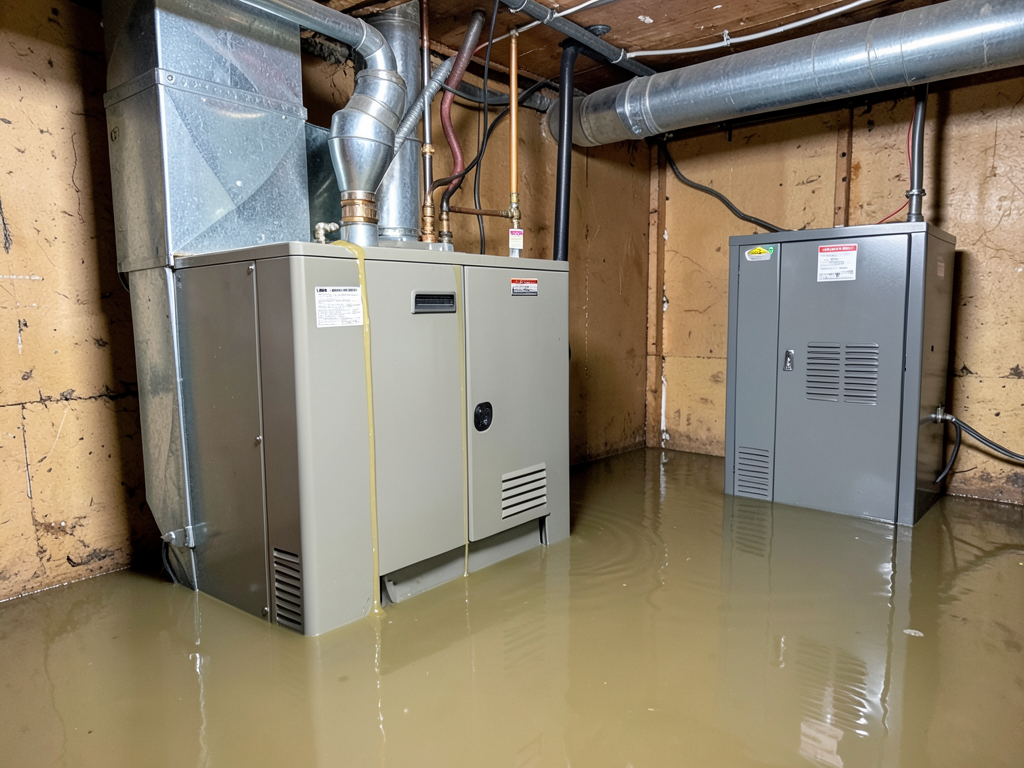
Restoring Your HVAC System After a Basement Flood in Slavic Village
If your basement flooded in Slavic Village, your HVAC system could be damaged beyond safe operation. Water exposure can corrode electrical components, contaminate ductwork, and create serious health hazards. This guide walks you through immediate safety steps, the inspection process, and what to expect when restoring your system in Cleveland’s flood-prone areas. How Much Does a New Central Air System Cost in Northeast Ohio?.
Immediate Safety Steps Before Calling a Technician
Do not turn on your HVAC system after a flood. Even if it appears dry, electrical shorts and gas leaks can create life-threatening hazards. Follow these steps immediately:
- Shut Off Power
Locate your main electrical panel and switch off the breaker for your HVAC system. If the panel is wet, use the main disconnect outside your home.
- Gas Shut-Off
Turn the gas valve to the “off” position if you have a gas furnace. The valve handle should be perpendicular to the pipe when off. Replacing an Old Furnace in a Historic Shaker Heights Home.
- Document Damage
Take photos of your flooded equipment before cleanup begins. These images are essential for insurance claims.
- Remove Standing Water
Use a wet vacuum or sump pump to remove water. Do not use electrical equipment near standing water.
Why Slavic Village Homes Face Higher Flood Risk
Slavic Village’s older infrastructure and proximity to the Cuyahoga River create unique flood vulnerabilities. Many homes in the area were built before modern flood mitigation standards, with basements that sit below the water table during heavy rains. HVAC Rocky River.
The neighborhood’s combined sewer system, which handles both stormwater and wastewater, can back up during intense rainfall events. This creates a Category 3 water situation where floodwater contains bacteria, chemicals, and other contaminants that can destroy HVAC components.
According to the Cleveland Division of Water, areas near Fleet Avenue and Broadway experience basement flooding more frequently than other parts of the city. The clay-heavy soil in Slavic Village also drains poorly, allowing water to pool around foundations.
What Happens During a Professional HVAC Flood Inspection
A qualified HVAC technician follows specific diagnostic procedures to assess flood damage. Here’s what the inspection involves:
- Visual Assessment
The technician examines all components for water lines, corrosion, and debris. They check the heat exchanger, control board, and blower motor for visible damage.. Read more about Climate Control Tips for Finished Basements and Playrooms in Highland Hills.
- Electrical Testing
Using a multimeter, they test all electrical connections for shorts and corrosion. Even minimal water exposure can cause copper wiring to corrode.
- Gas System Check
For gas furnaces, they inspect the gas valve, burner assembly, and heat exchanger for sediment buildup and corrosion that could cause dangerous gas leaks.
- Ductwork Evaluation
The technician checks for standing water in ducts and tests for bacterial contamination. Floodwater in ducts requires complete replacement under EPA guidelines. EPA flood cleanup guidelines.
Repair vs. Replacement: Making the Right Decision
The decision to repair or replace depends on several factors. Here’s what technicians consider: Fast and Local AC Repair Services in Solon and Surrounding Areas.
| Component | Repair Possible? | Replacement Required? |
|---|---|---|
| Control Board | No | Yes |
| Blower Motor | Sometimes | If bearings seized |
| Heat Exchanger | No | Yes |
| Ductwork | No | Yes (Category 3 water) |
| Gas Valve | No | Yes |
National Flood Insurance Program guidelines require replacement of any HVAC component that came into contact with floodwater. This is because even thorough cleaning cannot guarantee removal of all contaminants.
The EPA’s Indoor Air Quality guidelines state that ductwork exposed to Category 3 water must be replaced to prevent mold growth and bacterial contamination. This applies to all Slavic Village homes regardless of flood depth.
Insurance and Documentation Requirements
Documenting flood damage properly can make the difference between a denied claim and full coverage. Here’s what you need:
- Photos of all damaged equipment before cleanup
- Professional inspection report with damage assessment
- Itemized repair or replacement estimates
- Proof of loss documentation within 60 days
Cuyahoga County requires specific documentation for flood damage claims. Your insurance adjuster will need evidence that the damage was directly caused by flooding, not pre-existing conditions.
Keep all receipts for temporary housing, cleanup services, and emergency repairs. These may be reimbursable under your flood insurance policy.
Preventing Future Flood Damage
After restoring your HVAC system, take steps to prevent future flood damage. Consider these upgrades:
- Elevate Equipment
Raise your furnace and air handler on platforms at least 12 inches above the highest recorded flood level for your area.
- Install Check Valves
Prevent sewer backup by installing check valves on all drain lines entering your home.
- Waterproof Ducts
Seal and insulate ductwork to prevent moisture intrusion during minor flooding events.
- Backup Sump Pump
Install a battery backup system to keep your basement dry during power outages.
Local Resources and Emergency Contacts
Slavic Village residents have access to specific resources for flood recovery:
The Cleveland Office of Emergency Management provides flood updates and safety information during severe weather events. They coordinate with the Cuyahoga County Emergency Management Agency to deploy resources to affected neighborhoods.
The Slavic Village Development Corporation offers emergency assistance programs for qualifying residents dealing with flood damage. They can connect you with local contractors who understand the specific challenges of the area.
Call (216) 530-9077 for 24/7 emergency HVAC service in Slavic Village. Our technicians arrive within 90 minutes of your call and carry the equipment needed to handle flood-damaged systems.
Frequently Asked Questions
Can I clean and reuse my flooded air filters?
No. Flood-contaminated filters must be replaced immediately. They harbor bacteria and mold spores that can spread throughout your home when the system runs.
How long does the drying process take after a basement flood?
Complete drying typically takes 3-5 days with commercial dehumidifiers and air movers. However, moisture meters must confirm all materials are dry before reinstalling HVAC equipment. Commercial HVAC Maintenance for Businesses in Downtown Cleveland.
Will my warranty cover flood damage?
Standard manufacturer warranties do not cover flood damage. You need flood insurance or a separate equipment protection plan that specifically includes water damage coverage.
Is it safe to be in my home while the HVAC system is being repaired?
Yes, if the power is off and the system is not operating. However, avoid the affected area until all standing water is removed and the space is properly ventilated.
What should I do if I smell gas after a flood?
Evacuate immediately and call your gas company’s emergency line from outside the home. Do not operate any electrical switches or create sparks.
How can I tell if my ductwork is salvageable?
Only a professional inspection can determine this. However, if floodwater reached your vents or registers, the entire duct system likely needs replacement under EPA guidelines.
Are there specific building codes for HVAC replacement in Slavic Village?
Yes. Cleveland Municipal Code requires permits for all HVAC replacements and mandates that new equipment meet current energy efficiency standards. Your contractor should handle all permitting requirements.
How much does it cost to replace a flooded HVAC system?
Costs vary based on system size and configuration, but most replacements in Slavic Village range from $4,500 to $12,000. Insurance may cover a significant portion if you have flood coverage.
Can mold grow in my HVAC system after a flood?
Yes, and it can spread rapidly. Mold can begin growing within 24-48 hours in moist environments. Professional cleaning and disinfection are essential after any flood exposure.
What’s the difference between Category 1 and Category 3 floodwater?
Category 1 is clean water from a broken pipe. Category 3 is contaminated water containing bacteria, chemicals, or sewage. Most basement floods in Slavic Village are Category 3 due to the combined sewer system.
Call (216) 530-9077 today to schedule your inspection. Our technicians understand Slavic Village’s unique flood challenges and can restore your system safely and efficiently. For more information, visit FEMA flood insurance requirements.
You may also find this helpful. Why your North Olmsted utility room smells like sewage and how to fix it.
{
“@context”: “https://schema.org”,
“@type”: “BlogPosting”,
“headline”: “Restoring Your HVAC System After a Basement Flood in Slavic Village”,
“description”: “Flooded basement in Slavic Village? Learn how to safely restore your HVAC system, avoid electrical hazards, and prevent mold growth with expert Cleveland guidance.”,
“wordCount”: 1303,
“datePublished”: “2026-05-08T10:41:00.000Z”,
“dateModified”: “2026-05-08T10:41:00.000Z”,
“inLanguage”: “en-US”,
“mainEntityOfPage”: {
“@type”: “WebPage”,
“@id”: “https://acehvaccleveland.com”
},
“publisher”: {
“@type”: “LocalBusiness”,
“name”: “Ace HVAC Cleveland”,
“url”: “https://acehvaccleveland.com”
},
“author”: {
“@type”: “Organization”,
“name”: “Ace HVAC Cleveland”,
“url”: “https://acehvaccleveland.com”
},
“image”: {
“@type”: “ImageObject”,
“url”: “https://acehvaccleveland.com/wp-content/uploads/2026/03/restoring-your-hvac-system-after-a-basement-flood-1.png”
}
}
{
“@context”: “https://schema.org”,
“@type”: “HVACBusiness”,
“name”: “Ace HVAC Cleveland”,
“url”: “https://acehvaccleveland.com”,
“address”: {
“@type”: “PostalAddress”,
“addressLocality”: “Cleveland”
},
“areaServed”: {
“@type”: “City”,
“name”: “Cleveland”
}
}
{
“@context”: “https://schema.org”,
“@type”: “FAQPage”,
“mainEntity”: [
{
“@type”: “Question”,
“name”: “Can I clean and reuse my flooded air filters?”,
“acceptedAnswer”: {
“@type”: “Answer”,
“text”: “No. Flood-contaminated filters must be replaced immediately. They harbor bacteria and mold spores that can spread throughout your home when the system runs.”
}
},
{
“@type”: “Question”,
“name”: “How long does the drying process take after a basement flood?”,
“acceptedAnswer”: {
“@type”: “Answer”,
“text”: “Complete drying typically takes 3-5 days with commercial dehumidifiers and air movers. However, moisture meters must confirm all materials are dry before reinstalling HVAC equipment. Commercial HVAC Maintenance for Businesses in Downtown Cleveland.”
}
},
{
“@type”: “Question”,
“name”: “Will my warranty cover flood damage?”,
“acceptedAnswer”: {
“@type”: “Answer”,
“text”: “Standard manufacturer warranties do not cover flood damage. You need flood insurance or a separate equipment protection plan that specifically includes water damage coverage.”
}
},
{
“@type”: “Question”,
“name”: “Is it safe to be in my home while the HVAC system is being repaired?”,
“acceptedAnswer”: {
“@type”: “Answer”,
“text”: “Yes, if the power is off and the system is not operating. However, avoid the affected area until all standing water is removed and the space is properly ventilated.”
}
},
{
“@type”: “Question”,
“name”: “What should I do if I smell gas after a flood?”,
“acceptedAnswer”: {
“@type”: “Answer”,
“text”: “Evacuate immediately and call your gas company’s emergency line from outside the home. Do not operate any electrical switches or create sparks.”
}
},
{
“@type”: “Question”,
“name”: “How can I tell if my ductwork is salvageable?”,
“acceptedAnswer”: {
“@type”: “Answer”,
“text”: “Only a professional inspection can determine this. However, if floodwater reached your vents or registers, the entire duct system likely needs replacement under EPA guidelines.”
}
},
{
“@type”: “Question”,
“name”: “Are there specific building codes for HVAC replacement in Slavic Village?”,
“acceptedAnswer”: {
“@type”: “Answer”,
“text”: “Yes. Cleveland Municipal Code requires permits for all HVAC replacements and mandates that new equipment meet current energy efficiency standards. Your contractor should handle all permitting requirements.”
}
},
{
“@type”: “Question”,
“name”: “How much does it cost to replace a flooded HVAC system?”,
“acceptedAnswer”: {
“@type”: “Answer”,
“text”: “Costs vary based on system size and configuration, but most replacements in Slavic Village range from $4,500 to $12,000. Insurance may cover a significant portion if you have flood coverage.”
}
},
{
“@type”: “Question”,
“name”: “Can mold grow in my HVAC system after a flood?”,
“acceptedAnswer”: {
“@type”: “Answer”,
“text”: “Yes, and it can spread rapidly. Mold can begin growing within 24-48 hours in moist environments. Professional cleaning and disinfection are essential after any flood exposure.”
}
},
{
“@type”: “Question”,
“name”: “What’s the difference between Category 1 and Category 3 floodwater?”,
“acceptedAnswer”: {
“@type”: “Answer”,
“text”: “Category 1 is clean water from a broken pipe. Category 3 is contaminated water containing bacteria, chemicals, or sewage. Most basement floods in Slavic Village are Category 3 due to the combined sewer system.”
}
}
]
}
{
“@context”: “https://schema.org”,
“@type”: “HowTo”,
“name”: “Immediate Flood Response”,
“step”: [
{
“@type”: “HowToStep”,
“position”: 1,
“name”: “Shut Off Power”,
“text”: “Locate your main electrical panel and switch off the breaker for your HVAC system. If the panel is wet, use the main disconnect outside your home.”
},
{
“@type”: “HowToStep”,
“position”: 2,
“name”: “Gas Shut-Off”,
“text”: “Turn the gas valve to the \”off\” position if you have a gas furnace. The valve handle should be perpendicular to the pipe when off. Replacing an Old Furnace in a Historic Shaker Heights Home.”
},
{
“@type”: “HowToStep”,
“position”: 3,
“name”: “Document Damage”,
“text”: “Take photos of your flooded equipment before cleanup begins. These images are essential for insurance claims.”
},
{
“@type”: “HowToStep”,
“position”: 4,
“name”: “Remove Standing Water”,
“text”: “Use a wet vacuum or sump pump to remove water. Do not use electrical equipment near standing water.”
}
],
“image”: “https://acehvaccleveland.com/wp-content/uploads/2026/03/restoring-your-hvac-system-after-a-basement-flood-1.png”
}
{
“@context”: “https://schema.org”,
“@type”: “BreadcrumbList”,
“itemListElement”: [
{
“@type”: “ListItem”,
“position”: 1,
“name”: “Home”,
“item”: “https://acehvaccleveland.com”
},
{
“@type”: “ListItem”,
“position”: 2,
“name”: “Blog”,
“item”: “https://acehvaccleveland.com/blog”
},
{
“@type”: “ListItem”,
“position”: 3,
“name”: “Restoring Your HVAC System After a Basement Flood in Slavic Village”
}
]
}
{
“@context”: “https://schema.org”,
“@type”: “Service”,
“serviceType”: “HVAC”,
“provider”: {
“@type”: “LocalBusiness”,
“name”: “Ace HVAC Cleveland”,
“url”: “https://acehvaccleveland.com”
},
“areaServed”: {
“@type”: “City”,
“name”: “Cleveland”
},
“description”: “Flooded basement in Slavic Village? Learn how to safely restore your HVAC system, avoid electrical hazards, and prevent mold growth with expert Cleveland guidance.”
}