
Designing the perfect climate control system for your Kirtland wine cellar
Wine collectors in Kirtland know that Ohio’s humid continental climate presents unique challenges for preserving fine wines. Standard air conditioning systems simply cannot maintain the precise temperature and humidity levels required for proper wine storage. This guide explains how to design a climate control system that protects your investment through every season. How Much Does a New Central Air System Cost in Northeast Ohio?.
The first step in designing any wine cellar cooling system is understanding the science of wine preservation. Wine requires a stable environment between 55-57°F with relative humidity between 50-70%. These conditions prevent corks from drying out while avoiding condensation that can damage labels and promote mold growth.. Read more about How to integrate your HVAC system with a Matter-enabled smart home in Cuyahoga Heights.
Understanding Cleveland’s climate impact on wine storage
Kirtland’s location in Northeast Ohio means your wine cellar faces extreme seasonal variations. Summer humidity from Lake Erie can push indoor moisture levels above 80%, while winter heating systems create desert-like conditions with humidity dropping below 20%. These fluctuations stress wine corks and accelerate aging.. Read more about Heating and cooling options for your new backyard tiny home in Clark-Fulton.
The region’s clay soil composition also affects basement installations. Heavy clay retains moisture, creating hydrostatic pressure against foundation walls. This moisture migration can overwhelm standard vapor barriers and compromise your cooling system’s efficiency.
Local building codes in Lake County require specific vapor barrier installations for below-grade spaces. The International Residential Code Section R406 mandates a minimum 6-mil polyethylene barrier on basement walls when installing climate-controlled spaces. Fast and Local AC Repair Services in Solon and Surrounding Areas.
Types of wine cellar cooling systems
Selecting the right cooling system depends on your cellar size, insulation quality, and local climate demands. Each system type offers different advantages for Kirtland homes.

| System Type | Best For | Installation Complexity | Energy Efficiency |
|---|---|---|---|
| Through-the-wall | Small cellars under 150 sq ft | Low | Moderate |
| Split system | Medium cellars 150-500 sq ft | Medium | High |
| Fully ducted | Large cellars over 500 sq ft | High | Very High |
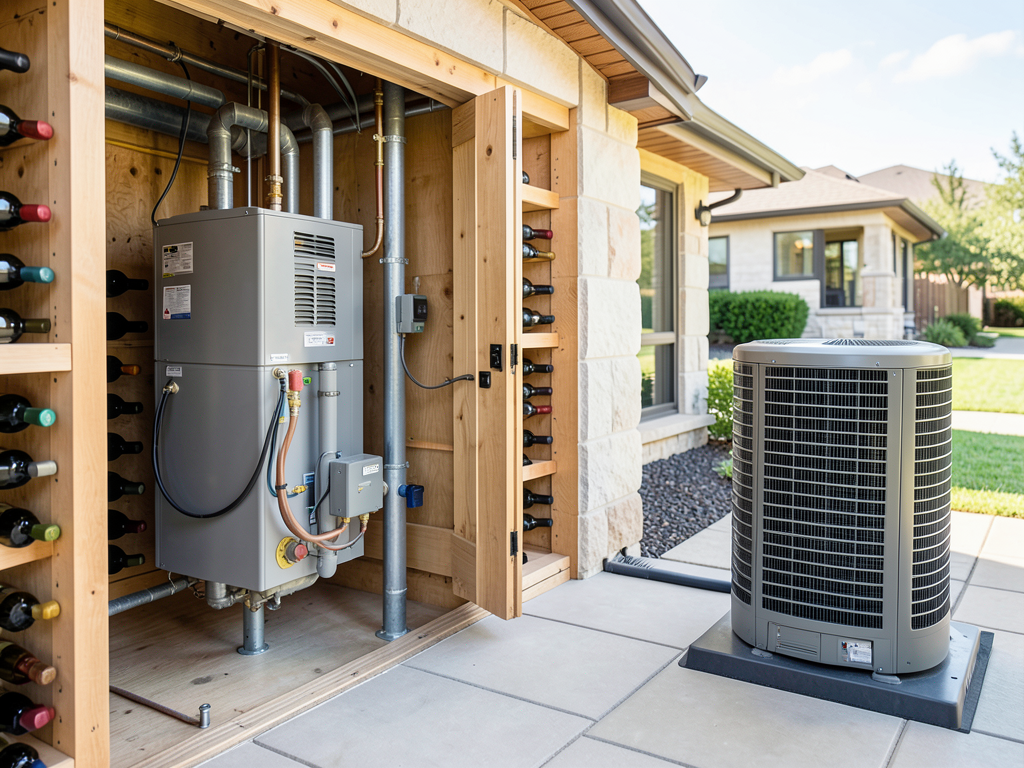
Through-the-wall units mount directly through the cellar wall and work well for small collections. Split systems separate the evaporator inside the cellar from the condensing unit outside, reducing vibration and noise. Fully ducted systems provide the most even temperature distribution for larger spaces. EPA relative humidity guidelines.
Vapor barrier and insulation requirements
Proper insulation and vapor barriers are critical in Kirtland’s climate. The thermal load calculation must account for both summer heat gain and winter heat loss through foundation walls.
For basement installations, use closed-cell spray foam insulation with an R-value of at least 19 on walls and R-30 on ceilings. This prevents condensation on cold surfaces while maintaining consistent temperatures.
The vapor barrier system requires multiple layers. Install a 6-mil polyethylene sheet on the warm side of insulation, sealed at all seams with specialized tape. In areas with high clay content, add a dimpled drainage membrane to direct moisture away from foundation walls.
Local building inspectors in Kirtland often require documentation showing compliance with Ohio Building Code Chapter 11 for mechanical systems in climate-controlled spaces.
Thermal load calculations for Northeast Ohio
Accurate BTU sizing prevents system short-cycling and ensures proper humidity control. The calculation must consider:
- Measure cellar dimensions
Calculate cubic footage by multiplying length × width × height.
- Determine insulation values
Account for R-values of walls, ceiling, and floor.
- Calculate heat gain
Include solar heat through any windows and adjacent room temperatures.
- Add humidity load
Factor in occupant load, door openings, and moisture migration.
- Apply safety factor
Add 15-20% to account for Cleveland’s temperature extremes.. Read more about How Cleveland Heights musicians protect their pianos from Ohio humidity swings.
A typical 200-bottle cellar in Kirtland requires approximately 3,500-4,000 BTU/hour cooling capacity. However, the humidity removal capacity often becomes the limiting factor, not cooling capacity.
Wine Guardian and WhisperKOOL units offer models specifically designed for Ohio’s climate zone. These systems include features like hot gas reheat to prevent over-drying during shoulder seasons.
Installation considerations for Kirtland homes
Many Kirtland homes were built between 1950-1980 with poured concrete foundations. These structures require specific installation approaches to prevent vibration transmission to wine bottles.
Mount the condensing unit on vibration isolation pads to prevent bottle agitation. Even slight vibrations can disturb wine sediment and accelerate aging. The evaporator coil should include a condensate drain pan with backup overflow protection.
Electrical requirements typically call for a dedicated 115V or 208/230V circuit depending on unit size. Local electricians familiar with NEC Article 424 requirements for fixed space heating equipment should handle all wiring.
Consider the location of your utility room. Condensing units need proper clearance for airflow and must comply with local noise ordinances. Kirtland’s residential zoning code limits outdoor unit noise to 65 decibels at property lines.
Maintenance and troubleshooting
Wine cooling systems require specialized maintenance different from standard HVAC equipment. The condenser coils collect dust and debris that reduce efficiency, while the evaporator coils can develop mold in high-humidity conditions. Commercial HVAC Maintenance for Businesses in Downtown Cleveland.
Annual maintenance should include coil cleaning, refrigerant level checks, and thermostat calibration. The condensate drain line requires periodic flushing to prevent algae growth and backups. HVAC Maintenance & Tune-Ups.
Common issues in Kirtland include:
- Ice buildup on evaporator coils during winter when adjacent rooms are heated
- Condensate drain freezing in unheated mechanical spaces
- Short cycling due to improper BTU sizing
- Vibration noise transmission through shared walls
Diagnostic testing involves checking superheat and subcooling levels, measuring air velocity across coils, and verifying humidity control operation. These tests require specialized refrigeration gauges and thermometers.
Energy efficiency and operating costs
Modern wine cellar cooling systems offer significant energy savings through variable-speed compressors and smart controls. Units with Energy Star certification can reduce operating costs by 20-30% compared to standard models. Energy Department cooling efficiency guide.
Operating costs in Kirtland average $25-45 monthly for a typical home cellar, depending on insulation quality and seasonal temperature extremes. The high-efficiency models often pay for themselves within 3-5 years through reduced electricity consumption.
Smart thermostats designed for wine storage maintain precise temperature bands and can send alerts if conditions deviate from setpoints. This prevents wine damage during power outages or system failures.
Common mistakes to avoid
Many wine collectors make critical errors when designing their cooling systems. Understanding these pitfalls can save thousands in repairs and wine replacement costs.
Insufficient insulation ranks as the most common mistake. Cutting corners on R-values leads to continuous system operation and premature equipment failure. The second most frequent error involves improper vapor barrier installation, allowing moisture migration that damages both wine and equipment.
Another critical mistake is selecting a unit based solely on cooling capacity without considering humidity control. A system that maintains 55°F but only 40% humidity will ruin wine through cork desiccation.
Finally, many installations fail to account for future collection growth. Design your system with 20-30% excess capacity to accommodate collection expansion without requiring complete replacement.
Professional installation benefits
While DIY installation might seem cost-effective, professional installation provides critical advantages for wine collectors. Certified technicians understand the nuances of wine storage environments and can optimize system performance for your specific collection.
Professional installation includes proper refrigerant charging, vibration isolation mounting, and compliance with all local building codes. Technicians also provide warranty documentation and maintenance schedules tailored to your system.
Most importantly, professional installers can identify potential issues before they cause damage. This includes checking for proper drainage, verifying electrical connections, and testing system performance under load conditions.
Emergency repair services
Wine cooling system failures can destroy thousands of dollars in wine within 24-48 hours. Having access to emergency repair services provides crucial protection for your collection.
Look for HVAC companies offering 24/7 emergency service with technicians specifically trained in wine cooling systems. These specialists carry common replacement parts and can often restore cooling within hours of failure.
Emergency response should include temporary cooling solutions to protect your wine during repairs. This might involve portable cooling units or temporary power connections to maintain critical temperature levels.
Regular maintenance contracts with emergency response guarantees provide the best protection. These agreements ensure priority service and often include annual inspections that prevent most emergency situations.
Call (216) 530-9077 today to schedule your wine cellar cooling system consultation. Our technicians understand the unique challenges of preserving wine collections in Northeast Ohio’s climate and can design a system that protects your investment for decades.
Frequently Asked Questions
What size wine cellar cooling system do I need?
The cooling capacity depends on your cellar’s cubic footage, insulation quality, and local climate conditions. A professional thermal load calculation considers all these factors to determine the exact BTU requirements for your specific installation.
How much does it cost to install a wine cellar cooling system?
Installation costs vary based on system type, cellar size, and complexity. Through-the-wall units start around $1,500 installed, while fully ducted systems can exceed $8,000. Professional installation ensures proper operation and warranty compliance.
How long do wine cellar cooling systems last?
With proper maintenance, quality wine cooling systems typically last 10-15 years. Regular coil cleaning, refrigerant checks, and annual maintenance can extend system life and prevent costly emergency repairs.
Can I use a regular air conditioner for my wine cellar?
Standard air conditioners cannot maintain the precise temperature and humidity levels required for wine storage. They remove too much humidity and cannot achieve the consistent 55-57°F temperature range needed for proper wine preservation.
What maintenance does a wine cellar cooling system require?
Annual maintenance includes coil cleaning, refrigerant level checks, condensate drain flushing, and thermostat calibration. Some systems benefit from bi-annual service to prepare for extreme seasonal temperature changes in Northeast Ohio.
{
“@context”: “https://schema.org”,
“@type”: “BlogPosting”,
“headline”: “Designing the perfect climate control system for your Kirtland wine cellar”,
“description”: “Expert HVAC design for Kirtland wine cellars. Learn humidity control, vapor barriers, and cooling systems that protect your collection in Northeast Ohio’s climate.”,
“wordCount”: 1576,
“datePublished”: “2026-05-17T10:17:00.000Z”,
“dateModified”: “2026-05-17T10:17:00.000Z”,
“inLanguage”: “en-US”,
“mainEntityOfPage”: {
“@type”: “WebPage”,
“@id”: “https://acehvaccleveland.com”
},
“publisher”: {
“@type”: “LocalBusiness”,
“name”: “Ace HVAC Cleveland”,
“url”: “https://acehvaccleveland.com”
},
“author”: {
“@type”: “Organization”,
“name”: “Ace HVAC Cleveland”,
“url”: “https://acehvaccleveland.com”
},
“image”: {
“@type”: “ImageObject”,
“url”: “https://acehvaccleveland.com/wp-content/uploads/2026/03/designing-the-perfect-climate-control-system-for-y-1.png”
}
}
{
“@context”: “https://schema.org”,
“@type”: “HVACBusiness”,
“name”: “Ace HVAC Cleveland”,
“url”: “https://acehvaccleveland.com”,
“address”: {
“@type”: “PostalAddress”,
“addressLocality”: “Cleveland”
},
“areaServed”: {
“@type”: “City”,
“name”: “Cleveland”
}
}
{
“@context”: “https://schema.org”,
“@type”: “FAQPage”,
“mainEntity”: [
{
“@type”: “Question”,
“name”: “What size wine cellar cooling system do I need?”,
“acceptedAnswer”: {
“@type”: “Answer”,
“text”: “The cooling capacity depends on your cellar’s cubic footage, insulation quality, and local climate conditions. A professional thermal load calculation considers all these factors to determine the exact BTU requirements for your specific installation.”
}
},
{
“@type”: “Question”,
“name”: “How much does it cost to install a wine cellar cooling system?”,
“acceptedAnswer”: {
“@type”: “Answer”,
“text”: “Installation costs vary based on system type, cellar size, and complexity. Through-the-wall units start around $1,500 installed, while fully ducted systems can exceed $8,000. Professional installation ensures proper operation and warranty compliance.”
}
},
{
“@type”: “Question”,
“name”: “How long do wine cellar cooling systems last?”,
“acceptedAnswer”: {
“@type”: “Answer”,
“text”: “With proper maintenance, quality wine cooling systems typically last 10-15 years. Regular coil cleaning, refrigerant checks, and annual maintenance can extend system life and prevent costly emergency repairs.”
}
},
{
“@type”: “Question”,
“name”: “Can I use a regular air conditioner for my wine cellar?”,
“acceptedAnswer”: {
“@type”: “Answer”,
“text”: “Standard air conditioners cannot maintain the precise temperature and humidity levels required for wine storage. They remove too much humidity and cannot achieve the consistent 55-57°F temperature range needed for proper wine preservation.”
}
},
{
“@type”: “Question”,
“name”: “What maintenance does a wine cellar cooling system require?”,
“acceptedAnswer”: {
“@type”: “Answer”,
“text”: “Annual maintenance includes coil cleaning, refrigerant level checks, condensate drain flushing, and thermostat calibration. Some systems benefit from bi-annual service to prepare for extreme seasonal temperature changes in Northeast Ohio.”
}
}
]
}
{
“@context”: “https://schema.org”,
“@type”: “HowTo”,
“name”: “Wine Cellar BTU Calculation Steps”,
“step”: [
{
“@type”: “HowToStep”,
“position”: 1,
“name”: “Measure cellar dimensions”,
“text”: “Calculate cubic footage by multiplying length × width × height.”
},
{
“@type”: “HowToStep”,
“position”: 2,
“name”: “Determine insulation values”,
“text”: “Account for R-values of walls, ceiling, and floor.”
},
{
“@type”: “HowToStep”,
“position”: 3,
“name”: “Calculate heat gain”,
“text”: “Include solar heat through any windows and adjacent room temperatures.”
},
{
“@type”: “HowToStep”,
“position”: 4,
“name”: “Add humidity load”,
“text”: “Factor in occupant load, door openings, and moisture migration.”
},
{
“@type”: “HowToStep”,
“position”: 5,
“name”: “Apply safety factor”,
“text”: “Add 15-20% to account for Cleveland’s temperature extremes.”
}
],
“image”: “https://acehvaccleveland.com/wp-content/uploads/2026/03/designing-the-perfect-climate-control-system-for-y-1.png”
}
{
“@context”: “https://schema.org”,
“@type”: “BreadcrumbList”,
“itemListElement”: [
{
“@type”: “ListItem”,
“position”: 1,
“name”: “Home”,
“item”: “https://acehvaccleveland.com”
},
{
“@type”: “ListItem”,
“position”: 2,
“name”: “Blog”,
“item”: “https://acehvaccleveland.com/blog”
},
{
“@type”: “ListItem”,
“position”: 3,
“name”: “Designing the perfect climate control system for your Kirtland wine cellar”
}
]
}
{
“@context”: “https://schema.org”,
“@type”: “Service”,
“serviceType”: “HVAC”,
“provider”: {
“@type”: “LocalBusiness”,
“name”: “Ace HVAC Cleveland”,
“url”: “https://acehvaccleveland.com”
},
“areaServed”: {
“@type”: “City”,
“name”: “Cleveland”
},
“description”: “Expert HVAC design for Kirtland wine cellars. Learn humidity control, vapor barriers, and cooling systems that protect your collection in Northeast Ohio’s climate.”
}