
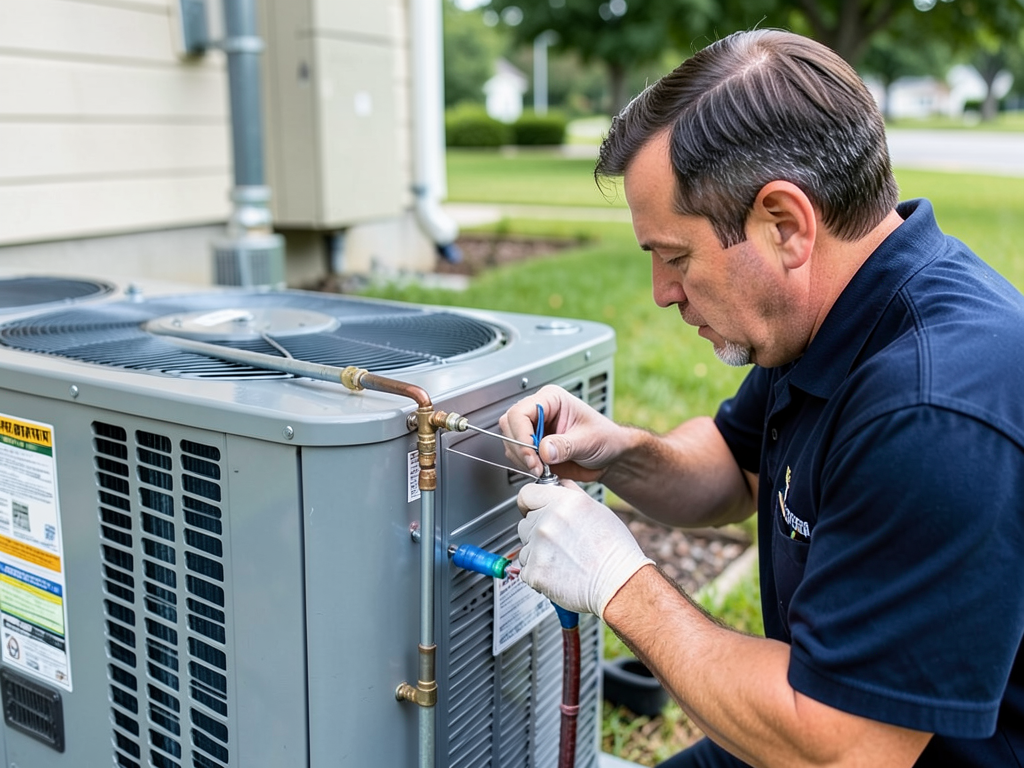
The Real Cost of Moving Your Outdoor Condenser for a New Deck in Sagamore Hills
Moving your outdoor AC condenser in Sagamore Hills typically costs between $1,200 and $3,500 depending on distance, refrigerant line length, and electrical work required. Most homeowners planning a new deck or patio discover too late that their existing unit sits exactly where they want to build. The good news? With proper planning and Cleveland-specific expertise, you can relocate your system without sacrificing comfort or breaking your renovation budget. How Much Does a New Central Air System Cost in Northeast Ohio?.
The process involves more than just picking up the unit and setting it down elsewhere. Cuyahoga County building codes require permits for condenser relocation, and EPA regulations mandate specific handling of refrigerant lines. Local soil conditions in Sagamore Hills’ glacial till can affect concrete pad stability, while Cleveland’s freeze-thaw cycles demand proper elevation to prevent winter damage. Understanding these factors upfront helps you avoid costly surprises during your deck construction project. EPA Section 608 Certification.
Why Sagamore Hills Homeowners Need to Move Their Condensers
Many Sagamore Hills properties feature expansive backyards perfect for outdoor living spaces. However, original AC installations from the 1980s and 1990s often placed units in locations that conflict with modern deck designs. The glacial till soil common in this area creates unique challenges – it drains poorly compared to the sandy soils found in western Cuyahoga County, meaning condensers placed too low can suffer from water accumulation and accelerated corrosion.
Additionally, Sagamore Hills experiences more dramatic temperature swings than downtown Cleveland due to its elevation changes. This means outdoor units need additional clearance from snow drifts that can build up against deck railings during lake-effect storms. A properly relocated condenser considers these local climate factors while maintaining the manufacturer’s required clearance specifications for optimal performance. Fast and Local AC Repair Services in Solon and Surrounding Areas.
Breaking Down the True Costs in Cleveland Dollars
The total cost to move an AC condenser depends on several interconnected factors that Cleveland HVAC contractors must evaluate during an on-site assessment. Here’s what drives your final price tag:
| Cost Component | Price Range | Why It Matters in Sagamore Hills |
|---|---|---|
| Basic relocation (under 5 feet) | $1,200 – $1,800 | Minimal line set extension, same electrical circuit |
| Standard relocation (5-15 feet) | $1,800 – $2,500 | Line set extension, possible electrical adjustment |
| Complex relocation (15+ feet) | $2,500 – $3,500+ | New line set, electrical upgrade, concrete work |
The glacial till soil in Sagamore Hills often requires deeper concrete pads than standard installations. This soil expands and contracts more dramatically with moisture changes than the clay soils found in older Cleveland neighborhoods, potentially adding $200-400 to your concrete work costs.
Hidden Costs Most Contractors Don’t Mention
Beyond the basic relocation fee, several Cleveland-specific factors can increase your total investment. Cuyahoga County requires electrical permits for any condenser relocation, costing $75-150 depending on your township. The Sagamore Hills building department also mandates inspections for condenser relocations affecting property lines or setback requirements.
Refrigerant handling represents another significant cost factor. EPA Section 608 certification requires licensed technicians to recover and recharge refrigerant systems. For R-410A systems common in homes built after 2010, this process costs $150-300. Older R-22 systems face even higher costs due to refrigerant scarcity and phase-out regulations.
Line set brazing represents a technical skill that separates qualified contractors from general handymen. Poor brazing creates refrigerant leaks that can destroy your compressor within months. Quality contractors use nitrogen purging during brazing to prevent oxidation, adding $100-200 to the job but protecting your $3,000+ investment in the condenser unit.
The EPA Compliance Factor You Can’t Ignore
Moving your condenser requires strict adherence to EPA Section 608 regulations. These federal rules govern refrigerant handling, recovery, and disposal. Violating these regulations can result in fines up to $37,500 per day for contractors who cut corners.
The process requires specialized equipment including vacuum pumps capable of achieving 500 microns of vacuum, refrigerant recovery machines, and electronic leak detectors. Each technician must maintain current EPA 608 certification. This level of compliance explains why DIY condenser moves or hiring unlicensed handymen often leads to system failures within the first year.
In Sagamore Hills’ humid climate, proper refrigerant charging becomes even more critical. The area’s high summer humidity means your system runs longer cooling cycles, making accurate superheat and subcooling measurements essential for efficiency. An improperly charged system can increase your summer electric bills by 15-25% while reducing equipment lifespan.
Concrete Pad vs. Wall Bracket: Which Makes Sense for Your Property?
Your Sagamore Hills property’s specific characteristics determine the best mounting method for your relocated condenser. Glacial till soil requires different considerations than the clay soils found in Northfield or Macedonia.
Concrete pads work best for properties with level ground and good drainage. The pad should extend 3 inches beyond the unit on all sides and sit 6 inches above grade to prevent snow accumulation. In Sagamore Hills’ freeze-thaw climate, a 4-inch thick pad with wire mesh reinforcement prevents cracking and settling.
Wall brackets offer advantages for properties near wooded areas where leaves and debris accumulate. They also work well for homes on slopes where proper pad leveling would require extensive excavation. However, brackets must be engineered to support the unit’s weight plus wind loads, typically requiring a licensed structural engineer’s approval in Cuyahoga County.
The choice affects long-term maintenance too. Wall-mounted units stay cleaner but require more frequent vibration inspections. Ground-mounted units are easier to service but need vegetation clearance to maintain proper airflow. Commercial HVAC Maintenance for Businesses in Downtown Cleveland.
Line Set Extension: The Technical Heart of Your Relocation
Extending refrigerant lines requires precision that impacts your system’s efficiency for years. Each foot of line set adds resistance, reducing cooling capacity by approximately 0.5% per 10 feet of additional tubing.
The brazing process itself demands specific techniques. Technicians must use silver-based brazing rods rather than standard copper-phosphorus rods to ensure leak-free joints. The joint area should be heated until the rod flows freely into the connection, creating a bond stronger than the copper tubing itself.
Vacuum pulling represents another critical step. After brazing, the system must be evacuated to remove moisture and non-condensable gases. A proper vacuum pulls the system to 500 microns or below and holds that vacuum for at least 10 minutes without rising more than 500 microns. This process can take 30-60 minutes depending on line set length and ambient humidity.
In Sagamore Hills’ humid summers, moisture contamination causes particular problems. Water in the refrigerant circuit creates acid that corrodes compressor windings, often leading to catastrophic failure within 1-2 years.
Electrical Considerations That Affect Your Timeline
Condenser relocation often requires electrical work beyond simple wire pulling. The National Electrical Code (NEC Article 440) governs HVAC electrical installations, requiring specific wire gauges, conduit types, and disconnect locations. National Association of Certified Home Inspectors.
Most Sagamore Hills homes built before 2000 have 10-gauge wire for condenser circuits, adequate for runs under 50 feet. Longer distances require 8-gauge wire to prevent voltage drop that can cause hard starting and compressor overheating. Voltage drop over 3% reduces efficiency and can void manufacturer warranties.
Disconnect box placement follows strict rules – it must be within sight of the condenser and no more than 50 feet away. The box requires a 240-volt, 30-amp breaker for standard residential units. Upgrading from an existing setup typically adds $150-300 to your project cost.
Local building inspectors in Sagamore Hills check electrical work during final inspections. Unpermitted electrical changes can result in failed inspections and require costly rework before your deck project passes final approval.
Timing Your Project Around Cleveland’s Weather Patterns
Spring and fall offer ideal conditions for condenser relocation in Northeast Ohio. Summer heat makes refrigerant handling more difficult, while winter cold can cause condensation in line sets that freezes and creates pressure problems.
The best window typically runs from mid-April through early June and again from mid-September through October. During these periods, ground temperatures remain above freezing but humidity stays moderate enough for proper vacuum pulling and refrigerant charging.
Emergency relocations during heat waves cost 20-30% more due to overtime rates and rushed material delivery. Planning your deck project during shoulder seasons not only saves money but ensures your contractor can take the time needed for proper installation rather than rushing to restore cooling.
Move vs. Replace: Making the Right Decision for Your 10+ Year Old Unit
Condensers over 10 years old in Cleveland’s climate often make more sense to replace than relocate. The area’s humidity and temperature swings mean units typically last 12-15 years, so moving a 12-year-old unit might only buy you 2-3 more years of service.
Modern high-efficiency units offer 16-18 SEER ratings compared to 10-12 SEER for units from the early 2000s. This efficiency gain can reduce cooling costs by 30-40%. Additionally, R-410A refrigerant systems use different oils than older R-22 systems, meaning a simple line set extension on an old unit might not provide optimal performance anyway.
The break-even analysis becomes straightforward: if relocation costs exceed 40% of a new unit’s price, replacement often makes more financial sense. For a $2,500 relocation on a $4,000 replacement unit, investing the extra $1,500 gets you a warranty and 5+ years of additional service life.
Protecting Your Investment During Deck Construction
Even after relocation, your condenser needs protection during deck building. Construction dust and debris can clog condenser coils, reducing efficiency by up to 30%. Smart contractors schedule condenser work after major deck construction to minimize exposure.
If your timeline requires condenser operation during construction, consider temporary plywood barriers around the unit. These should provide 2 feet of clearance on all sides while blocking wind-driven dust. Some Sagamore Hills homeowners temporarily relocate units to garage space during major deck renovations, though this requires additional electrical work.
Post-construction cleaning proves essential. Construction dust combined with Cleveland’s pollen season can create a perfect storm of coil contamination. Professional coil cleaning after deck completion, costing $150-250, restores efficiency and prevents the musty odors that develop when dust combines with condensation on dirty coils.
Frequently Asked Questions
How long does a typical condenser relocation take?
Most standard relocations in Sagamore Hills take 4-8 hours for a two-person crew. Complex relocations requiring new electrical circuits or extensive line set work may require two days. Weather delays are common in spring and fall, so contractors often schedule buffer time.
Will moving my condenser void my existing warranty?
Moving the unit itself doesn’t void the warranty, but improper installation can. Using non-OEM parts, failing to pull proper vacuum, or incorrect refrigerant charging can all void coverage. Always use EPA-certified technicians who follow manufacturer specifications.
Can I move my condenser myself to save money?
DIY condenser moves violate EPA regulations and can result in fines. Beyond legal issues, improper handling can introduce moisture or contaminants that destroy your compressor. The specialized tools and expertise required make professional installation cost-effective compared to potential repair costs.
What permits do I need in Sagamore Hills?
You’ll need both electrical and mechanical permits from the Sagamore Hills building department. Electrical permits cost $75-150, while mechanical permits for HVAC work typically run $100-200. Your contractor should handle permit acquisition, though some charge administrative fees for this service.
Ready to Plan Your Deck and AC Relocation?
Don’t let your outdoor condenser derail your dream deck project. The right planning and Cleveland-specific expertise can save you thousands while ensuring your new outdoor space stays cool and comfortable for years to come.
Call (216) 530-9077 today to schedule your free assessment. Our EPA-certified technicians will evaluate your specific situation, explain all permit requirements, and provide a detailed written quote with no hidden fees. We’ll even coordinate with your deck builder to ensure perfect timing and minimal disruption to your renovation schedule.
Pick up the phone and call (216) 530-9077 before the next heat wave hits. Your comfort can’t wait, and neither should your outdoor living dreams.
{
“@context”: “https://schema.org”,
“@type”: “BlogPosting”,
“headline”: “The Real Cost of Moving Your Outdoor Condenser for a New Deck in Sagamore Hills”,
“description”: “Discover the true cost of relocating your AC condenser in Sagamore Hills. Learn about local permit requirements, EPA refrigerant handling, and hidden fees from Cleveland HVAC experts.”,
“wordCount”: 1986,
“datePublished”: “2026-05-05T14:17:00.000Z”,
“dateModified”: “2026-05-05T14:17:00.000Z”,
“inLanguage”: “en-US”,
“mainEntityOfPage”: {
“@type”: “WebPage”,
“@id”: “https://acehvaccleveland.com”
},
“publisher”: {
“@type”: “LocalBusiness”,
“name”: “Ace HVAC Cleveland”,
“url”: “https://acehvaccleveland.com”
},
“author”: {
“@type”: “Organization”,
“name”: “Ace HVAC Cleveland”,
“url”: “https://acehvaccleveland.com”
},
“image”: {
“@type”: “ImageObject”,
“url”: “https://acehvaccleveland.com/wp-content/uploads/2026/03/the-real-cost-of-moving-your-outdoor-condenser-for-1.png”
}
}
{
“@context”: “https://schema.org”,
“@type”: “HVACBusiness”,
“name”: “Ace HVAC Cleveland”,
“url”: “https://acehvaccleveland.com”,
“address”: {
“@type”: “PostalAddress”,
“addressLocality”: “Cleveland”
},
“areaServed”: {
“@type”: “City”,
“name”: “Cleveland”
}
}
{
“@context”: “https://schema.org”,
“@type”: “FAQPage”,
“mainEntity”: [
{
“@type”: “Question”,
“name”: “Concrete Pad vs. Wall Bracket: Which Makes Sense for Your Property?”,
“acceptedAnswer”: {
“@type”: “Answer”,
“text”: “Your Sagamore Hills property’s specific characteristics determine the best mounting method for your relocated condenser. Glacial till soil requires different considerations than the clay soils found in Northfield or Macedonia.”
}
},
{
“@type”: “Question”,
“name”: “How long does a typical condenser relocation take?”,
“acceptedAnswer”: {
“@type”: “Answer”,
“text”: “Most standard relocations in Sagamore Hills take 4-8 hours for a two-person crew. Complex relocations requiring new electrical circuits or extensive line set work may require two days. Weather delays are common in spring and fall, so contractors often schedule buffer time.”
}
},
{
“@type”: “Question”,
“name”: “Will moving my condenser void my existing warranty?”,
“acceptedAnswer”: {
“@type”: “Answer”,
“text”: “Moving the unit itself doesn’t void the warranty, but improper installation can. Using non-OEM parts, failing to pull proper vacuum, or incorrect refrigerant charging can all void coverage. Always use EPA-certified technicians who follow manufacturer specifications.”
}
},
{
“@type”: “Question”,
“name”: “Can I move my condenser myself to save money?”,
“acceptedAnswer”: {
“@type”: “Answer”,
“text”: “DIY condenser moves violate EPA regulations and can result in fines. Beyond legal issues, improper handling can introduce moisture or contaminants that destroy your compressor. The specialized tools and expertise required make professional installation cost-effective compared to potential repair costs.”
}
},
{
“@type”: “Question”,
“name”: “What permits do I need in Sagamore Hills?”,
“acceptedAnswer”: {
“@type”: “Answer”,
“text”: “You’ll need both electrical and mechanical permits from the Sagamore Hills building department. Electrical permits cost $75-150, while mechanical permits for HVAC work typically run $100-200. Your contractor should handle permit acquisition, though some charge administrative fees for this service.”
}
},
{
“@type”: “Question”,
“name”: “Ready to Plan Your Deck and AC Relocation?”,
“acceptedAnswer”: {
“@type”: “Answer”,
“text”: “Don’t let your outdoor condenser derail your dream deck project. The right planning and Cleveland-specific expertise can save you thousands while ensuring your new outdoor space stays cool and comfortable for years to come.”
}
}
]
}
{
“@context”: “https://schema.org”,
“@type”: “BreadcrumbList”,
“itemListElement”: [
{
“@type”: “ListItem”,
“position”: 1,
“name”: “Home”,
“item”: “https://acehvaccleveland.com”
},
{
“@type”: “ListItem”,
“position”: 2,
“name”: “Blog”,
“item”: “https://acehvaccleveland.com/blog”
},
{
“@type”: “ListItem”,
“position”: 3,
“name”: “The Real Cost of Moving Your Outdoor Condenser for a New Deck in Sagamore Hills”
}
]
}
{
“@context”: “https://schema.org”,
“@type”: “Service”,
“serviceType”: “HVAC”,
“provider”: {
“@type”: “LocalBusiness”,
“name”: “Ace HVAC Cleveland”,
“url”: “https://acehvaccleveland.com”
},
“areaServed”: {
“@type”: “City”,
“name”: “Cleveland”
},
“description”: “Discover the true cost of relocating your AC condenser in Sagamore Hills. Learn about local permit requirements, EPA refrigerant handling, and hidden fees from Cleveland HVAC experts.”
}