
Comparing solar and electric attic fans for better cooling in Hinckley
Hot attics drive up cooling costs and make your home uncomfortable during Cleveland’s humid summers. For homeowners in Hinckley Township, choosing between solar and electric attic fans means weighing energy efficiency against cooling power. This guide breaks down how each type performs in Medina County’s climate, what installation involves, and which option delivers better comfort for your specific home.
Why Hinckley homes need improved attic ventilation
Hinckley’s location in Northeast Ohio creates unique attic ventilation challenges. The township’s mix of wooded lots and open fields means some homes bake in direct sun while others stay shaded, creating different heat patterns in attic spaces. Medina County’s humid continental climate brings July and August temperatures that regularly climb into the 80s and 90s with high humidity levels that trap heat in attic spaces.
Without proper ventilation, attic temperatures can soar to 150°F on sunny summer days. This superheated air radiates down into living spaces, forcing air conditioning systems to work harder and driving up energy bills. The problem compounds in older Hinckley homes built before modern building codes required adequate attic ventilation. How Much Does a New Central Air System Cost in Northeast Ohio?.
Ice dam formation during Northeast Ohio winters presents another critical reason for proper attic ventilation. When heat escapes through the roof, it melts snow that refreezes at the eaves, creating ice dams that can damage shingles and cause leaks. Proper attic ventilation maintains consistent roof temperatures year-round.
Our attic fan options: solar vs. electric
Both solar and electric attic fans move hot air out of your attic, but they operate differently and suit different home configurations. Understanding these differences helps you choose the right system for your Hinckley home.
| Feature | Solar Attic Fan | Electric Attic Fan |
|---|---|---|
| Power Source | Solar panels (no wiring needed) | 120V electrical connection |
| Operation | Runs when sun shines | Thermostat controlled (runs when hot) |
| CFM Range | 800-1,500 CFM | 1,000-3,000+ CFM |
| Installation Complexity | Simple, no electrical work | Requires licensed electrician |
| Operating Cost | Free (solar powered) | $5-15/month during cooling season |
| Best For | Moderate cooling needs, eco-conscious homeowners | Large attics, extreme heat, consistent performance |
Solar attic fans: clean energy cooling
Solar attic fans use photovoltaic panels to power a DC motor that spins the fan blades. When sunlight hits the panel, the fan runs automatically without any wiring or thermostat. This simplicity means installation takes just a few hours and requires only basic roofing skills.
The main advantage shows up in your utility bill. Solar fans operate at no cost after installation, making them attractive for budget-conscious homeowners. They work best on sunny days when attic heat buildup is worst, though they stop running when clouds block the sun or after sunset.
Performance varies with panel size and fan capacity. A 20-watt panel typically powers a fan moving 800-1,200 cubic feet per minute, suitable for attics up to 1,500 square feet. Larger panels and higher-capacity fans handle bigger spaces but cost more upfront.
Electric attic fans: powerful and reliable
Electric attic fans connect to your home’s electrical system and include a thermostat that activates the fan when attic temperatures reach preset levels, typically 90-110°F. This controlled operation means the fan runs only when needed, not just when the sun shines.
The key advantage is raw power. Electric fans move 1,500-3,000+ CFM, making them ideal for large attics, homes with minimal natural ventilation, or situations where maximum cooling is essential. They maintain consistent airflow regardless of weather conditions.
Installation requires an electrician to run wiring and install a dedicated circuit. This adds to upfront costs but ensures safe, code-compliant operation. The thermostat prevents the fan from running unnecessarily, keeping operating costs reasonable.
Benefits of professional installation
Proper attic fan installation goes beyond mounting a fan on the roof. Professional installation ensures your system works safely and effectively while protecting your home from water damage and electrical hazards.
Roof penetration creates the biggest risk during installation. Every roof vent represents a potential leak point, especially in Hinckley’s climate with heavy snow loads and driving rain. Professional installers use proper flashing techniques and sealants that withstand Northeast Ohio weather cycles.
Electrical safety cannot be overstated. Electric attic fans require dedicated circuits with proper overcurrent protection. Incorrect wiring creates fire hazards and may violate Medina County electrical codes. Licensed electricians understand these requirements and ensure your installation passes inspection.
Attic air balance matters for system effectiveness. Installing a powerful exhaust fan without adequate intake vents creates negative pressure that can pull conditioned air from your living space through ceiling penetrations. Professionals assess your existing ventilation and recommend intake solutions like soffit vents or gable vents.

Photo of a professional roofer installing an attic fan with proper flashing and sealant around the penetration point, showing the attention to detail that prevents future leaks.
Common installation mistakes to avoid
DIY installations often create more problems than they solve. The most common mistake involves inadequate intake ventilation. Exhausting 1,500 CFM from your attic requires matching intake capacity, or the system creates suction that pulls air from your living space.
Improper fan sizing wastes money and reduces effectiveness. A fan too small for your attic area moves insufficient air to make a difference. Conversely, oversized fans can create excessive negative pressure and strain your home’s envelope.
Incorrect thermostat placement causes operational issues. Mounting the thermostat in direct sunlight or near heat sources triggers false readings, causing the fan to run when unnecessary or fail to activate when needed.
Our process: from inspection to installation
Professional attic fan installation follows a systematic process that ensures optimal performance and customer satisfaction. Here’s what to expect when you choose Ace HVAC Cleveland for your Hinckley home.
- Initial Assessment
Our technicians inspect your attic space, measuring square footage, evaluating existing ventilation, and assessing roof structure. We check for moisture issues, insulation levels, and any signs of roof damage that need addressing before installation.
- System Design
Based on the assessment, we calculate the required ventilation capacity using the 1/300 rule for static ventilation or 1/150 for powered systems. We determine optimal fan location for maximum airflow and minimal roof penetrations.
- Permit Acquisition
Medina County requires permits for electrical work and roof penetrations. We handle all permit applications and ensure your installation meets local building codes, including proper electrical circuit requirements and flashing specifications. Fast and Local AC Repair Services in Solon and Surrounding Areas.
- Installation Day
Our team arrives with all necessary equipment and materials. We protect your home’s interior, install intake vents if needed, mount the fan with proper flashing, and complete all electrical connections. Most installations finish in 4-6 hours.
- Testing and Calibration
We verify fan operation, test thermostat settings, check for proper airflow, and ensure no air leakage into living spaces. We demonstrate the system operation and provide maintenance recommendations. Commercial HVAC Maintenance for Businesses in Downtown Cleveland.
Quality assurance standards
Every installation meets National Fire Protection Association (NFPA) standards for electrical safety and International Building Code requirements for roof penetrations. We use commercial-grade materials rated for Ohio’s climate extremes, including UV-resistant housings and corrosion-resistant hardware. International Association of Certified Home Inspectors ventilation standards.
Our warranty covers both workmanship and manufacturer defects for two years. We also provide a maintenance checklist to help you maximize system longevity and performance. HVAC Maintenance & Tune-Ups.
Frequently asked questions for Hinckley residents
How long does attic fan installation take?
Most installations complete in 4-6 hours for a single fan. Complex installations requiring additional intake vents or electrical upgrades may take 8-10 hours. We work efficiently to minimize disruption to your home.
Are there local utility rebates for energy efficiency?
FirstEnergy Ohio utilities occasionally offer rebates for energy-efficient home improvements. While specific attic fan rebates vary by year, we can check current programs during your consultation. Solar installations may qualify for federal tax credits through 2032.
Will an attic fan work with my existing insulation?
Yes, attic fans work with all insulation types. However, proper attic ventilation actually helps insulation perform better by preventing heat buildup that can reduce R-value effectiveness. We assess your insulation during the inspection and recommend improvements if needed.
How much can I expect to save on cooling costs?
Most homeowners see 10-25% reductions in cooling costs after proper attic ventilation installation. Savings depend on your home’s size, existing insulation, and local electricity rates. The reduction comes from your air conditioner running less frequently to maintain comfortable temperatures.
Do I need both intake and exhaust vents?
Yes, proper attic ventilation requires balanced airflow. Exhaust fans remove hot air, but without adequate intake vents, they create negative pressure that can pull conditioned air from your living space. We ensure your system has proper intake capacity for optimal performance.
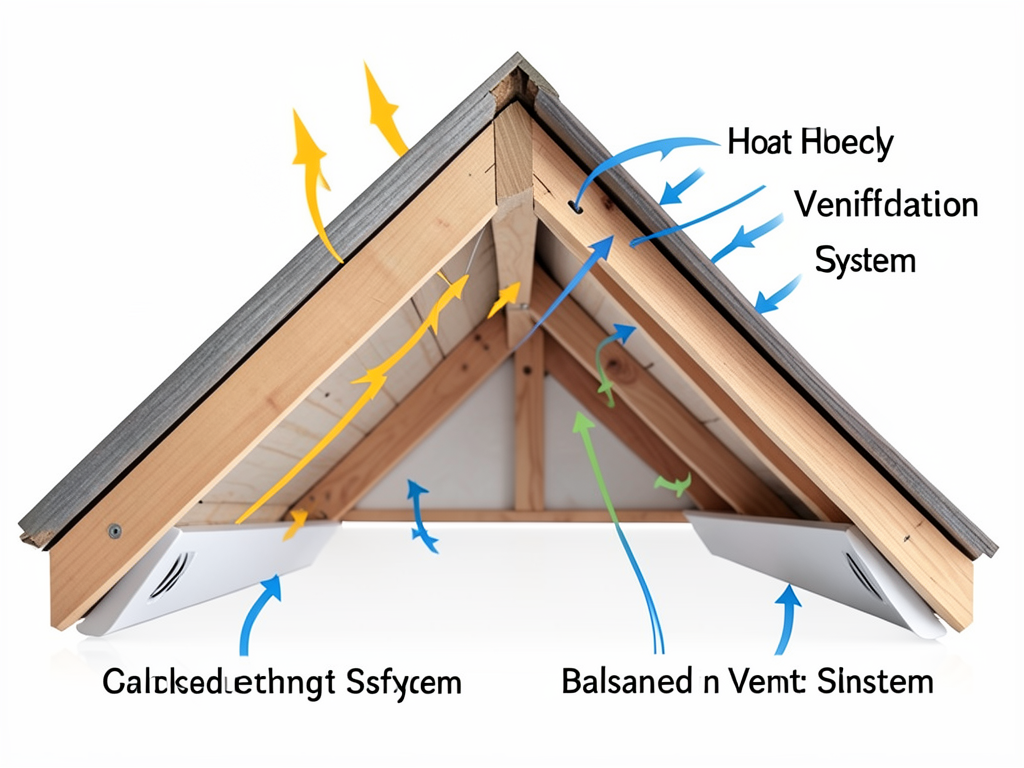
Diagram showing airflow patterns in a properly ventilated attic, with arrows indicating hot air exhaust at the ridge and cool air intake at soffit vents, demonstrating the balanced ventilation system.
Can I install an attic fan myself?
While DIY installation is possible, professional installation ensures safety, code compliance, and optimal performance. Roof work carries fall risks, electrical connections require proper permits, and incorrect installation can cause roof leaks or electrical hazards. Professional installation typically pays for itself through better performance and warranty protection.
How do I know which size fan I need?
Fan sizing depends on attic square footage and existing ventilation. The general rule suggests 1 CFM per 1-2 square feet of attic space, but factors like roof color, sun exposure, and local climate affect the calculation. Our assessment determines the exact size needed for your home.
Making the right choice for your Hinckley home
Choosing between solar and electric attic fans depends on your specific situation, budget, and cooling needs. Consider these factors when making your decision.
Solar fans work best for smaller attics under 1,500 square feet, homes with good passive ventilation, and homeowners prioritizing minimal operating costs. They’re ideal for shaded properties where electric fans might run less frequently due to lower attic temperatures.
Electric fans excel in larger homes over 2,500 square feet, properties with minimal natural ventilation, and situations requiring maximum cooling power. They’re the better choice for homes with HVAC equipment in the attic or where consistent performance matters most.
Climate considerations matter in Hinckley. Medina County’s humid summers mean moisture control becomes as important as temperature control. Both fan types help reduce humidity when properly installed with adequate intake ventilation.
Budget planning should include both upfront costs and long-term savings. Solar fans cost $300-600 for the unit plus installation, with no operating costs. Electric fans run $200-400 for the unit, but installation costs $200-400 more due to electrical work, plus ongoing electricity costs.
Call (216) 530-9077 today to schedule your inspection. Our technicians will assess your attic ventilation needs and recommend the best solution for your Hinckley home.
Technician using a thermal imaging camera to scan an attic, showing temperature variations and heat buildup patterns that help determine optimal fan placement and sizing requirements.
Local building codes and permit requirements
Medina County and Hinckley Township enforce specific building codes for attic ventilation and electrical installations. Understanding these requirements ensures your installation proceeds smoothly and passes inspection.
Ohio Building Code Section 1203 mandates minimum attic ventilation ratios of 1:150 for powered ventilation systems. This means your intake vents must provide at least 1 square foot of net free area for every 150 cubic feet per minute of exhaust capacity.
Electrical installations must comply with National Electrical Code Article 334, which requires dedicated circuits for attic fans with proper overcurrent protection. Permits cost $50-100 and typically process within 24-48 hours in Medina County.
Roof penetrations require flashing that meets International Building Code standards for your specific roof type. Asphalt shingle roofs need step flashing and counter flashing, while metal roofs require specialized brackets and sealants rated for thermal expansion.
Local zoning ordinances in Hinckley Township may restrict fan placement on visible roof planes for aesthetic reasons. We navigate these requirements during the design phase to ensure your installation meets all local standards.
Maintenance and longevity considerations
Both solar and electric attic fans require minimal maintenance but benefit from annual inspections to ensure optimal performance and longevity.
Solar fans need panel cleaning once or twice yearly to maintain efficiency. Dust, pollen, and debris reduce solar panel output by 15-25%. A simple rinse with a garden hose restores full capacity. Check fan bearings annually and lubricate if they become noisy.
Electric fans require thermostat testing and electrical connection inspection annually. Check for loose wiring, corroded connections, or signs of overheating at the electrical panel. Most quality fans last 10-15 years with proper maintenance.
Both types benefit from intake vent inspection to ensure they remain clear of insulation, debris, or pest nests. Blocked intake vents reduce system effectiveness and can cause the fan to work harder than necessary.
Professional maintenance includes checking roof flashing integrity, testing fan balance and vibration, and verifying thermostat operation. These inspections catch small issues before they become expensive problems.
Energy efficiency and environmental impact
Proper attic ventilation reduces your home’s overall energy consumption by decreasing air conditioning runtime. This environmental benefit extends beyond individual homes to reduce peak electrical demand during summer months.
Solar attic fans produce zero operational emissions and reduce grid demand during peak hours when electricity production is most carbon-intensive. A typical solar fan prevents 500-1,000 pounds of CO2 emissions annually compared to electric cooling alternatives.
Electric fans, while consuming electricity, still provide net environmental benefits by reducing air conditioning energy consumption. Modern high-efficiency fans use 60-80 watts during operation, costing only a few dollars monthly while preventing much larger AC energy use.
The embodied energy in fan manufacturing gets offset by energy savings within 1-2 years of operation. Both types contribute to extending roof life by reducing temperature cycling that causes shingle deterioration.
Cost factors and return on investment
Attic fan installation costs vary based on fan type, attic size, and installation complexity. Understanding these factors helps you budget appropriately and calculate your return on investment.
Solar fan installation typically costs $800-1,500 including the fan, mounting hardware, and basic installation. No electrical work reduces labor costs, but higher-capacity units with larger panels increase equipment costs.
Electric fan installation runs $1,000-2,500 depending on fan capacity and electrical requirements. Basic installations with existing wiring access cost less, while complex jobs requiring new circuits or extensive intake vent installation cost more.
Additional costs may include intake vent installation ($200-500), roof repair if existing damage exists, or electrical panel upgrades if capacity is limited. These costs become necessary investments in your home’s efficiency and comfort.
Most homeowners recoup installation costs through energy savings within 2-4 years. Additional benefits include extended roof life, reduced AC maintenance, and improved indoor comfort that enhance your quality of life beyond simple cost calculations.
Call (216) 530-9077 before the next heat wave hits. Our team will help you choose the right attic fan solution for your Hinckley home and schedule installation at your convenience. For more information, visit U.S. Department of Energy attic ventilation guide.
{
“@context”: “https://schema.org”,
“@type”: “BlogPosting”,
“headline”: “Comparing solar and electric attic fans for better cooling in Hinckley”,
“description”: “Discover which attic fan type cools your Hinckley home better. Compare solar vs electric attic fans for energy savings, installation costs, and Cleveland climate performance.”,
“wordCount”: 2503,
“datePublished”: “2026-04-21T08:45:00.000Z”,
“dateModified”: “2026-04-21T08:45:00.000Z”,
“inLanguage”: “en-US”,
“mainEntityOfPage”: {
“@type”: “WebPage”,
“@id”: “https://acehvaccleveland.com”
},
“publisher”: {
“@type”: “LocalBusiness”,
“name”: “Ace HVAC Cleveland”,
“url”: “https://acehvaccleveland.com”
},
“author”: {
“@type”: “Organization”,
“name”: “Ace HVAC Cleveland”,
“url”: “https://acehvaccleveland.com”
},
“image”: {
“@type”: “ImageObject”,
“url”: “https://acehvaccleveland.com/wp-content/uploads/2026/03/comparing-solar-and-electric-attic-fans-for-better-1.png”
}
}
{
“@context”: “https://schema.org”,
“@type”: “HVACBusiness”,
“name”: “Ace HVAC Cleveland”,
“url”: “https://acehvaccleveland.com”,
“address”: {
“@type”: “PostalAddress”,
“addressLocality”: “Cleveland”
},
“areaServed”: {
“@type”: “City”,
“name”: “Cleveland”
}
}
{
“@context”: “https://schema.org”,
“@type”: “FAQPage”,
“mainEntity”: [
{
“@type”: “Question”,
“name”: “How long does attic fan installation take?”,
“acceptedAnswer”: {
“@type”: “Answer”,
“text”: “Most installations complete in 4-6 hours for a single fan. Complex installations requiring additional intake vents or electrical upgrades may take 8-10 hours. We work efficiently to minimize disruption to your home.”
}
},
{
“@type”: “Question”,
“name”: “Are there local utility rebates for energy efficiency?”,
“acceptedAnswer”: {
“@type”: “Answer”,
“text”: “FirstEnergy Ohio utilities occasionally offer rebates for energy-efficient home improvements. While specific attic fan rebates vary by year, we can check current programs during your consultation. Solar installations may qualify for federal tax credits through 2032.”
}
},
{
“@type”: “Question”,
“name”: “Will an attic fan work with my existing insulation?”,
“acceptedAnswer”: {
“@type”: “Answer”,
“text”: “Yes, attic fans work with all insulation types. However, proper attic ventilation actually helps insulation perform better by preventing heat buildup that can reduce R-value effectiveness. We assess your insulation during the inspection and recommend improvements if needed.”
}
},
{
“@type”: “Question”,
“name”: “How much can I expect to save on cooling costs?”,
“acceptedAnswer”: {
“@type”: “Answer”,
“text”: “Most homeowners see 10-25% reductions in cooling costs after proper attic ventilation installation. Savings depend on your home’s size, existing insulation, and local electricity rates. The reduction comes from your air conditioner running less frequently to maintain comfortable temperatures.”
}
},
{
“@type”: “Question”,
“name”: “Do I need both intake and exhaust vents?”,
“acceptedAnswer”: {
“@type”: “Answer”,
“text”: “Yes, proper attic ventilation requires balanced airflow. Exhaust fans remove hot air, but without adequate intake vents, they create negative pressure that can pull conditioned air from your living space. We ensure your system has proper intake capacity for optimal performance.”
}
},
{
“@type”: “Question”,
“name”: “Can I install an attic fan myself?”,
“acceptedAnswer”: {
“@type”: “Answer”,
“text”: “While DIY installation is possible, professional installation ensures safety, code compliance, and optimal performance. Roof work carries fall risks, electrical connections require proper permits, and incorrect installation can cause roof leaks or electrical hazards. Professional installation typically pays for itself through better performance and warranty protection.”
}
},
{
“@type”: “Question”,
“name”: “How do I know which size fan I need?”,
“acceptedAnswer”: {
“@type”: “Answer”,
“text”: “Fan sizing depends on attic square footage and existing ventilation. The general rule suggests 1 CFM per 1-2 square feet of attic space, but factors like roof color, sun exposure, and local climate affect the calculation. Our assessment determines the exact size needed for your home.”
}
}
]
}
{
“@context”: “https://schema.org”,
“@type”: “HowTo”,
“name”: “Attic Fan Installation Process”,
“step”: [
{
“@type”: “HowToStep”,
“position”: 1,
“name”: “Initial Assessment”,
“text”: “Our technicians inspect your attic space, measuring square footage, evaluating existing ventilation, and assessing roof structure. We check for moisture issues, insulation levels, and any signs of roof damage that need addressing before installation.”
},
{
“@type”: “HowToStep”,
“position”: 2,
“name”: “System Design”,
“text”: “Based on the assessment, we calculate the required ventilation capacity using the 1/300 rule for static ventilation or 1/150 for powered systems. We determine optimal fan location for maximum airflow and minimal roof penetrations.”
},
{
“@type”: “HowToStep”,
“position”: 3,
“name”: “Permit Acquisition”,
“text”: “Medina County requires permits for electrical work and roof penetrations. We handle all permit applications and ensure your installation meets local building codes, including proper electrical circuit requirements and flashing specifications. Fast and Local AC Repair Services in Solon and Surrounding Areas.”
},
{
“@type”: “HowToStep”,
“position”: 4,
“name”: “Installation Day”,
“text”: “Our team arrives with all necessary equipment and materials. We protect your home’s interior, install intake vents if needed, mount the fan with proper flashing, and complete all electrical connections. Most installations finish in 4-6 hours.”
},
{
“@type”: “HowToStep”,
“position”: 5,
“name”: “Testing and Calibration”,
“text”: “We verify fan operation, test thermostat settings, check for proper airflow, and ensure no air leakage into living spaces. We demonstrate the system operation and provide maintenance recommendations. Commercial HVAC Maintenance for Businesses in Downtown Cleveland.”
}
],
“image”: “https://acehvaccleveland.com/wp-content/uploads/2026/03/comparing-solar-and-electric-attic-fans-for-better-1.png”
}
{
“@context”: “https://schema.org”,
“@type”: “BreadcrumbList”,
“itemListElement”: [
{
“@type”: “ListItem”,
“position”: 1,
“name”: “Home”,
“item”: “https://acehvaccleveland.com”
},
{
“@type”: “ListItem”,
“position”: 2,
“name”: “Blog”,
“item”: “https://acehvaccleveland.com/blog”
},
{
“@type”: “ListItem”,
“position”: 3,
“name”: “Comparing solar and electric attic fans for better cooling in Hinckley”
}
]
}
{
“@context”: “https://schema.org”,
“@type”: “Service”,
“serviceType”: “HVAC”,
“provider”: {
“@type”: “LocalBusiness”,
“name”: “Ace HVAC Cleveland”,
“url”: “https://acehvaccleveland.com”
},
“areaServed”: {
“@type”: “City”,
“name”: “Cleveland”
},
“description”: “Discover which attic fan type cools your Hinckley home better. Compare solar vs electric attic fans for energy savings, installation costs, and Cleveland climate performance.”
}