
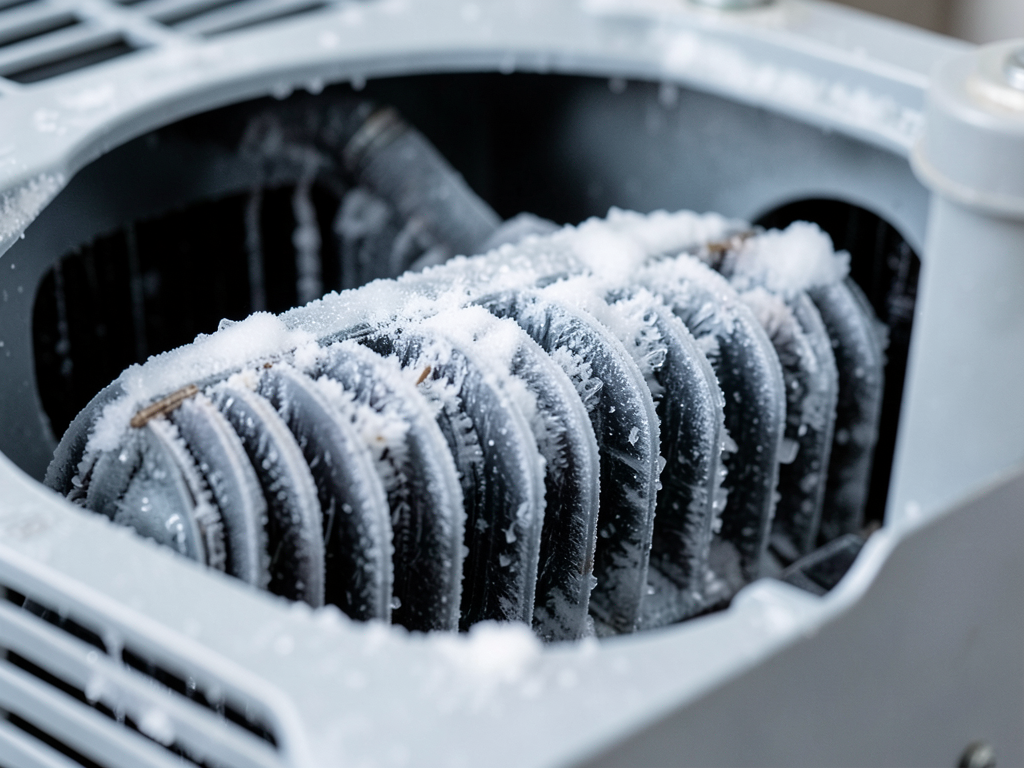
Your air conditioner should cool your home not turn into a block of ice. When you see frost or ice on the evaporator coils or refrigerant lines something is seriously wrong. This guide explains why your AC freezes up during a North Olmsted summer how to handle it immediately and when to call a Cleveland HVAC professional before the problem causes expensive damage. Cleveland Mechanical Code Section 307.2.1.
Why Your AC Freezes Up in Summer Heat
An air conditioner freezes when the evaporator coil gets too cold. Instead of absorbing heat properly the coil temperature drops below freezing and moisture in the air turns to ice. This creates a vicious cycle: ice blocks airflow making the coil colder until the system shuts down or the compressor fails. How Much Does a New Central Air System Cost in Northeast Ohio?.
Two main problems cause this: restricted airflow across the coil or low refrigerant charge. In North Olmsted homes with older ductwork or high summer humidity from Lake Erie both issues are common. Understanding which one you have determines if it is a quick fix or needs professional repair. EPA Section 608 regulations.
Immediate Steps to Take When You See Ice
Turn off the cooling mode immediately. Leaving a frozen AC running risks permanent compressor damage. Set your thermostat to “fan only” mode. This keeps air moving across the coils to help melt the ice safely.
Check your air filter. If it looks dirty replace it now. A clogged filter is the most common cause of restricted airflow. Also check that all supply vents are open and not blocked by furniture or curtains.
Let the system thaw completely. This usually takes 2 to 24 hours depending on how much ice formed. Do not try to scrape off ice it can damage the coil fins. Once thawed restart the system and monitor it closely.
Warning: If ice returns within hours or the system short cycles on and off you likely have a refrigerant leak or blower motor problem. Continuing to run it will destroy the compressor.
Common DIY Causes and Fixes
Dirty Air Filter: A MERV 8 to 11 filter clogged with Cleveland summer pollen and dust reduces airflow by up to 50%. Replace filters every 30 to 60 days during peak cooling season.
Blocked Return Vents: Furniture rugs or closed doors can block return air paths. Make sure at least one large return vent stays open in each zone.
Closed Supply Registers: Shutting too many vents to save energy actually increases pressure in the ducts reducing overall airflow. Keep at least 75% of registers open.
Thermostat Fan Setting: Switch from “auto” to “on” temporarily while troubleshooting. This keeps air moving even when the compressor is off.
Condensate Drain Clog: A blocked drain line causes water to back up and freeze on the coil. Clear the drain line with vinegar or compressed air.
Professional Repairs: Refrigerant Leaks and Mechanical Failures
Low Refrigerant Charge: If your system is low on R-410A refrigerant you have a leak. Adding refrigerant without fixing the leak is illegal under EPA Section 608 regulations and wastes money. A technician uses electronic leak detectors and UV dye to find and repair leaks then recharges the system to exact specifications.
Blower Motor Failure: A failing blower motor spins too slowly to move enough air across the coil. You might hear a humming noise or notice weak airflow from vents. Replacing the motor restores proper heat exchange.
Expansion Valve Problems: The thermostatic expansion valve (TXV) controls refrigerant flow. If stuck closed it can cause coil freezing. This requires professional diagnosis and replacement.
Refrigerant Line Frost: Ice on the larger insulated suction line usually means low charge. Ice on the smaller uninsulated liquid line suggests an expansion valve or filter drier issue.
The Cleveland Humidity Factor
North Olmsted sits near Lake Erie where summer humidity often exceeds 70%. High humidity means more moisture in the air which your AC must condense and drain away. If the condensate drain clogs or the coil gets too cold that moisture freezes instead of draining.
Older homes in North Olmsted built before 1980 often have undersized ductwork or poor insulation. These systems struggle to move enough air when outdoor temperatures hit 90 degrees with high humidity. The combination overwhelms the coil and causes freezing.
Local building codes require proper condensate drainage per the Cleveland Mechanical Code Section 307.2.1. A professional inspection ensures your system meets these requirements and handles our specific climate conditions. Fast and Local AC Repair Services in Solon and Surrounding Areas.
Preventing Future Freeze-Ups
Annual Professional Tune-Up: Spring maintenance includes checking refrigerant charge cleaning coils and testing the blower motor. This prevents 90% of freeze-up issues before they start.
Upgrade Your Filter Strategy: Use a high-quality MERV 8 to 11 filter and replace it monthly during cooling season. Consider a whole-house air cleaner for homes with pets or allergies.
Smart Thermostat Benefits: Programmable thermostats prevent the system from running when you are not home reducing wear. Some models alert you to performance issues before they cause damage.
Duct Inspection: Leaky or poorly designed ducts reduce airflow. Sealing and insulating ducts in older North Olmsted homes improves efficiency and prevents freezing.
Humidity Control: If your home feels clammy even when the AC runs consider a whole-house dehumidifier. This reduces the load on your AC and prevents coil freezing.
When to Call Ace HVAC Cleveland
Call us immediately if you see ice on the coils or refrigerant lines and the problem returns after thawing. Also call if you hear unusual noises like humming clicking or rattling or if the system short cycles on and off rapidly.
Emergency signs include burning smells from vents ice on the compressor or the system not cooling at all. These indicate serious problems that need immediate professional attention. Weird Smells from Vents.
We serve North Olmsted Rocky River Fairview Park and all of Greater Cleveland. Our technicians carry the tools and EPA certification to diagnose refrigerant leaks repair mechanical failures and restore your comfort fast. HVAC Rocky River.
Call (216) 530-9077 today to schedule your inspection. Do not let a frozen AC ruin your summer or damage your system beyond repair.
Frequently Asked Questions
Why does my AC freeze up when it is 90 degrees outside?
Your AC freezes when something restricts airflow or reduces refrigerant pressure. Common causes include dirty filters closed vents or refrigerant leaks. High humidity from Lake Erie makes freezing more likely in Cleveland homes.
How long does it take for a frozen AC unit to thaw?
Thawing typically takes 2 to 24 hours depending on ice buildup. Set the thermostat to “fan only” mode and let it melt naturally. Do not try to speed up the process by scraping ice off.
Can I add refrigerant myself if my AC is low?
No. Adding refrigerant without EPA certification is illegal and dangerous. Low refrigerant means you have a leak that needs professional repair. Improper charging can destroy your compressor.
What is the difference between frozen evaporator coils and frozen refrigerant lines?
Frozen evaporator coils usually mean airflow problems like dirty filters or blocked vents. Frozen refrigerant lines especially the larger insulated line often indicate low refrigerant charge from a leak. Both require different repairs.
How can I prevent my AC from freezing up again?
Replace your air filter monthly during cooling season keep vents open and schedule annual professional maintenance. Consider a whole-house dehumidifier for Cleveland’s high humidity and have your ductwork inspected for leaks or restrictions. Commercial HVAC Maintenance for Businesses in Downtown Cleveland.
{
“@context”: “https://schema.org”,
“@type”: “BlogPosting”,
“headline”: “Why Your Air Conditioner is Freezing Up During a North Olmsted Summer”,
“description”: “Is your AC freezing in the summer heat? Learn why it happens, how to thaw it safely, and when to call Ace HVAC Cleveland for fast local repair.”,
“wordCount”: 1265,
“datePublished”: “2026-03-16T09:46:00.000Z”,
“dateModified”: “2026-03-16T09:46:00.000Z”,
“inLanguage”: “en-US”,
“mainEntityOfPage”: {
“@type”: “WebPage”,
“@id”: “https://acehvaccleveland.com”
},
“publisher”: {
“@type”: “LocalBusiness”,
“name”: “Ace HVAC Cleveland”,
“url”: “https://acehvaccleveland.com”
},
“author”: {
“@type”: “Organization”,
“name”: “Ace HVAC Cleveland”,
“url”: “https://acehvaccleveland.com”
},
“image”: {
“@type”: “ImageObject”,
“url”: “https://acehvaccleveland.com/wp-content/uploads/2026/03/why-your-air-conditioner-is-freezing-up-during-a-n-1.png”
}
}
{
“@context”: “https://schema.org”,
“@type”: “HVACBusiness”,
“name”: “Ace HVAC Cleveland”,
“url”: “https://acehvaccleveland.com”,
“address”: {
“@type”: “PostalAddress”,
“addressLocality”: “Cleveland”
},
“areaServed”: {
“@type”: “City”,
“name”: “Cleveland”
}
}
{
“@context”: “https://schema.org”,
“@type”: “FAQPage”,
“mainEntity”: [
{
“@type”: “Question”,
“name”: “Why does my AC freeze up when it is 90 degrees outside?”,
“acceptedAnswer”: {
“@type”: “Answer”,
“text”: “Your AC freezes when something restricts airflow or reduces refrigerant pressure. Common causes include dirty filters closed vents or refrigerant leaks. High humidity from Lake Erie makes freezing more likely in Cleveland homes.”
}
},
{
“@type”: “Question”,
“name”: “How long does it take for a frozen AC unit to thaw?”,
“acceptedAnswer”: {
“@type”: “Answer”,
“text”: “Thawing typically takes 2 to 24 hours depending on ice buildup. Set the thermostat to \”fan only\” mode and let it melt naturally. Do not try to speed up the process by scraping ice off.”
}
},
{
“@type”: “Question”,
“name”: “Can I add refrigerant myself if my AC is low?”,
“acceptedAnswer”: {
“@type”: “Answer”,
“text”: “No. Adding refrigerant without EPA certification is illegal and dangerous. Low refrigerant means you have a leak that needs professional repair. Improper charging can destroy your compressor.”
}
},
{
“@type”: “Question”,
“name”: “What is the difference between frozen evaporator coils and frozen refrigerant lines?”,
“acceptedAnswer”: {
“@type”: “Answer”,
“text”: “Frozen evaporator coils usually mean airflow problems like dirty filters or blocked vents. Frozen refrigerant lines especially the larger insulated line often indicate low refrigerant charge from a leak. Both require different repairs.”
}
},
{
“@type”: “Question”,
“name”: “How can I prevent my AC from freezing up again?”,
“acceptedAnswer”: {
“@type”: “Answer”,
“text”: “Replace your air filter monthly during cooling season keep vents open and schedule annual professional maintenance. Consider a whole-house dehumidifier for Cleveland’s high humidity and have your ductwork inspected for leaks or restrictions. Commercial HVAC Maintenance for Businesses in Downtown Cleveland.”
}
}
]
}
{
“@context”: “https://schema.org”,
“@type”: “BreadcrumbList”,
“itemListElement”: [
{
“@type”: “ListItem”,
“position”: 1,
“name”: “Home”,
“item”: “https://acehvaccleveland.com”
},
{
“@type”: “ListItem”,
“position”: 2,
“name”: “Blog”,
“item”: “https://acehvaccleveland.com/blog”
},
{
“@type”: “ListItem”,
“position”: 3,
“name”: “Why Your Air Conditioner is Freezing Up During a North Olmsted Summer”
}
]
}
{
“@context”: “https://schema.org”,
“@type”: “Service”,
“serviceType”: “HVAC”,
“provider”: {
“@type”: “LocalBusiness”,
“name”: “Ace HVAC Cleveland”,
“url”: “https://acehvaccleveland.com”
},
“areaServed”: {
“@type”: “City”,
“name”: “Cleveland”
},
“description”: “Is your AC freezing in the summer heat? Learn why it happens, how to thaw it safely, and when to call Ace HVAC Cleveland for fast local repair.”
}